
As alfalfa breaks dormancy this spring, take time to evaluate the condition of your stand.
Early springtime, after alfalfa has broken dormancy, is an excellent time to evaluate the effect of winter injury on your alfalfa stand. According to this University of Wisconsin factsheet, Evaluating and Managing Alfalfa Stands for Winter Injury, there are a number of factors that can impact winter injury. These include:
- Stand age – Older stands are more likely to winterkill than younger ones.
- Variety – Varieties with superior winter hardiness ratings and a high disease resistance index are less likely to experience winter injury.
- Soil pH – Stands growing on soils with a pH above 6.6 are less likely to experience winter injury.
- Soil fertility – Stands with high fertility, particularly potassium, are less likely to experience winter injury than those with low fertility.
- Soil moisture – Alfalfa grown on well-drained soils is less prone to winter injury.
- Fall soil moisture status – As dehydration is the primary means of tolerating freezing temperatures, stands that go into winter with low soil moisture are better able to lose moisture and are less likely to winter kill.
- Cutting management – Both harvest frequency and timing of fall cutting affect alfalfa winterhardiness. The shorter the interval between cuttings, the greater is the risk of winter injury. Stands in which the last cutting is taken between September 1 and October 15 are at greater risk, as plants are unable to replenish root carbohydrate reserves before winter.
- Snow cover – Snow is an excellent insulator. Temperature fluctuations are much less under snow cover. As little as 4 inches of snow can result in a 10oF difference in soil temperatures. Stands that have not been cut after September 1 or that have at least 6 inches of stubble left will be able to retain more snow cover and be less susceptible to winter injury.
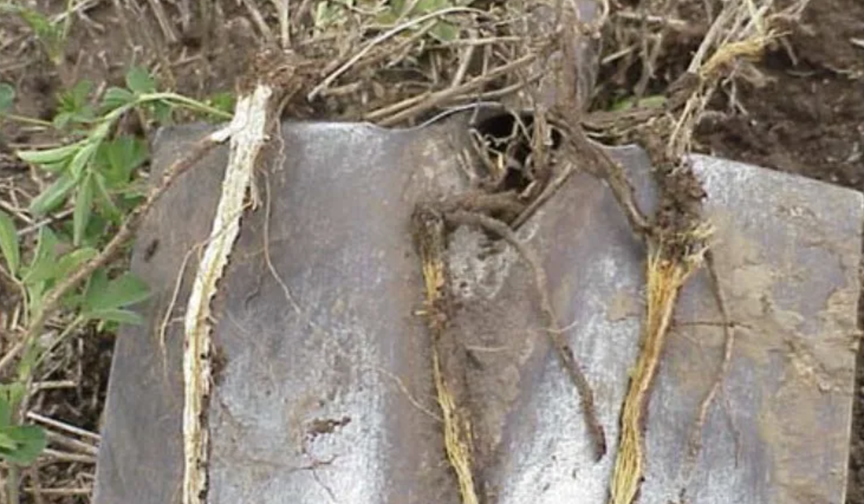
Signs of winter injury include slow green-up, uneven or asymmetrical growth of plants, or root damage. Root assessment is the best way to assess winter injury. According to Dr. Dan Undersander, retired forage specialist at the University of Wisconsin, springtime stand assessment can begin as soon as the frost is out of the ground and continue until spring green-up occurs. The process is to dig a few plants 4 to 6 inches deep and look at the condition of the taproot. If the taproot is turgid (like a potato, leftmost plant), it is alive and healthy. If the root is browned, dehydrated, and ropey (like two plants on the right), it is dead or dying. If 50% or more of the root is blackened from root rot, the plant will most likely die during spring green-up or later in the year.


Be the first to comment