
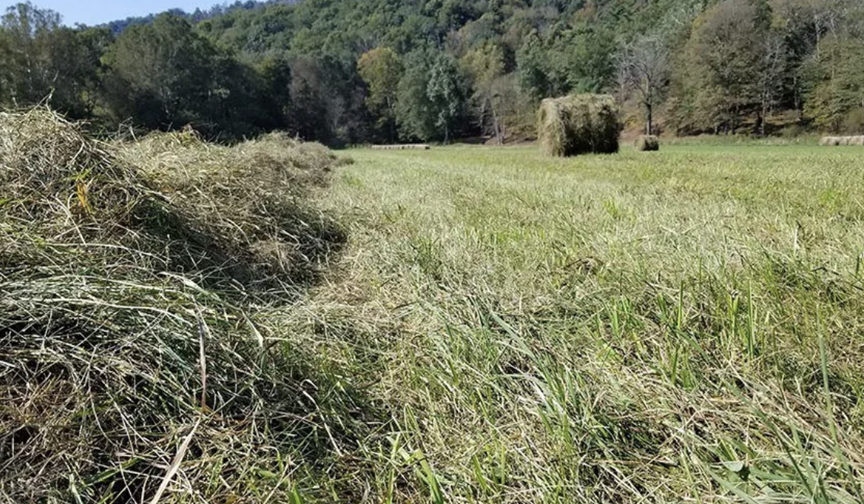
A potential shortage of stored forages means producers may have to make tough decisions regarding late-fall forage management. Extreme weather may keep forage growers out of their fields or provide less than expected yields during the spring and summer. However, they may then be faced with the need to decide about late-season hay harvest – should you mow or let the forage stand in the field?
Managing Grass Stands
Fall hay management can be a “make-or-break” time for stand longevity and subsequent forage yields. Managing grass stands is not as challenging as legume stands. The main consideration in determining whether to mow a grass field is how much forage is standing and at what point in the fall you are considering mowing. If there is considerable regrowth that accrued during the summer and early fall and you were unable to maintain a regular harvest schedule, assess your forage stand to determine if you should mow in the late fall.
Residual Height
Regardless of whether the hay field is grass or legumes, residual height should be a primary concern for the last cutting of forage. Cool-season grasses store carbohydrates at the base of the plant, near the soil surface. Cutting too late and too low in the fall removes the carbohydrates the plant has stored all summer. That reduces bud formation and crown tissue, and leads to lower yields the following spring.
Species differ in how much close defoliation they tolerate. For pastures, the Penn State Agronomy Guide recommends a grazing height of 4 to 5 inches for tall grasses and 2 to 3 inches for Kentucky bluegrass and perennial ryegrass. Orchardgrass in particular should not be grazed below 3 to 4 inches. Tall-growing hay grasses therefore need the most protection at the last cutting. Before the final cutting, check that the mower actually leaves the stubble height you intend, since mowers can easily cut lower than expected. Finally, do not apply nitrogen after the last harvest of the year. Much of it will end up in groundwater, and high nitrogen levels in late fall and winter can reduce the winterhardiness of some grasses.
Disease Considerations
Another factor to consider is if your crop has foliar, crown, or root diseases. For many of the pathogens that cause these problems, there is a risk of disease in the subsequent growing year, as the pathogen(s) can often overwinter in plant biomass if environmental conditions are favorable. Some examples of these include crown rust, stem rust, and leaf rust of cereals, as well as brown stripe of orchardgrass. For more information on grass diseases, see the Penn State Extension article “Identifying late season diseases in forage grasses”.
Harvest Options When Drying Conditions Are Poor
Even when there is enough forage to justify a fall cutting, getting it dry enough to bale can be a challenge. Shorter days, cooler temperatures, heavy dews, and more frequent rain all slow field drying in the fall. A cutting that lies in the windrow waiting for good weather loses both yield and quality. Tedding or turning windrows can help, especially to dry the damp layer on the bottom.
For alfalfa and red clover legumes, two tools can widen the harvest window. Chemical drying agents applied during mowing can reduce drying time. Organic acid preservatives, used at recommended rates and properly applied, make it possible to store alfalfa hay that was baled at up to 25 percent moisture. Grass hay is a different case: chemical drying agents have not been shown to improve the drying rate of grasses.
Ensiling, either as chopped silage or as round bale silage (baleage), is another option. If properly harvested and stored, silage can provide high-quality forage with fewer risks of weather damage than hay. The Penn State Agronomy Guide recommends field wilting grass or alfalfa to 60 to 70 percent moisture before ensiling in conventional upright, bunk, or pit silos or as round bale silage, and to 50 to 60 percent moisture for sealed upright silos. A good, tight pack ensures an oxygen-free environment and depends on fineness of chop, moisture content, and rate of fill. Silage preservatives, additives, and inoculants may improve silage fermentation in some cases, but they are not a substitute for proper management.
Grazing Instead of Harvesting
Grazing a hayfield can be more economical and is a way to extend the grazing season. These hayfields can be “stockpiled” and grazed after the growing season ends and the need for stored forage is reduced. By allowing the livestock to “harvest” the forage, labor needs are reduced, the cost of harvest is lower, and the need for hay is less. If you plan on grazing a hay field, it is important to implement a strip grazing system.
Additional Resources
For more information on fall forage management for both grasses and legumes, please see How Fall Forage Harvest Can Affect Spring Stands and Fall Forage Management Tips.


Be the first to comment