
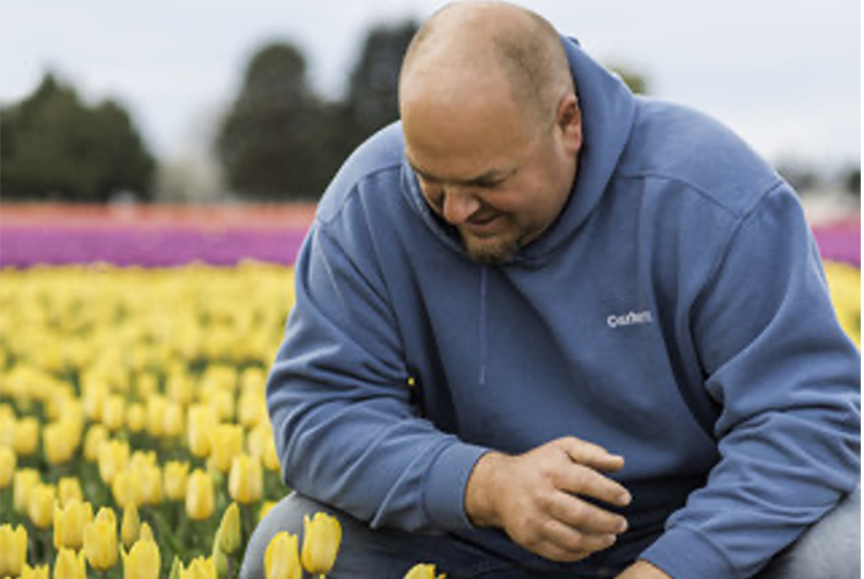
In 2016, Allred piloted a new technology from Biofiltro that uses the digestive power of worms and microbes in a biofilter to convert dirty water into irrigation-quality water in addition to creating a valuable soil amendment, which improves soil health, crop yield, and carbon sequestration. According to Biofiltro, studies have shown this process cuts GHG emissions by 91 percent. Allred won the U.S. Dairy Outstanding Dairy Farm Sustainability Award in 2018 and today has expanded the worm beds to five acres.
“Cows are amazing. As ruminants, they can upcycle grasses, corn, and byproducts like spent grain from local breweries, bakery waste, vegetables not ‘pretty enough’ for the grocery store, and much more into milk, meat, and manure instead of those byproducts ending up in a local landfill,” Allred said.
In addition to upcycling byproducts, byproduct substrates also fuel local digesters on farms like Harmony Dairy in Mount Vernon.
Continuous improvement has long been a core value for dairy farmers and is evident by the 63 percent smaller carbon footprint to produce a gallon of milk in 2007 compared to 1944. According to a University of Arkansas study, the entire dairy sector contributes only 1.9 percent of total GHG emissions.
Dairy farms are literally doing more with less, and they could not do it without taking good care of natural resources. Each year, thousands of acres of Washington farmland is developed and taken out of production while farmers are tasked with feeding more people. In fact, dairy farms utilize 90 percent less land and 65 percent less water than in the 1940s while producing more milk with fewer cows. Fewer, more efficient dairy cows equal less methane – both enteric and from manure – and a smaller carbon footprint.
This Earth Day, Dairy Farmers of Washington is challenging perceptions about dairy farm sustainability and dairy’s role as an environmental solution by dispelling common myths on their Facebook and Instagram pages with the help of local farmers. Visit wadairy.org/sustainability to learn the truth behind these misconceptions and stories from local farmers including VanderKooy and Allred.
Be the first to comment