

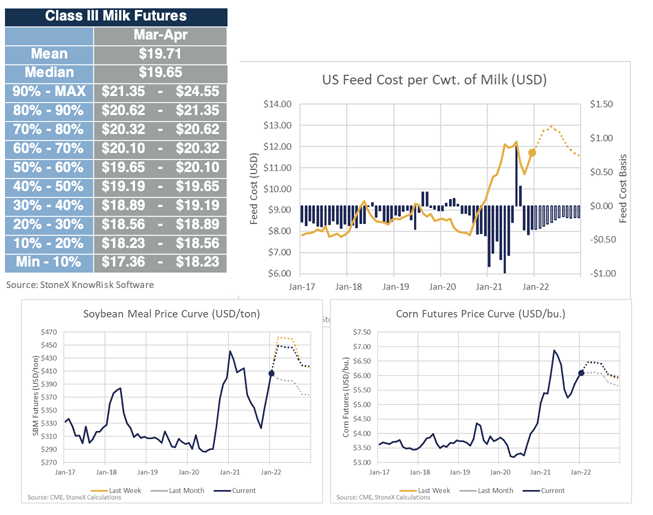
Feed costs, like milk prices, are at very high levels which are likely pressing down on margins that dairy farmers are receiving. We expect feed costs should continue to be strong, at least through the first half of the year. While we don’t expect corn prices to climb quite as high as they did last year, we do think that soybean meal could surpass last year’s levels which along with a growing cost for alfalfa will likely raise feed costs above the highs that we experienced last year. Supporting this strength in the grain market in part is the dry weather that is being experienced in South America. The crop outlook there is not ideal, but there is an opportunity for some moisture in the forecast at the moment which could help grain production in that area.
The supply factor of milk price at its core is a relationship between milk production and dairy herd size. Milk production in the first half of the year will likely track close to, or below year ago, but higher milk prices are going to drive
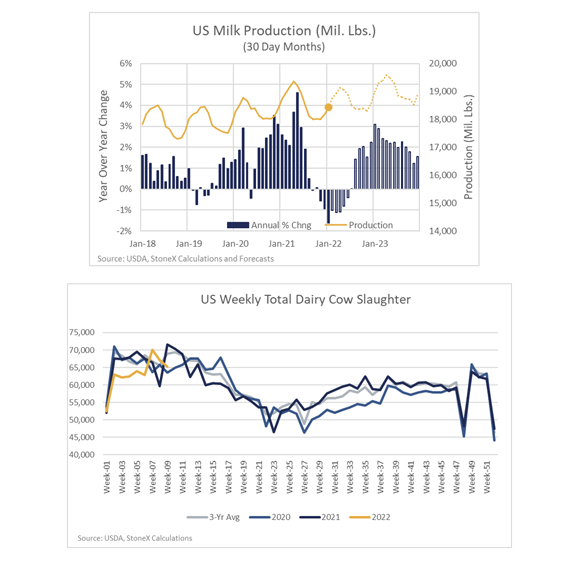
There are early signs that the dairy herd is starting to turn around. The USDA reported that the number of heifers expected to calve this year (which are the new animals that will come into the milking herd) were down 2.7% this year. That is a headwind to herd expansion, but weekly slaughter data during January was down roughly 7%. Since then, slaughter has picked up slightly, but year-to-date we are still below year-ago levels. If slaughter continues to hold below year-ago levels, we should see plenty of opportunity for milk production to grow. When this production is established, it will likely support a break in price due to more supply becoming available.
So, what is the takeaway here, bullishness should be expected to continue in the short-term, but margins could continue to be slim. We expect that in the first half 2022 demand should maintain, and supply will likely remain tight. This outlook should support the current premium in the market, that premium will likely persist until either demand breaks or supply increases. Our expectation is that a supply increase will likely occur first. The reason being that while these high prices may impact demand, global supply is still tight enough that declining sales likely won’t have a major impact unless there is a large reduction in purchases.
Editor’s Note: Dustin Winston, an Idaho native, has a Master of Science in Applied Economics and Bachelor of Science degrees in Finance and Agricultural Economics. After gaining a passion for commodities Dustin focused his efforts on the dairy industry where he has been involved over the last five years. Since joining StoneX in 2019 Dustin has served as a Commodity Analyst, providing quality market intelligence materials in the dairy and livestock markets. Dustin also leads the Continuing Education initiative at StoneX, providing CPE credits to accountant’s though various company events. Over the last five years Dustin has worked directly with many agricultural organizations including publishing for Idaho Dairymen’s Association and Cheese Market News, and helping to educate students on market fundamentals through presentations at land-grant institutions.


Be the first to comment