

Farm Real Estate Value
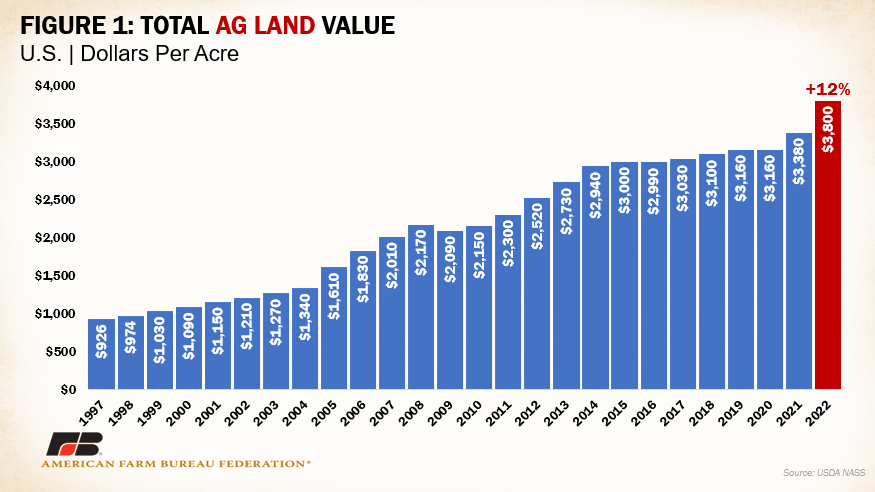
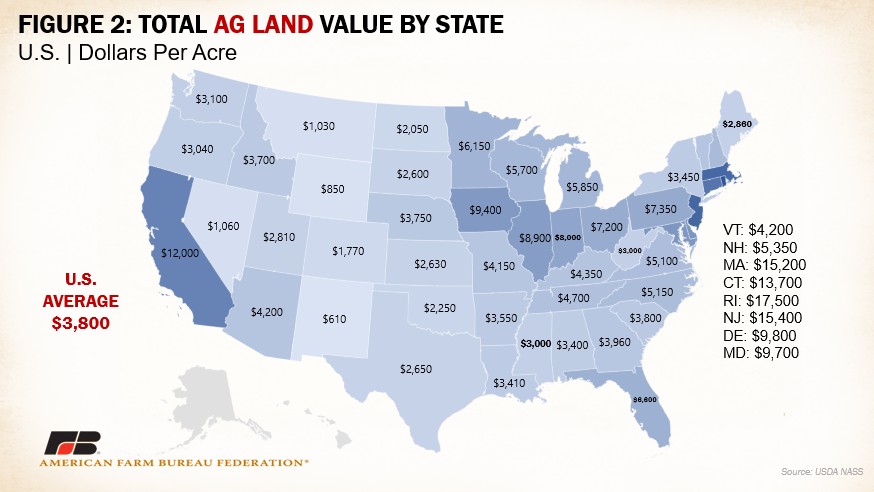
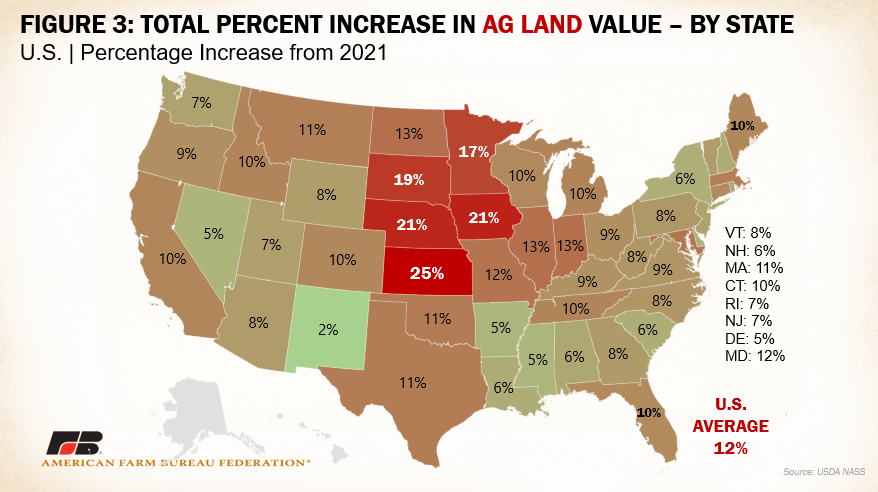
The U.S. average farm real estate value, a measurement that includes the value of all land and buildings on farms, clocked in at a record $3,800 per acre. This 12% increase over last year represents a percentage change not seen since 2006, when values increased 14% over the previous year. Looking at the dollar value of the change, the $420 per acre increase over 2020 is a level not seen since the USDA first began the survey in 1997. These levels vary significantly throughout the country, with the highest real estate values concentrated in areas of the country with larger volumes of high-value crops (think wine grapes and tree nuts in California), as well as areas experiencing upward pressure due to proximity to urban areas with little remaining developable land, like the small states of the Northeast. Much of the Midwest had higher real estate values, followed by the South and Pacific Northwest, and finally the Plains and Mountain states. Part of this increase can be linked to the rise in commodity prices that have translated to a higher farming value for land in row crop-heavy heartland states like Iowa, Illinois and Indiana. Incentives added to government programs, such as those added in 2021 to the Conservation Reserve Program, that provide financial compensation to landowners who voluntarily enroll and retire highly erodible and environmentally sensitive lands also contributed to increased competition for active cropland, increasing land prices. Other factors contributing to rising land values include competing land-use interests, which includes urban and suburban sprawl, and the increased investments into hard assets, like land, for a safer return on investment during a period of high inflation. On a state-by-state basis, (excluding Northeast states with urban pressure), Kansas experienced the largest percent increase (+25%), followed by Iowa and Nebraska (both +21%) and South Dakota (+19%). Half of all the states in the nation faced double-digit farm real estate value increases.
Cropland Value

Pastureland Value
Similar to overall agricultural real estate values and cropland values, pastureland values posted strong gains from the previous year, coming in at $1,650 per acre on average for the U.S. This is an increase of 11.5% over 2021, the highest increase since 2006’s 30% increase and following seven years of little to no increases in value. However, the distribution of pastureland values across the country differs from the cropland values and real estate values. Instead of the Midwest and California, some of the more valuable pastureland state averages are concentrated in the South and the mid-South, with the Midwest and the Plains states making up the next group of higher average values. With extended drought impacting 60% of the Western U.S., reducing the quantity of grazable land, demand for pastureland has increased. This has increased pastureland prices more broadly but has targeted areas with less density of high value row crops and more regular precipitation such as the South and Midsouth. By percent increase, however, the leaders are Kansas (+23% year-over-year) and Idaho and South Dakota (tied at +16%).


Cash Rent Increases

Margins for producers who rely on rented land are jeopardized by even marginal changes in rental rates. The higher rates rise, the fewer acres farmers can afford to rent, reducing their annual production output. More broadly, those who lack equity from land ownership have reduced access to operating lines of credit needed to fund annual equipment and input purchases; and the variation in their land cost can often take away the benefits of high crop prices.
Summary
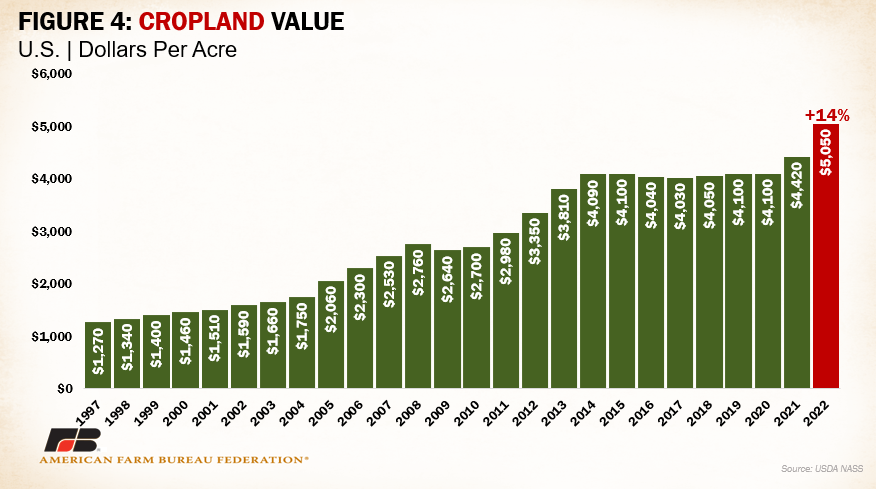
USDA’s land value report showed sharp increases across the board in agricultural real estate values, cropland values and pastureland values. The average U.S. farm real estate value increased by a record $420 per acre, or 12% over 2021, while the cropland value and pastureland value increased by 14% and 11.5%, respectively. Cash rents have also jumped, ranging from 4.6% to 7.7% across cropland, irrigated and non-irrigated, and pastureland. In a period of heightened input costs across the board further exacerbated by inflationary pressures, high rent and land costs are yet another hurdle for farmers and ranchers working to produce more crops and raise more livestock. Fortunately for producers who own land, their equity has increased, but for those just starting out or reliant on the acres they rent to make ends meet, these increases can become an unbreachable barrier to entry.



Be the first to comment