
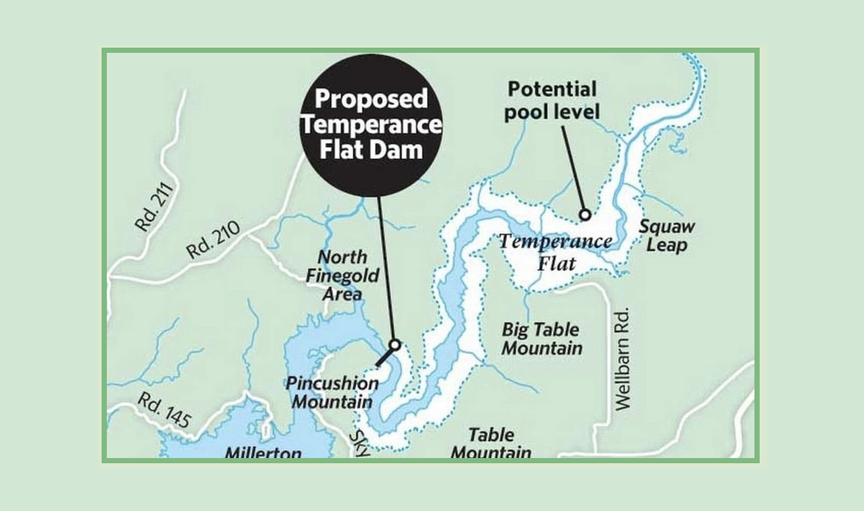
This is the challenge of our day. What infrastructure can we build that can capture these flows and store them for later. The obvious reality is that very wet periods occur infrequently and like this one, show up in different places at different rates. The Southern Sierra snowpack is over 336% of normal, while the Northern Sierra is 219% of normal. The flood control lakes in the Southern Sierra are small: Success is 84,000 acre-feet and Kaweah is 186,000 acre-feet. The Central and Northern Sierra lakes are much larger: Pine Flat (Kings River) is 1 million acre-feet, McClure (Merced River) is 1 million acre-feet, Don Pedro (Tuolumne River) 2 million acre-feet and New Melones (Stanislaus River) is 2.4 million acre-feet. The one undersized lake in the Central Sierra is Millerton on the San Joaquin River at 520,000 acre-feet. This is where an additional dam has been proposed above Millerton at Temperance Flat, which would add another 1.2 million acre-feet of storage to the San Joaquin River. The Temperance Flat project was actively promoted a decade ago, but the costs to build it was calculated at over $3 billion and the average annual increased water supply was not huge because these wet winters are so infrequent. The project was basically shelved in 2020.
So, what else can we do? It seems that on-farm recharge and increased dedicated recharge basins are things that make economic sense. The Groundwater Sustainability Plans are full of these types of recharge projects. What we are seeing this year is that more and better conveyance to get the water moved and dispersed over the Valley floor is absolutely critical to taking advantage of the recharge opportunities. There are also significant flood control benefits that can be obtained through better conveyance infrastructure. Making these improvements is a huge task, expensive and complex. But clearly there are times when the Good Lord provides bountiful precipitation, and we need to be good stewards of those resources. There is a lot to learn from this year’s events and a lot of work to do to make things better. But clearly there are opportunities for progress that should not be missed.

Be the first to comment