
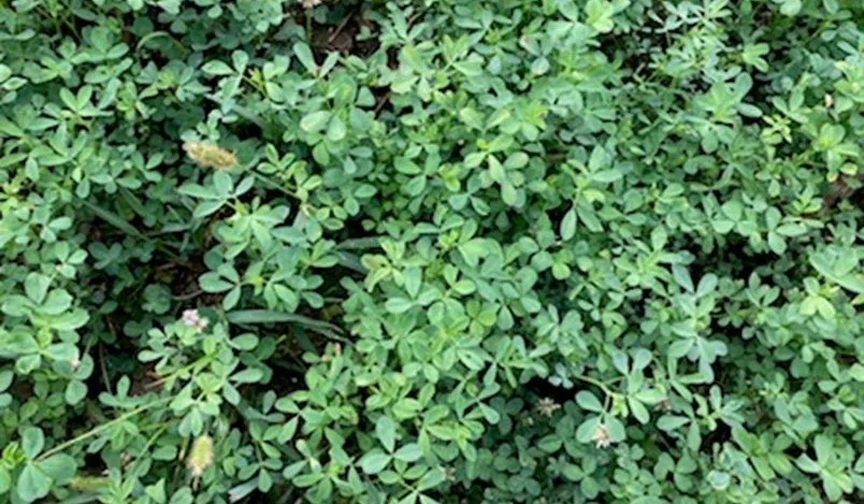
Late summer forage seedings present the farmer with the highest chance of success when done properly. This guide will help ensure it is done properly.
For optimum forage crop establishment, forages should be planted at least 6 weeks before the first killing frost. This means that forage producers in Pennsylvania should seed cool-season perennials between mid-August to mid-September, depending on location. During this time, the weather is still warm enough to encourage establishment while beating the potential extreme temperatures that settle into our state by mid-fall. September rains encourage quick establishment, and the warm days boost growth.
Typically, the ideal time to seed cool-season perennial forages across PA is:
- August 10 – August 15 for Northern PA
- August 15 – August 20 for Central PA
- August 20 – September 10 for Southern PA
When renovating or establishing pastures or hay fields, producers need to pay close attention to two things: seeding depth and seed-to-soil contact. More failures in forage establishment occur because of improper seeding depth than any other cause. Forage seeds are very small and thus have a very small supply of stored energy to support the seedling until it emerges and can begin making its own energy. Seeds placed too deep are not likely to emerge.
Seeding Depth
Optimum seeding depth varies with soil type (sandy, clay, or loam), soil moisture, seeding time, and seedbed firmness but generally is not more than 3/8 inch deep. A rule of thumb is that 5-10% of the forage seeds that are planted should be on the soil surface after seeding. Ensuring that seeds are placed at the proper depth requires a firm seedbed. Accurately regulating seeding depth is extremely difficult if the soil is soft and fluffy. On properly firmed soil, an adult’s footprint should not be deeper than ½ inch, that is the rule of thumb regarding soil firmness. Forage seeds should be covered with enough soil to provide moist conditions for germination but not so deep that the shoot cannot reach the surface.
Seed-to-Soil Contact
Proper seed-to-soil contact can be tricky when no-tilling into an established stand to restore or improve forage stands, and special attention should be paid to seeding depth. Forage seeds must absorb at least their weight in water before germination begins. Unless the forage seed has been planted in saturated soils, the water generally moves into the seed from the surrounding soil. Adequate seed-to-soil contact ensures maximum water movement into the seed in the shortest time. Field situations that do not promote good seed-to-soil contact, such as cloddy or loose soil, generally result in extended germination periods and sporadic emergence. Press wheels on a grain drill or cultipacking after seeding can improve seed-to-soil contact.
If soil conditions are droughty and soil moisture is limited, it would be best to delay planting. No-tilling maintains soil moisture, whereas working the ground for summer seedings can greatly reduce soil moisture. If tilling, especially in a dry year, seeding should be done earlier in the summer to conserve moisture.
Fall, better called late-summer forage seedings, presents the producer with the best opportunity for stand success and production success in the subsequent year. Typically, fall seedlings will produce slightly less than a maintenance field compared to a spring-seeded forage, which can produce as little as 30% of a maintenance forage field. Using this information for seeding dates and field prep will help ensure more success.
Be the first to comment