
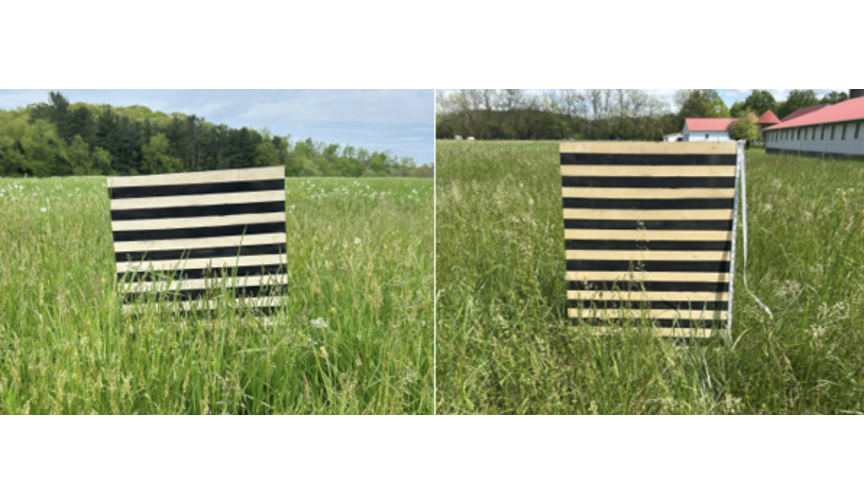
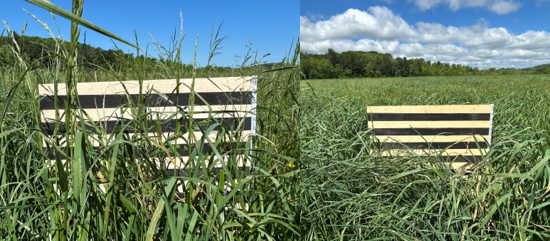
As cool- season grasses are heading, questions are coming in from hay farmers concerned about their height and yield potential.
Even though the grasses appear shorter than normal, Dr Guojie Wang, Penn State Forage Specialist says, “Yield is about the density of the crop, not the height of the crop.” It may not be an above-average first cutting yield but fields that received adequate fertility look much better than fields that have been neglected. Remember one ton of grass hay removes 50 pounds of N, 15 pounds of P205 and 50 pounds of K20, also don’t forget about sulfur, a grass hay crop needs between 20 and 40 pounds of S per acre.
The southern regions of Pennsylvania have been drier than the northern regions, but everyone is below average on rainfall since September 1, 2024. Another trend is the entire state is above average on heat units. Cool season grass starts growing at 32 degrees Fahrenheit, so we use a Growing Degree Calculator with a base of 32 degrees. Since January 1st, the southern regions are about 10% above average and the Northern Regions are 20-30% above average. That is telling us to be prepared for an earlier harvest this season.
| County | PA Region | Moisture (deviation from average) |
Temperature (deviation from average) |
|---|---|---|---|
| Montgomery | Southeast | 35% drier | 10% warmer |
| Lebanon | Southcentral | 29% drier | 8% warmer |
| Franklin | Southcentral | 36% drier | 13% warmer |
| Fayette | Southwest | 22% drier | 10% warmer |
| Centre | Central | 19% drier | 21% warmer |
| Crawford | Northwest | 3% drier | 18% warmer |
| Potter | Northern | 12% drier | 24% warmer |
| Wayne | Northeast | 16% drier | 30% warmer |
Remember a few best management practices when it comes to harvesting. Keep the cutting height above 3 inches, and a 4-inch stubble is even better for the stand longevity and regrowth. Apply required fertility soon after baling based on a soil test, crop removal and expected yield of the next cutting. A well-fertilized competitive grass crop will increase the crop density and assist with weed control. All of these factors play into the resiliency and longevity of a forage stand, especially during periods of poor weather conditions.

Be the first to comment