

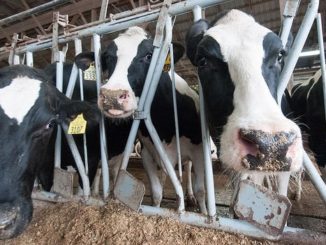
Infected dairy cows experience sudden drops in milk production, lowering milk quality and causing significant economic losses for farmers. Cases of HPAI have also been observed spilling over from cattle to dairy workers. The level of risk for dairy workers from this novel spillover transmission ion poses and how it occurs is still under study.
“The detection of avian influenza in dairy cattle and humans underscores how little we know about how the virus spreads,” said Dr. Miriam Martin LeValley, FFAR scientific program manager. “This grant is determining how the virus spreads between cows and from cows to humans so farmers can protect their workers, herds and livelihoods.”
Researchers led by Dr. Catalina Picasso, MSU assistant professor of large animal clinical sciences at the College of Veterinary Medicine, are detecting and quantifying the risk of environmental HPAI transmission for animals and humans by mapping results from animals and air samples collected at dairy farms experiencing cases of avian influenza. Understanding the route of virus transmission will help identify effective strategies to control its spread.
“By mapping and characterizing H5N1 virus hotspots, we can better identify potential pathways of spread, such as airborne transmission, wildlife contact or cattle movements,” said Dr. Picasso.
FFAR’s ROAR program rapidly funds research and outreach in response to emerging or unanticipated threats to the U.S. food supply or agricultural systems.

Be the first to comment