
Corn remains the backbone of dairy rations across North America, supplying both highly digestible energy and a substantial share of total dietary protein. Its versatility, yield and cost‑effectiveness ensure that corn grain, corn silage and corn byproducts such as corn gluten meal, corn gluten feed, corn germ meal and distillers dried grains with solubles (DDGS) continue to dominate the ration’s ingredient lists.
Corn as a source of protein
In addition to providing energy, corn and its byproducts make a significant contribution to the overall protein intake of dairy cows. In a diet containing 16% crude protein, with 50% of the dry matter as corn silage and 10% as corn grain, over one quarter of the protein originates from corn. This proportion increases further when additional corn byproducts are included in the ration.
The amino acid profile of this protein source does not ideally meet the requirements for dairy cattle. A well-balanced diet provides all the essential amino acids a cow needs with minimum overage. When amino acids are poorly balanced, some amino acids must be fed in excess to satisfy the limiting amino acid, leading to waste. In that case, cows must use extra energy to eliminate the excesses. Conversely, when amino acids are lacking, milk production becomes difficult, and other essential functions like immune response and muscle growth may suffer.
Corn amino acid profile – strengths and weaknesses
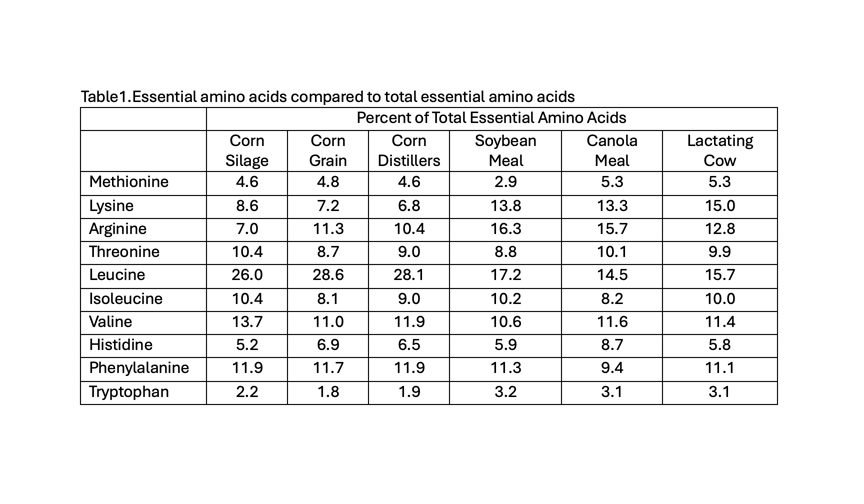
Table 1 (above) provides ratios of essential amino acids for three corn products, soybean meal and canola meal, and compares these to the ratio of essential amino acids needed by a cow producing 100 pounds of milk. Values were obtained using the Cornell Net Carbohydrate Protein System Version 6.5.6.
Corn products share a similar amino acid profile: high in leucine but consistently low in arginine, histidine and lysine, with methionine marginal relative to requirements. These deficiencies limit the efficiency of microbial protein use and restrict the cow’s ability to achieve optimal milk protein output.
Complementary proteins: soybean meal and canola meal
To ensure an adequate intake of amino acids, it’s important to supplement corn with proteins rich in essential amino acids that corn lacks. Soybean meal is a good source of arginine and lysine and provides enough histidine, though it contains relatively little methionine. Of the commonly used
Why this matters
As dairy operations continue to focus on nitrogen (crude protein) efficiency, component yield and return on investment, amino acid balancing is no longer optional. Corn will remain a staple in dairy diets, but its protein must be complemented strategically. Incorporating ingredients such as canola meal or other ingredients rich in limiting amino acids allows nutritionists to maximize the value of corn while improving cow performance and reducing waste nitrogen.
Balancing amino acids rather than crude protein is one of the most cost‑effective ways to improve both cow performance and environmental sustainability in modern dairy systems.

Be the first to comment