
Introduction
The Texas dairy industry is rapidly evolving. With the integration of “Dairy 4.0” technologies, such as automated milking systems (AMS), wearable sensors, and internet of things devices, production has been optimized like never before.
However, this digital adoption has introduced a new, critical vulnerability: cyberattacks. For a modern dairy producer, a cyberattack is no longer just an IT nuisance; it could pose a real threat (Bayer, 2024).
If a hacker disables robotic milkers via ransomware, cows suffer acute physical stress. Manual milking in facilities designed for robotics is practically impossible, leading to immediate impacts on herd health, milk production and overall farm management.
This article outlines the current threat landscape facing commercial diaries and provides actionable, practical steps to secure your farm.
Know your vulnerabilities
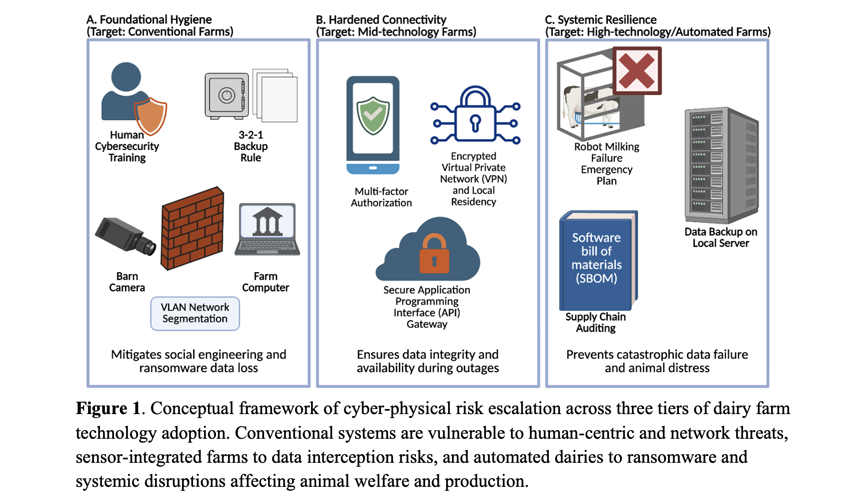
Overall, farms can be classified into three technology adoption tiers based on their infrastructure and level of automation, each associated with distinct cybersecurity risks (Figure1). Conventional or low-tech farms are vulnerable to social engineering attacks such as phishing, spam emails and poorly isolated farm networks where personal devices share connectivity with operational equipment, increasing exposure to unauthorized access.
Sensor-integrated or mid-tech farms face heightened risks due to unencrypted data transmission protocols, allowing attackers to intercept or manipulate real-time data streams that control feeding systems, activity monitors and environmental sensors.
Why would dairies be targeted? Dairy is a cornerstone of the food supply chain, providing essential proteins and fats. Because it is a thriving, critical industry, adversaries know that shutting down a dairy operation creates immediate, high-stakes pressure to pay ransoms (Palatucci, 2026).
Treating Cybersecurity Like Biosecurity
Just as you wouldn’t let a sick animal mingle with a healthy herd, you must not allow unprotected internet traffic to mingle with your farm’s critical operations. Producers must shift their mindset to think about digital threats in two phases: prevention before an attack and response during and after an attack.
Prevention and Preparation
The goal here is to make your farm a difficult target for cyber threats. Analysis of vendor manuals showed that the most common structural vulnerabilities are insecure network communications and factory-default passwords (Neethirajan, 2025). To address these risks, implement the following best practices:
- Take Inventory: Create a master list of every tool, sensor and computer that connects to the internet.
- Change Default Passwords: Never leave a factory-default password on a new piece of equipment. Read the owner’s manual and change it immediately.
- Network Segmentation: Isolate your networks. Your home routers, business office routers and barn/AMS equipment should not share the same network.
- Routine Software Updates: When a vendor sends a software update for a known cyber security issue, apply it immediately. Include update verification in your monthly audits.
- Manage Access: When employees leave the dairy, instantly delete their digital credentials. Educate current employees not to use the same password across multiple websites, and give the consultants, veterinarians and other external farm personnel only limited access to crucial farm database and inventory records.
- Practice Operational Security: Avoid posting sensitive photos of your infrastructure or vendor details on public social media. Keep business phones separate from personal phones. Train employees about spam/phishing emails, potential adversary behaviors and any suspicious activity in their routine technology interface.
Managing Vendors and Supply Chains
A farm is only as secure as its weakest vendor. Producers must take charge of these relationships.
- Ask the Hard Questions: Who is liable for an attack? You must ask your technology vendors and milking equipment providers about their cybersecurity guarantees.
- Shorten the Supply Chain: Where possible, rely on local vendors rather than international ones to build a community-level defense and ensure faster physical response times. Rely on companies that provide local servers and keep multiple backups.
- Monthly Audits: Incorporate cybersecurity into your regular operational meetings. Include your milk co-op, nutritionists and IT staff in discussions about potential vulnerabilities. Run practice drills with your team. “If the parlor screens lock up and demand money, what are our first three steps?
References
Bayer, M. 2024. Ransomware attack paralyzes milking robots — cow dead. CSO Online.
Neethirajan, S. 2025. Safeguarding digital livestock farming-a comprehensive cybersecurity roadmap for dairy and poultry industries. Front. Big Data 8:1556157.
Palatucci, K. 2026. Navigating the 2025 Food and Agriculture Sector Ransomware Landscape. Accessed April 2, 2026. https://www.foodandag-isac.org/post/navigating-the-2025-foodand-agriculture-sector-ransomware-landscape.
Be the first to comment