

For decades, soybean meal has been the benchmark protein source in dairy rations. Its consistent supply, high crude protein content and ready availability have made it a default choice in formulation software and on-farm feeding decisions. But when we move beyond crude protein and take a closer look at the amino acid profile and metabolizable protein supply, a compelling case for canola meal emerges.
Dairy ration balancing is not just about meeting crude protein targets, it’s about delivering the right amino acids to the small intestine. Canola meal deserves a more prominent role in high-producing dairy diets because its amino acid profile aligns exceptionally well with the needs of dairy cows, particularly when used in corn-based diets.
Compared to soybean meal, canola meal provides:
- Higher methionine concentration as a proportion of protein
- A more favorable lysine-to-methionine ratio
- Strong contributions to metabolizable protein yield and profile
Metabolizable protein: Where canola meal shines
Ultimately, what matters to milk production is metabolizable protein with the correct amino acid balance. The ideal source of metabolizable protein is rumen microbial protein: nature has designed microbial protein to provide an amino acid profile that matches the cow’s need for milk protein synthesis. Second to microbial protein is canola meal, with an amino acid profile that closely aligns with microbial protein.
Compared with other protein sources, canola meal provides more metabolizable protein than some highly degradable proteins, such as untreated soybean meal, or cottonseed. It is also less variable than many byproduct ingredients, such as distillers’ grains, making it a consistent, reliable source of metabolizable protein when used as a supplemental protein source.
Turning metabolizable protein into milk protein
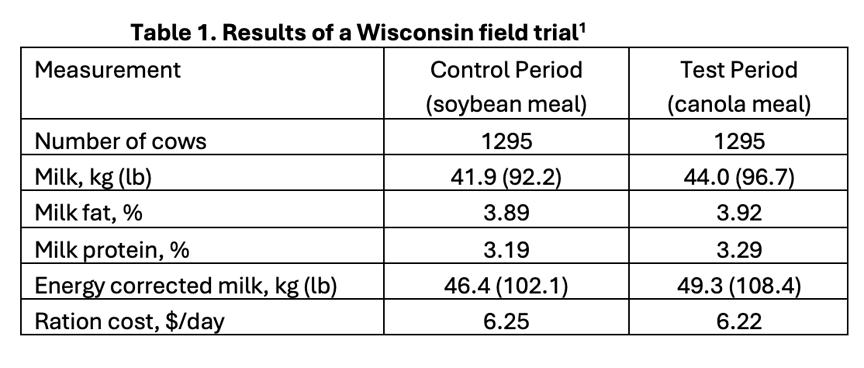
Both field observations (Table 1) and numerous research trials have shown that substituting canola meal for soybean meal at the same dietary protein levels increases milk yield and improves milk protein yield. For dairy producers paid for components, this speaks volumes.
Practical formulation considerations
For dairies considering canola meal or looking to increase its use, here are some practical tips:
- Balance rations for metabolizable protein, looking carefully at matching amino acid levels with cow requirements. This may ultimately result in lower protein diets, and less rumen protected amino acids.
- To compensate for greater milk output, cows often increase their intakes. Consider increasing intake by about 2 lbs / 1 kg when balancing the diet.
- Ensure microbial protein is maximized by supplying adequate fermentable carbohydrate and soluble protein.
- If still hesitant, try partially substituting canola meal for soybean meal.
As nutritionists and dairy producers continue to evaluate protein sources beyond crude protein, canola meal stands out as a strategic ingredient for balancing high-performing dairy diets.
1 Faldet, M. 2018. Evaluating feed financials. 2018. Proceedings 4-State Dairy Nutrition Conference, pp.152-157.

Be the first to comment