
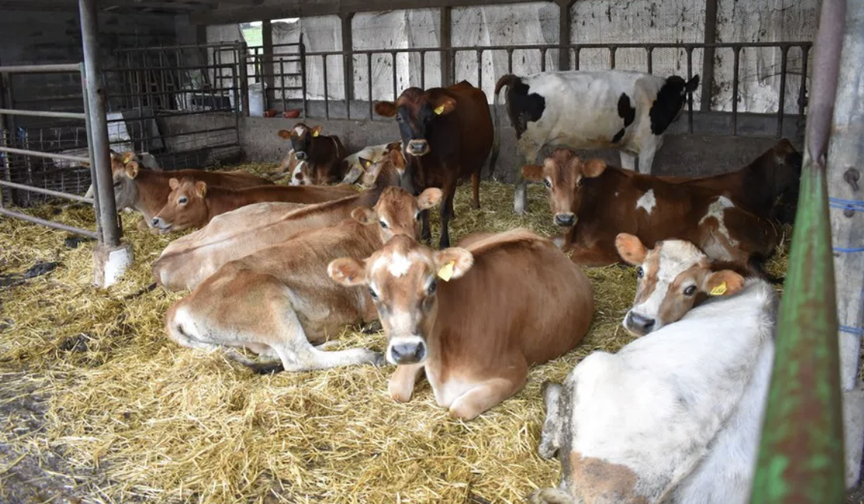
Why weight, structural maturity, and consistent growth monitoring matter before breeding and first calving.

Every replacement heifer represents an investment in the future of the herd. Long before she produces her first calf or enters the milking string, months of feed, labor, health care, and management have already been invested in her development.
The question isn’t simply whether a heifer reaches breeding age—it’s whether she reaches the right weight and structural maturity at the right time.
Research from Texas A&M AgriLife Extension, the University of Florida IFAS Extension, and the University of Wisconsin–Madison Division of Extension reinforces what many producers already know: age alone doesn’t tell the whole story. Body weight is a key indicator of whether replacement heifers are developing as intended. Reaching appropriate targets before breeding and first calving can influence reproductive success, development costs, and long-term productivity.
Growth Targets Matter
The goal of a replacement development program isn’t simply to produce bigger heifers. It is to develop females that reach breeding and first calving at the appropriate stage of maturity.
When growth falls behind, however, the consequences can extend well beyond a lighter animal.
The Cost of Falling Behind
Replacement heifers that fail to reach appropriate weight targets may require additional time before breeding, extending the nonproductive period while feed, labor, and development costs continue to accumulate.
Delayed breeding often leads to delayed first calving, reducing the efficiency of the replacement program and creating greater variation within the herd.
For dairy producers, age at first calving has a direct financial impact. The University of Wisconsin–Madison Division of Extension reports that dairy heifers have traditionally been managed to calve between 22 and 24 months of age. However, each month beyond 22 months may add approximately $100 per animal in development costs. A heifer calving at 24 months could therefore represent an additional $200 invested before she begins generating income.
This does not mean heifers should be bred early simply to reduce costs. Undersized heifers can experience more problems at calving and may produce less milk over their lifetime. The goal is to help each heifer reach the appropriate size and maturity efficiently—not to reach a particular birthday as quickly as possible.
Regardless of operation type, missing growth targets often means spending more resources to achieve the same end goal.
Age Is Only One Part of Breeding Readiness
Calendar age can provide a general management guideline, but it does not confirm that an individual heifer is ready to breed.
According to the University of Wisconsin–Madison Division of Extension, dairy heifers should generally reach:
| Development stage | Recommended target |
| At breeding | 55% of mature body weight |
| At breeding | 90% of mature structural growth |
| After first calving | 85–90% of mature body weight |
| After first calving | 95% of mature structural growth |
These targets should be based on the mature cows within the individual herd rather than breed averages alone. Herd-specific measurements better account for differences in genetics, nutrition, housing, and management.
For example, if the herd’s mature cows average 1,500 pounds, the target breeding weight would be approximately 825 pounds:
1,500 pounds × 55% = 825 pounds
Weight should also be considered alongside structural development, such as hip height or height at the withers. Together, these measurements provide a more complete picture of whether a dairy heifer is physically prepared for breeding.
Why Visual Estimates Aren’t Always Enough
Research cited by the University of Wisconsin–Madison Division of Extension found that dairy farmers incorrectly estimated animal weight 81% of the time, with estimates differing from actual weight by an average of 214 pounds. Veterinarians underestimated weight 65% of the time and were off by an average of 140 pounds.
Across a group of replacement heifers, those differences can be easy to miss until valuable opportunities to adjust nutrition or management have already passed.
Objective weight records allow producers to monitor development throughout the growing period instead of relying solely on visual assessments. More importantly, they can identify heifers beginning to fall behind expected growth rates, creating an opportunity to adjust nutrition, health management, or feeding strategies before those differences become more difficult to correct.
Choosing a Measurement Method
A properly calibrated livestock scale provides the most accurate body weight and can be used for replacement management and other weighing needs throughout the operation.
Weight tapes can provide an estimate when a scale is unavailable. According to the University of Wisconsin–Madison Division of Extension, weight tapes may estimate weight within 3–5% of actual body weight for animals weighing more than 330 pounds. Accuracy may decrease to within 5–8% for calves weighing between 110 and 330 pounds.
Whatever method is used, consistency matters. Scales should be placed on a level surface, zeroed between animals, cleaned after use, and calibrated regularly. Weight-tape measurements should also be taken consistently, with the animal standing on level ground and her head upright.
What Weight Trends Can Tell You
Regular weight measurements don’t diagnose problems—but they do provide early indicators that something deserves a closer look.
| Weight trend | Potential areas to evaluate |
| Heifers below target weight approaching breeding or first calving | Evaluate nutrition, growth goals, and the overall development program |
| Slower-than-expected average daily gain | Review feed quality, ration balance, and health management |
| Inconsistent growth within a group | Assess feed access, stocking density, and grouping strategies |
| Growth plateau over multiple weigh-ins | Investigate health, environmental conditions, or management changes |
| Animals consistently above target weights | Reevaluate the nutritional program and development objectives |
| Heifers reaching the target age but not the target size | Delay breeding and determine why growth has fallen behind |
| Heifers reaching target size earlier than expected | Review breeding plans using both weight and structural maturity |
Monitoring these trends gives producers an opportunity to adjust before missed growth targets begin affecting reproductive performance or overall replacement efficiency.
Better Information Leads to Better Decisions
A single weight provides a snapshot in time. A series of weights tells the story of how a replacement heifer is developing throughout the growing period, helping producers separate temporary variation from meaningful trends.
Tracking weight throughout development helps producers:
- Monitor average daily gain
- Evaluate nutrition programs
- Identify animals falling behind growth targets
- Compare development across groups
- Establish herd-specific breeding targets
- Support breeding decisions with objective data
- Build historical records that improve future replacement programs
Rather than reacting after problems become visible, producers can use weight trends to make informed management decisions throughout the development period.
Keeping Replacements on Track
Replacement heifers represent the future of every cow herd and dairy operation. While genetics, nutrition, and health all play important roles in their success, those investments are most effective when producers know whether animals are progressing as expected.
Age can help establish a timeline, but weight and structural maturity provide a clearer indication of breeding readiness. By measuring replacements regularly and comparing their progress with herd-specific targets, producers can make timely decisions that support efficient development, successful breeding, first calving, and long-term productivity.
Sources
- UW–Madison Extension: Target Age and Weight When Breeding Dairy Heifers
- UF IFAS Extension: Management of Replacement Heifers for a High Reproductive and Calving Rate
- Texas A&M AgriLife Extension: Replacement Heifer Selection, Development, and Reproduction

Be the first to comment