
Survey of U.S. dairy producers with digesters finds 95 percent did not expand herds because of the technology.
U.S. dairy production has continued its decades-long consolidation into fewer, larger operations[. Recent news coverage has suggested that the growth in anaerobic digester adoption over the past decade may have encouraged this expansion. Whether digesters influence herd-size decisions, however, has not been well documented.
Key findings:
- 95 percent of farms did not increase herd size because of their digester.
- Cost share programs remain a top driver of adoption and future investment.
- Long-term markets for renewable energy and carbon credits matter most for new digesters.
- 44 percent of producers plan to reinvest in or build new digester infrastructure.
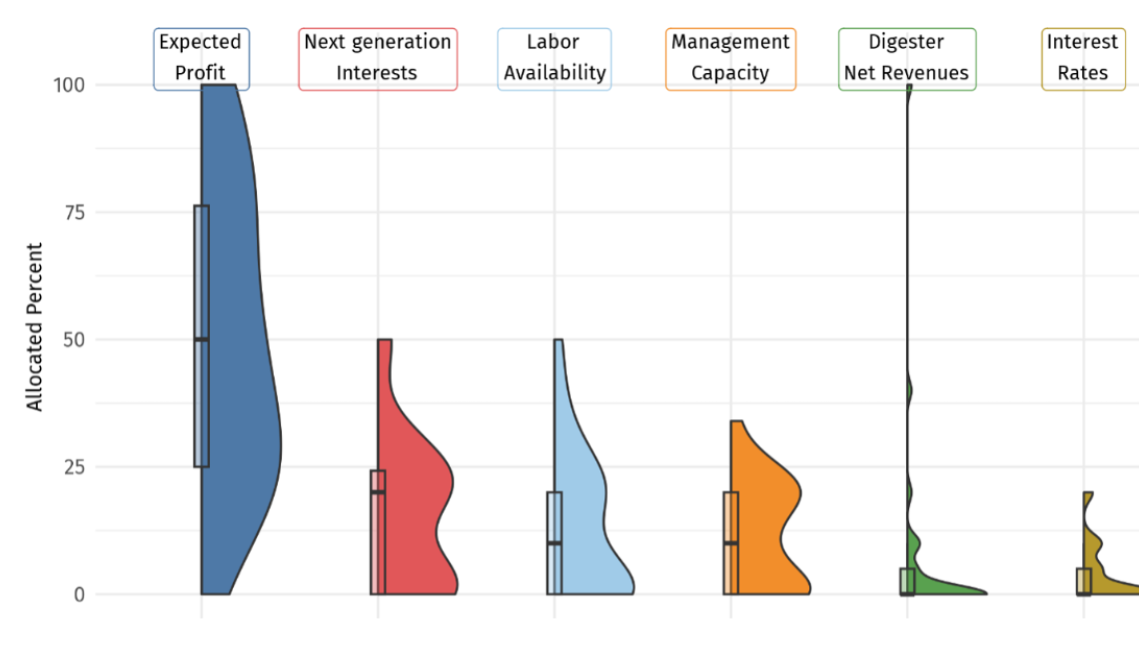
Producers ranked expected dairy business profit as the most important factor in decisions to expand their herds, followed by the interests of the next generation and labor availability. Digester net revenues played little to no role, and 95 percent of farms did not increase herd size because of their digester. Figure 1 from the peer-reviewed publication shows how producers weighted six factors in these decisions.
A statistically significant positive correlation between larger herd size and renewable natural gas (RNG) production for off-farm sale suggests that larger operations are more likely to adopt biogas to RNG pathways, rather than biogas to electricity pathways. Most dairy manure digesters generate more biogas energy than is used on the farm, resulting in some off-farm use whether electricity or RNG is produced.

Be the first to comment