
The T.C. Jacoby Weekly Market Report Week ending July 2, 2021
Class III and settled today not far from where they finished last Friday.Those prices are generally disappointing for dairy producers, but they are not low enough to significantly slow milk output. The dairy herd is massive, and it’s likely to stay that way for a while.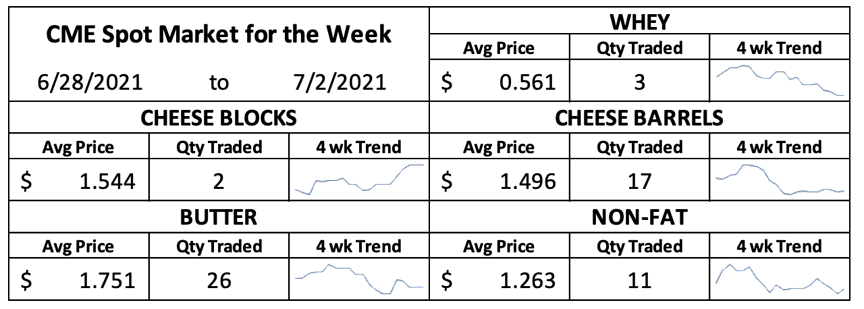
The dairy trade checked out early and the markets coasted into the long holiday weekend. Class III and Class IV futures settled today not far from where they finished last Friday. Class III futures range from $16.71 to $18.24 per cwt. in 2021. Class IV contracts sit comfortably above $16. Those prices are generally disappointing for dairy producers, particularly as feed costs and other on-farm expenses rise. But they are not low enough to significantly slow milk output. The dairy herd is massive, and it’s likely to stay that way for a while.
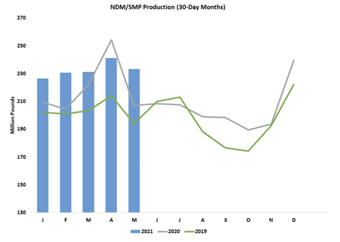
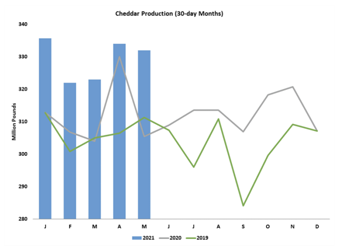 Formidable milk production added up to a mountain of dairy products in May. Year over-year comparisons are skewed by all the dumped milk and processing headaches the industry suffered a year ago. But the broader trends are clear. New cheese processing capacity has boosted Cheddar output, which tops that of the first five months of 2020 by 5.6%. Total cheese production bested May 2020 by 5%. Although butter output fell short of the unusually high volumes of the prior year in March and April, it remains historically high and exceeded May 2020 production by 7.6%. Driers ran hard in May, and combined production of nonfat dry milk (NDM) and skim milk powder reached 241 million pounds, the highest May total on record and 12.7% more than the prior year. Dry whey production remains in the doldrums.
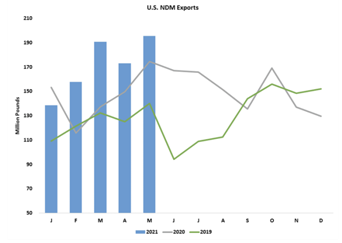
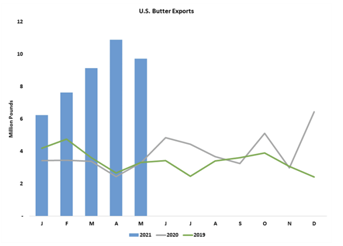
 Thankfully, exports have provided an outlet. Despite port backlogs, a container shortage, and a lack of truckers, dairy exports soared in May. The weak dollar and competitive pricing helped to keep product moving. U.S. NDM exports accelerated to an all-time high of 196 million pounds thanks to big shipments south of the border and to Southeast Asia. An uptick in milk powder exports to Algeria, where Europe typically dominates, suggests that European stocks are scant and the U.S. may continue to gain global marketshare. Dry whey exports were strong too, up an impressive 30% from May 2020. For the year to date, whey exports are running at their best pace since 2014. Cheese exports faltered, but butter sales climbed. So far this year the U.S. has sent slightly more butter abroad than it has taken in, marking its first major stretch as a net butter exporter since 2014.
 Strong exports buoyed the powder markets all spring, but values retreated this week. Domestic buyers are quick to back off as asking prices climb, driving the market downward despite reliable demand. It’s hard to argue for higher prices with so much milk to go around. CME spot NDM slipped 0.75ȼ this week to $1.2575 per pound. Spot whey powder fell 2.75ȼ to 55ȼ. That’s a significant decline in a market that has helped to prop up Class III values for months. Despite modest dry whey production and booming exports for whey powder and NDM, stocks of both products grew in May.
 Cheese and butter bounced back this week. CME spot butter rallied 2.25ȼ to $1.74. Barrels added a penny and reached $1.50. Blocks staged a more impressive comeback, rising 6.5ȼ to $1.555. Still, cheese is inexpensive, reflecting onerous output.
USDA shocked the feed markets on Wednesday with its annual assessment of the acreage mix. Amid unusually high corn prices this spring, the grain trade expected that farmers had stepped up corn seedings to nearly 94 million acres. But, according to USDA, farmers planted 92.7 million acres of corn this spring. That is 1.6 million acres more than they intended to plant in the March Prospective Plantings report and the highest corn acreage since 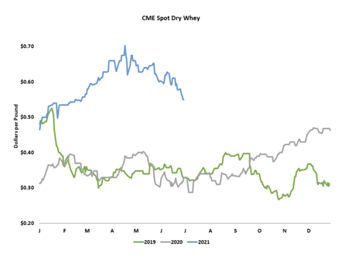 the 2016-17 crop year. But it was significantly lower than the trade had penciled in to its balance sheets, and the location of the new acres will not help matters. Farmers shifted 100,000 acres away from corn and into soybeans in Iowa, the nation’s most productive corn state. Nebraska ranks second in average corn yield; plantings dropped by 200,000 in the Cornhusker State. Farmers in the drought-stricken Dakotas and Minnesota added a combined 1 million corn acres, but the harvest is likely to disappoint. Demand remains daunting, and the new acreage figures leave little room for error on crop yields. Meanwhile, frost damage in southern Brazil and Paraguay shrunk the exportable crop in South America. As we head into the critical pollination season, the grain markets are primed to react violently to the tiniest shifts in the forecast.
The grain and oilseed markets soared on Wednesday but faded today. September corn settled today at $5.92 per bushel, up more than 60ȼ since last Friday. August soybeans added an astounding $1.305 and closed at $14.3325. After a big setback last week, August soybean meal regained all that it lost and then some. It closed today at $381.50 per ton, up $32.60.
Original Report at: https://www.jacoby.com/market-report/markets-coast-into-the-long-holiday-weekend/

Be the first to comment