
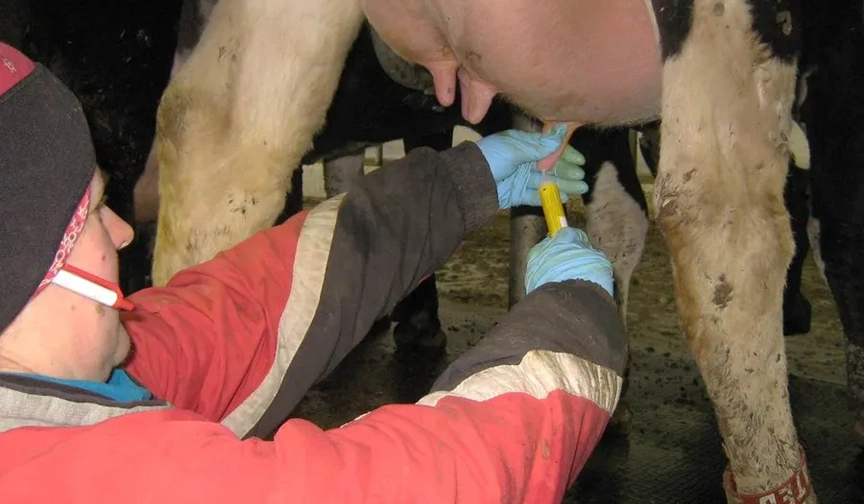
The role of nutrition in mastitis prevention is reviewed relative to its impact on immune response of dairy cows
- Mastitis is the result of a bacterial invasion of the mammary gland where the immune system is either weakened or overwhelmed
- The immune system has many different components, both pathogen specific and nonspecific, which can reduce or eliminate bacterial invasion of the mammary gland; all of which are sensitive to nutritional status of animal
- Of all the possible nutrients that could affect immunity and mastitis incidence, vitamin E and selenium, zinc and vitamin A have been well documented
- Physiologic changes associated with the dry period and initiation of lactation predispose the cow to increased mastitis susceptibility
- Proper nutritional management of the transition cow in conjunction with pathogen reduction in the cow’s environment are critical mastitis preventive measures
Introduction
In financial terms, mastitis is the most costly disease in the dairy industry, totaling approximately $1.8 billion dollars lost annually. Cost of a single case of mastitis ranges from $104 (Hoblet et al. 1991) to $200 (NMC, 1996). These losses are a result of reduced milk production, discarded milk, replacement costs, extra labor, treatment and veterinary service costs. Increased prevalence of mastitis also results in greater risk of antibiotic residues in human food as well as milk quality issues.
Mastitis is an inflammation of the mammary gland. The term inflammation describes the response of a tissue or organ to injury. The purpose of inflammation is to destroy or neutralize infectious agents and associated toxins, thus allowing the gland to return to normal function. Bacterial invasion of the mammary gland occurs by bacteria entering the teat sphincter and moving into the teat cistern and beyond. Bacterial presence within the udder results in the movement of white blood cells into the gland to help fight the disease. An uninfected mammary gland will maintain a low total cell count (< 25,000 to 200,000 cells/ml), with most cells being macrophages. Macrophages can be viewed as special surveillance cells, constantly monitoring for the presence of foreign particles or microorganisms. Once gland tissue becomes infected, numerous neutrophils will be drawn to the mammary gland, resulting in increased somatic cell counts.
Outcome from bacterial invasion of the udder depends upon pathogenicity of the bacterial species involved and competency of the cow’s immune system. In the best case scenario, the bacteria are cleared without subsequent colonization of mammary tissues. Successful bacterial colonization of mammary tissue can result in a wide spectrum of disease outcomes, ranging from subclinical (e.g., no obvious change to udder or milk) to peracute clinical (e.g., severe systemic disease symptoms with dramatic changes to udder and milk secretion) mastitis (NMC, 1996). Contagious mastitis pathogens such as Streptococcus agalactia, Mycoplasma bovis and Staphylococcus aureus are most often associated with subclinical mastitis infections, recognized as elevated somatic cell counts (>200,000 cells/ml). Coliform bacteria such as E. coli and Klebsiella sp. are most often associated with acute clinical mastitis cases. The interaction between bacterial pathogenicity and immune response dictates the ultimate disease severity and duration. For example, differing strains of Staphylococcus aureus, based on virulence factors associated with capsular polysaccharides, can result in subclinical as well as acute clinical mastitis and everything in between.
The objective of this presentation is to provide an overview of how nutrition during the dry period and early lactation can influence a cow’s susceptibility to mastitis. Emphasis will be on how diet influences the immune system.
Immune Defenses Against Mastitis
The immune system is a highly specialized, coordinated set of cells and tissues that have a primary role of body surveillance for foreign antigens. Foreign antigens are any macromolecule (protein, lipid, polysaccharide) or microorganism (bacteria, virus, mold, protozoan) that does not contain a special host-specific identification code recognized as “self”. Many pathogenic organisms have evolved exquisite mechanisms to evade the host immune system and facilitate disease propagation. Staphylococcus aureus can survive within phagocytic cells or become walled off within mammary tissue, thus evading immune detection and preventing its elimination.
The immune system is often viewed solely as specialized white blood cells (leukocytes) that either engulf and destroy (e.g., phagocytosis) invading microorganisms (cell-mediated immunity) or respond to vaccines to produce antibody (humoral immunity). Overlooked components of the immune system are physical barriers and non-specific immunity. The immune system can be viewed as a three-tiered defense starting with physical barriers and non-specific and specific immune responses. Physical barriers and non-specific immune responses comprise the innate or natural immunity. These immune responses are not antigen specific, nor do they have any memory response. Cell mediated and humoral immune responses comprise active immunity and are antigen specific and have memory.
Physical barriers of the udder are anatomic features of the teat and associated structures that pose a physical blockade to invading bacteria at the teat sphincter, the point of entry. These anatomic features include the teat skin, teat sphincter muscle and keratin plug. Teat skin that has abrasions, cracks or is chapped increases contagious bacteria colonization of the skin greatly increasing bacterial numbers around the teat sphincter and thusly increasing risk of bacterial penetration through the teat duct. Following milking the teat duct is dilated, greatly increasing the risk of bacterial penetration. Contraction of the teat sphincter takes time, which is why providing cows fresh feed following milking is promoted. This practice allows time for the teat sphincter to constrict, closing off the teat opening, before cows return to their stalls and have direct contact with the environment. The keratin plug is produced by skin lining the teat duct. Keratin is gummy, has bacteriostatic activity and completely occludes the teat canal.
Other non-specific immune responses include phagocytic cells (i.e., somatic cells), inflammatory response, complement cascade and lactoferrin. Phagocytic cells of various types are by in far the most important mediator of mastitis infections. All though there are a number of cell types, neutrophils and macrophages account for the majority of phagocytic cells in mastitis infections. Macrophages play multiple roles in coordinating activation of the specific immune response. After engulfing a foreign antigen, macrophages will present these on their cellular surface to stimulate lymphocytes to respond.
The inflammatory response produces many of the signs associated with clinical mastitis, heat: redness and swelling of the udder. Inflammation is a response to activated macrophages resulting in increased permeability of blood vessels allowing fluids, minerals, proteins (albumin and immunoglobulins) to move into the infection site. Neutrophils are then attracted to the site and move from surrounding blood vessels. Complement proteins also move into the inflamed area and promote phagocytosis and killing of bacteria by neutrophils and macrophages. Lactoferrin is a specialized protein synthesized in the udder that binds iron making it unavailable for bacterial growth, especially coliform bacteria.
Lymphocytes are specialized leukocytes that are involved in the active immune response, which includes cell mediated and humoral immunity. T-lymphocytes coordinate and stimulate the immune response as well as provide cytotoxic cells. B-lymphocytes are responsible for the production of antibody (i.e., immunoglobulin). Both T and B lymphocytes respond only to a very specific antigen, thus the term specific immunity. When T and B lymphocytes respond, in addition to generating clones of their effector (active) cells, they produce memory cells. These memory cells are retained for periods of time allowing the animal to respond more immediately if the same antigen is encountered. This is the function premise behind vaccination protocols: generation of memory cells to a specific pathogenic agent.
Nutritional Factors Impacting Mastitis
All of the essential nutrients, e.g., energy, protein, macrominerals, microminerals and vitamins, can influence some aspect of immune function (Table 1). Nutritional status can have direct and indirect effects on immune function.


Be the first to comment