

The Economist magazine estimates that consumers in 21 rich countries saved $3+ trillion more than normal in the first nine months of 2020. In the U.S., excess savings could be more than 10% of GDP if you include the most recent stimulus bill. In many parts of the world, the richest consumers have accumulated most of the excess savings, but thanks to the large direct payments and generous unemployment benefits that often paid better than the job that they lost, many lower income consumers in the U.S. are also sitting on excess savings. With President Biden declaring that there will be enough doses of vaccine for all adults to start receiving it by May 1st and covid restrictions already being lifted in some parts of the country, the next question becomes, will we see a surge of consumer spending and what will it mean to the dairy market?
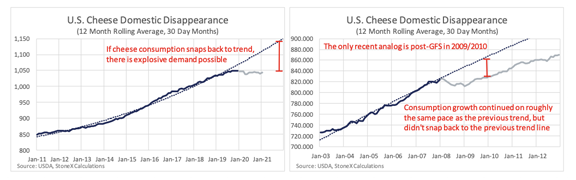
There are a lot of assumption and estimates, but when I work through what I think we’ll see for food service sales, retail, schools reopening in the fall, packaged foods (like frozen pizza) and government purchases I come out with a 2.3% increase in domestic cheese consumption for 2021. The evidence continues to suggest that an average U.S. restaurant meal has more cheese in it than an average meal prepared at home. A shift back toward food service should be supportive for cheese demand, but it will be partially offset by declines in retail, packaged foods and government purchases compared to 2020.
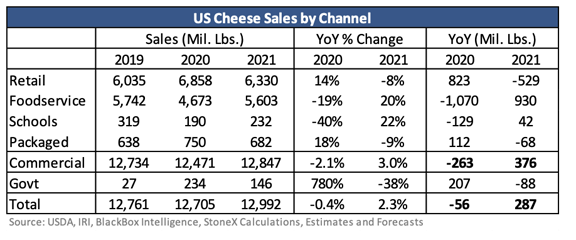
Many consumers have excess savings, and after more than a year of restrictions, I’m sure we are going to see better food service sales. But if you went out to dinner 2 times a week pre-pandemic, maybe you go out 3-4 times for a while, but that likely drops back to 2-3 again as the novelty wears off (and the excess savings dwindle). Also, there aren’t any vaccines approved for kids under the age of 16 in the U.S. yet, which might limit family trips to restaurants this summer (at least for indoor dining). Then you still have people who will continue working remotely at least part of the week, which will keep mid-day restaurant sales in cities from hitting pre-pandemic levels. I think we’re looking at a pretty healthy 2.3% increase in cheese consumption, but not 4-5% growth.
For more details and forecasts sign up for a free trial of our market intelligence service.
https://www.stonex.com/Commodities/Dairy/Capabilities/dairy-market-intelligence-packages/
Editor’s Note: Nate Donnay is the Director of Dairy Market Insight at StoneX Financial Inc. and has been applying his interest in large complicated systems and statistical analysis to the international and U.S. dairy markets since 2005. As a consultant, he has worked with clients at all levels of the dairy marketing chain from the farm level up to processors and packaged foods companies, food distributors and restaurants as well as connected industries like banks, private equity groups, government agencies, and industry associations. Through ongoing reports or one-off client specific projects, he helps them understand the short and long-term trends and the underlying relationships driving the market and what that means to their businesses.


Be the first to comment