

Read the latest issue of Dairy Market Drivers, a bi-weekly report from IDFA partner Ever.Ag. Dairy Market Drivers features spotlight data, key policy updates, and a one-minute video that covers timely topics for the dairy industry.
Dairy Market Drivers: Protein Demand and Supply; New Zealand Milk Production; and The Fourth of July in a Minute!
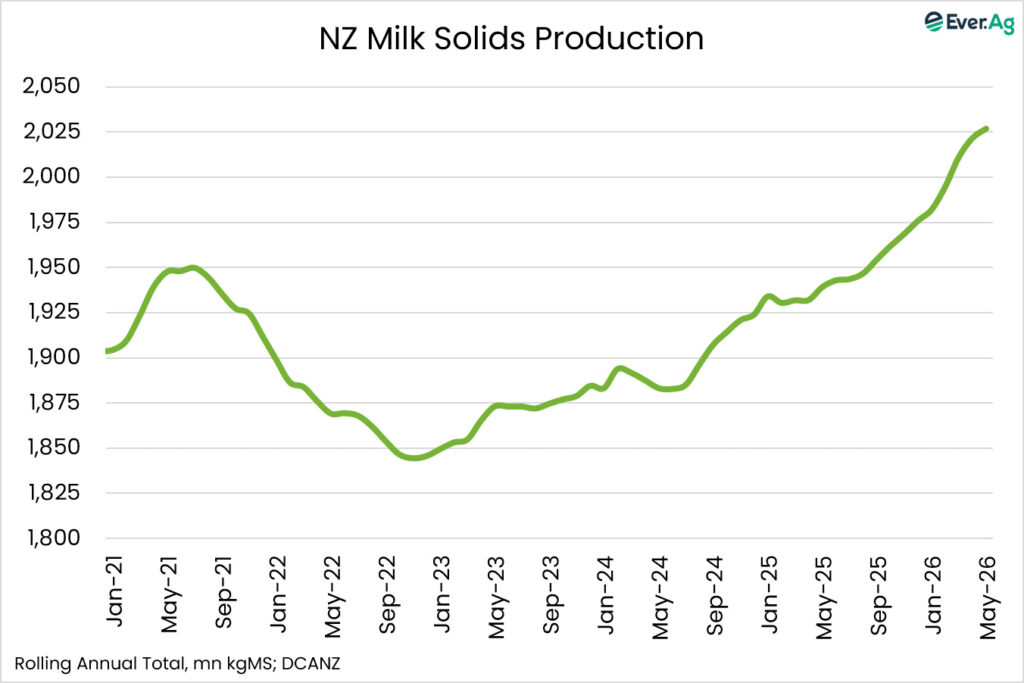
Quick Bites: New Zealand Output Broke Records
- New Zealand’s 2025-2026 milk production season was one for the record books. In the season that ended on May 31, both milk and milk solids output reached new highs.
- The season finished strong, with May milk volume up 3.6% year-over-year. That brought the full-season volume to 2.03 billion kilograms, up 5.3% compared to 2024-2025.
- From a milk solids equivalent standpoint, output for the season increased 4.5%, climbing to 109 million kilograms. According to Dairy Companies Association of New Zealand, milk solids output was 4.1% higher than the previous season record set in 2021. May production put an exclamation mark at the end of the season, with milk solids equivalents up 5.0% compared to 2025.
- Strong farmgate prices helped keep milk flowing throughout the season. Culling was down year-over-year despite strong beef prices as farmers kept cows in the herd to take advantage of good milk prices instead.
- Favorable weather conditions also maintained pasture growth and provided ample feed supplies in the 2025-26 season. Forecasters expect an El Niño to influence weather patterns in New Zealand and across the world over the next 12 months, increasing the chance of drought and tighter feed resources in 2027. However, New Zealand dairy producers will begin the 2026-27 milk production season in a good financial position following the profitable season that just wrapped up.
Today’s Special
- Protein has become one of the most powerful trends shaping current food and beverage innovation. The Associated Press reported that the average U.S. supermarket now carries nearly 38,700 products promoting their protein content, highlighting how quickly protein claims have spread beyond traditional sports nutrition.
-
Retailers are responding to consumer demand by expanding protein-focused assortments across the store. Costco recently pointed to strong sales of protein products and continues to introduce new protein-focused private-label offerings. As protein becomes a larger purchasing priority for consumers, retailers are dedicating more shelf space to products that can deliver both convenience and nutritional benefits.
- Manufacturers are finding new ways to incorporate protein into everyday foods. Product launches are now extending well beyond shakes and powders, with a growing number of protein-rich options appearing in categories traditionally associated with indulgence rather than nutrition. Individuals on GLP-1 weight loss medications and health-focused consumers alike are reaching for more nutrient-dense offerings.
- Demand growth is beginning to strain available whey protein supplies. Whey is a byproduct of cheese making, and the U.S. makes a lot of cheese. Excess whey is exported to China and other countries, but domestic demand has been keeping more whey stateside. That’s part of the reason why whey protein concentrate and whey protein isolate exports to China declined 47% in the first four months of this year versus the same period in 2025.
- Protein is in high demand, driving prices nationally. According to Ever.Ag, U.S. whey protein concentrate (80% protein) prices have increased more than 250% over the past year to exceed $13 per pound. The price of whey protein isolate, a more refined version with at least 90% protein, has climbed roughly 150%.
- Dairy manufacturers are responding to the uptick in demand by investing for impact, including in whey protein production. Dairy processors have invested more than $1.6 billion in dairy protein processing capacity. This will eventually improve supplies, but output expansion will take some time. Until then, consumers will likely see higher prices when shopping for dairy-derived proteins.



Be the first to comment