

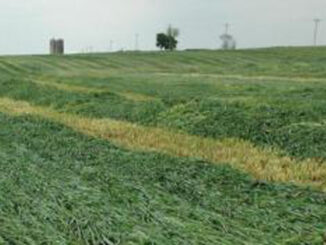
Diminishing levels of water reduces yields and can wipe out some harvests altogether.
Drought impacts the entire agribusiness industry — not only farms, ranches and fisheries, but the food production and distribution sectors as well, ultimately impacting consumers who face higher prices at the supermarket.
The U.S. government is taking steps to address the impacts of drought. In May, the Biden administration and the states along the Colorado River — Arizona, California, Nevada, Wyoming, Colorado, Utah and New Mexico — agreed to a plan that would require the three Lower Basin states of Arizona, California and Nevada to save 13% of Colorado River water by the end of 2026.
What agribusinesses, producers in particular, should understand is that water scarcity may be the new normal. That makes risk mitigation against drought an essential part of any agribusiness strategy.
Developing a risk mitigation plan to minimize drought risk can help those in agribusinesses prepare for dryer than normal conditions.
Assess your risk
First perform a risk factor assessment to help inform which practices can better mitigate the impacts of drought in your area. While the intensity and probability of drought may be impossible to predict, different methods can reduce drought’s overall impact.
Take microirrigation for example. Microirrigation is a low-volume and low-pressure system for crops that directly applies water and fertilizer to plants or trees, reducing the amount of water used. This method is popular in California, where 48% of the state’s farmland is watered with drip, micro or subsurface irrigation systems.
Timing is everything with this strategy. Microirrigation allows a producer to water crops at different times of the day when crops need it most. Farmers can control the amount of water used and can water up to four times a day based on the crops’ needs versus blanketing the entire area with copious amounts of water one time a day.
Knowing your soil type is the first step in using this system effectively. For example, sandy soil conditions require watering in the evening.
Creating an irrigation schedule, rotating crops, and practicing residue and tillage management, along with implementing and improving the management of existing
irrigation systems can also help those in the agribusiness mitigate and better prepare for drought.
Look at the warning signs
Determining the best practices for watering is just a first step when it comes to combatting drought conditions. Monitoring your water levels and creating an impact assessment can help identify drought risk. This process allows farmers and food manufacturers to secure proper insurance and government assistance should drought occur.
There are multiple tools available to obtain short-term and long-term weather outlooks such as using the National Weather Service’s Climate Prediction Center, which can assess weather up to two weeks in advance. It may be appropriate for you to purchase your own moisture evaluation tools to assess your soil’s water levels vs. depending on a vendor’s assessments.
Growers might also consider parametric coverage for crops that are otherwise uninsurable. Parametric coverage insures against an event happening with payouts based on the magnitude of the weather event, no matter the damage to the crop or buildings.
Get help
Low water supplies, extreme heat and surging power demand that cause rolling blackouts can threaten the ability of many producers to properly irrigate their crops.
Federal government assistance programs can help mitigate the financial losses of drought while conservation programs help farmers become more resilient to drought.
For example, the USDA Risk Management Agency is providing financial assistance to farmers in drought-affected areas, which is especially helpful for small agribusinesses. In addition, the U.S. Department of Agriculture’s Regional Conservation Partnership Programis providing funding to help with climate-smart agriculture and conservation efforts.
Obtaining federal crop insurance is an essential to mitigate risk — especially for larger operations.
Educate yourself and your team
The agriculture industry is already operating under considerable pressure, with a shortage of labor, rising costs overall, and heightening competition from foreign products that are pushing margins ever tighter.
Consider harnessing public-private partnerships, which were established not only to encourage innovation but to provide aid and technical assistance for droughts as well. For example, the Environmental Quality Incentives Program was established to provide
financial and technical assistance to agribusinesses. The goal of these partnerships is to help identify additional water conservation methods, improve soil quality, create soil additives, and offer irrigation methods.
Think outside the box and look at employee management as well. The agriculture industry is as impacted by the current labor shortage as all the other organizations in the United States. Employers who understand and know how to use the tools and resources available to manage their employees more effectively will help ensure that your seasonal workers come back, saving time and resources on training. This is especially important for those with employees using an H-2A visa, which allows foreign workers to come the United States and work temporary agricultural jobs.
In conclusion
Ultimately, addressing drought-related risks takes a multi-pronged approach. So limit the threat of a water shortage by incorporating drought preventative measures into your agribusiness strategy.
Editor’s Note: As a Farm & Agribusiness leader at HUB International, Leif Erickson works directly with farm and business owners to help structure insurance solutions and risk management programs to protect their operations and mitigate their exposure to potential risks. Leif was born and raised on a small dairy farm in the Blanchardville, WI area and has a true passion for helping farmers. This background has helped Leif develop programs specific to farming and agriculture, including an exclusive Environmental Liability program.

Be the first to comment