
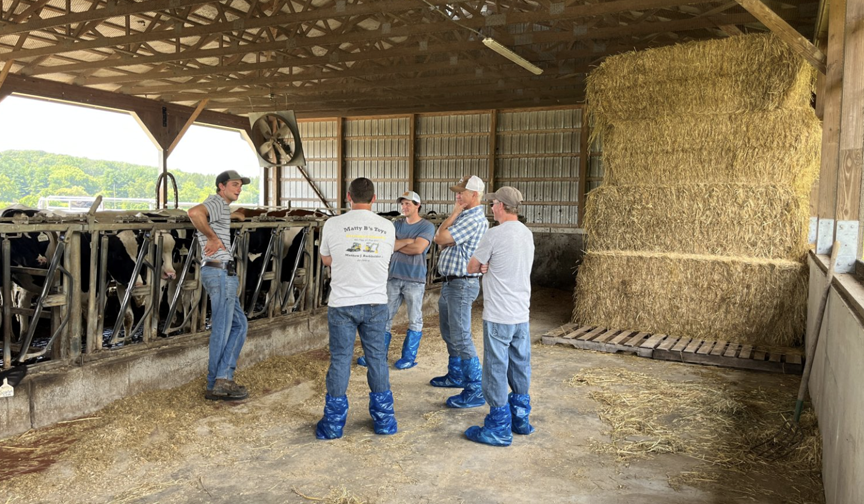
When it comes to renting land or purchasing a farm, knowing your numbers, dissecting your data, and understanding your cash flow are all important steps in the process. For Lonnie Horst, a Pennsylvania dairy farmer from Berks County, an outside consultant helped him create rental agreements, provide documentation to banks, and determine whether a new purchase was right for his specific situation.
“I was renting a farm, and I was going to buy the cows. We would share a milk check and decided we should probably draw up a plan. Before we could get a loan from a bank for cows, we had to have written documentation of how it was going to work,” Lonnie said. “I had my consultant, Dr. Reed, sit down with us and draw up a plan for [me and my landlord]. We wrote up rules and regulations between both parties and wrote down an equal share of the milk check. That’s what we took to the bank. I really appreciated Dr. Reed’s advice.”
A few years later, Lonnie was considering another big undertaking: purchasing a nearby farm. Looking for an outside perspective, he turned to his consultant to help put numbers onto paper.
“Dr. Reed came with me to look at the farm, so I could get his general idea of what he thought of the property. We talked about what the seller wanted, and he drew up a really nice spreadsheet for me.
Whether you’re navigating a family business transition, or trying to create a partnership with a landlord like Lonnie did, he says an outside consultant can be the neutral party you need to build a mutually beneficial agreement.
“It’s a neutral party sitting down with you. Especially on a rental agreement, it works really well to have him sit between you and the landlord as you’re putting things on paper, just so both parties can speak what they want,” Lonnie said. “Even for a family transition, a consultant brings such a neutralizing presence to the table. You have somebody sitting there saying yes or no, having a conversation with the dad, or having a conversation with the son. I will always recommend getting someone to crunch the numbers and be an added set of eyes.”
Beyond his consultant, Lonnie also finds value in comparing his numbers with other dairy producers through a peer-to-peer discussion group led by an outside facilitator. It’s this kind of benchmarking and knowledge-sharing that continues to impact the efficiency of his dairy business.
“I like the discussion group a lot. We meet three times a year and it’s a group of farmers discussing dairy. I learn a good bit just in discussion and debate. Our facilitator, Dr. Gardner, also does feed efficiency papers and we compare our DHIA numbers. I find great value in seeing people’s farms, seeing their papers, and discussing what worked and what didn’t,” he added.
Be the first to comment