
Dairy farmers have long paid careful attention to manure management, as it is central to operational efficiency and to supplying nutrients for feed crop production. As science evolves, so has the sector’s understanding of how to better manage manure, in part due to the development of new technologies and pathways for adopting advanced manure management practices.
There is much to consider today as California dairy farmers plan for better long-term manure management. They are looking for solutions that meet the needs of their unique operations, shrink their environmental footprint, and help them stay ahead of increasingly strict regulations.
Adoption of advanced manure management solutions can often constitute multi-million-dollar capital investments. The Dairy Plus program has been a critical opportunity for California dairy farms to secure cost-share funding for projects that both reduce methane and improve water quality protection.
Like other dairy incentive programs, Dairy Plus has historically been oversubscribed, and another robust set of applications is expected by the September 14 deadline. As farmers have been preparing to take advantage of this opportunity, they lean on early adopters for insights and advice.
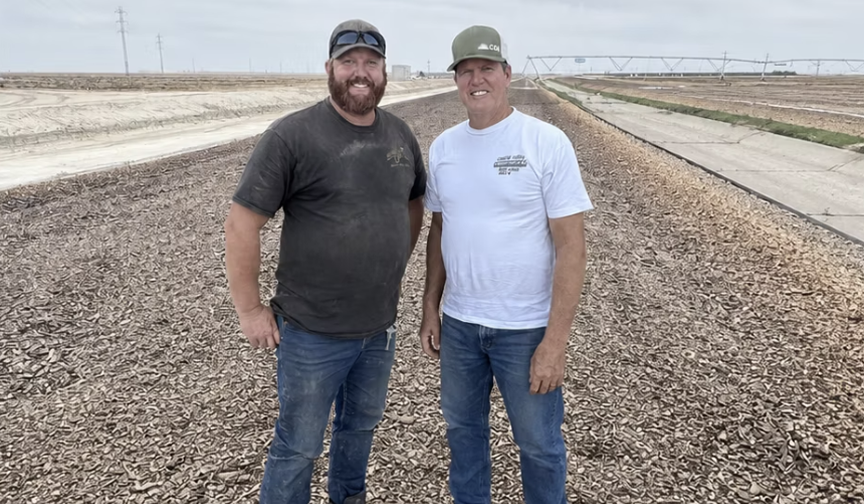
Second-generation dairy farmer Dennis Verhoeven and his family implemented a Dairy Plus project on their Kings County dairy this past Spring. They chose to adopt a BioFiltro vermifiltration (worm bed) system for its potential to improve water quality while making better use of manure nutrients on the farm. The Verhoevens have been gracious in welcoming other farmers to see the system and in helping answer their questions.
For the Verhoeven family, results have been encouraging. They have seen a dramatic reduction of nitrogen levels in the effluent stream. In addition, they have been able to use less fresh water for irrigation because they no longer need to blend fresh water with the manure effluent before applying it to forage crops.
“We are continuing to monitor the results because farming conditions change with the seasons, and long-term performance is what ultimately matters,” said Dennis. “At this point, we believe the system has real potential to be a useful part of our overall manure, water, and nutrient-management strategy.”
Brothers and third-generation dairy farmers, Jack and Jonathon (Jon) Postma of Stanislaus County are also encouraged by the initial results of their Dairy Plus project. They adopted an advanced solid-liquid separation system that uses flocculants, as this option required the smallest on-farm footprint and was a cost-effective way to achieve their goals.
Some of the main questions the Postmas hear from other farmers are, “Is the recycled water really that clean on a regular basis?” and “How much time do you spend managing the system?” The brothers are happy to report that yes, the water really is that clean, and they spend little time on management since the technology provider, Figure 8 Environmental, operates it and sends the clean water to the storage lagoon, while the Postmas move and handle the solids being produced.
“Overall, we are very happy with what we have seen after the first eight months,” said Jack. “The water is consistently clean. We have reduced flushing times by over 70%. When we use the water for irrigation, it travels all the way across the field, distributing nutrients uniformly. We expect to see yield improvements, and we are excited about the carbon credits being generated that will offer additional revenue to help offset costs.”
As these innovators have been gracious in hosting other farmers to come see cutting-edge technologies at work, they have also welcomed regulators and other key partners to be a part of these important conversations.
“If farms are being asked to invest in solutions that improve water quality and nutrient management, there should be practical permitting pathways, consistent standards, and appropriate incentives or cost-sharing programs,” said Dennis Verhoeven. “Collaboration among farmers, technology providers, researchers, and regulators will be important if these systems are going to be adopted more widely.”
Jack said that these types of advanced manure management projects show dairy farmers are striving to take their sustainability efforts further. He also greatly appreciates the partners who are helping make this possible.
“These efforts prove our commitment to sustainability, which requires extra time, energy, and money from dairy farmers. Grants make these projects economically possible. True sustainability includes environmental, economic, and social pieces too. The people who are helping us also deserve positive recognition.”
Funded by dairy farmers through the California Milk Advisory Board (CMAB), the California Dairy Research Foundation (CDRF) has played a significant role in promoting education, collaboration, and progress to date. With support from Dairy Cares and other dairy groups, the CDRF secured the funding from the U.S. Department of Agriculture (USDA)’s Advancing Markets for Producers (AMP) Initiative that made the Dairy Plus program possible. CDRF has been working with the California Department of Food and Agriculture (CDFA)’s Office of Agricultural Resilience and Sustainability (OARS), who administers this important program. Through two earlier rounds, a total of $43.6 million was awarded among 37 advanced manure management projects. More than $34 million is now available to be awarded in what is anticipated to be the final round. Securing additional funding for Dairy Plus and other incentive programs will be critical to continued progress.
Environmental benefits are being achieved through innovation and partnership. More of both will continue to be needed to expand adoption of advanced technologies on California dairy farms.


Be the first to comment