
Class III Markets Came Roaring Back This Week
The T.C. Jacoby Weekly Market Report Week Ending December 11, 2020
February through December contracts posted life-of-contract highs, a sign of health and good cheer.
After losing ground for more than a month, the Class III markets came roaring back this week. Most contracts gained between 30 and 50ȼ, and February Class III jumped 85ȼ to $17.27 per cwt. February through December contracts posted life-of-contract highs and all stand well above $17, a sign of health and good cheer.
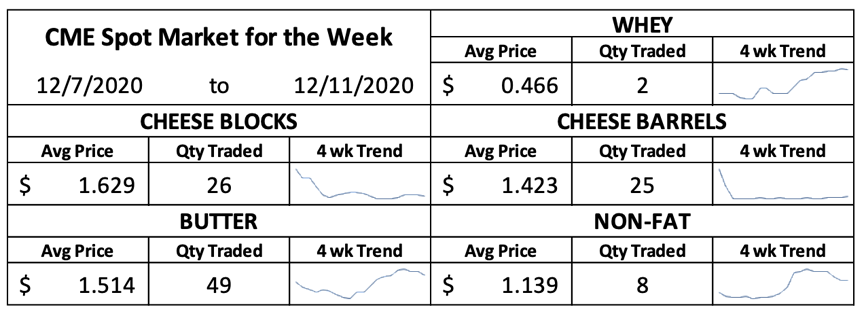
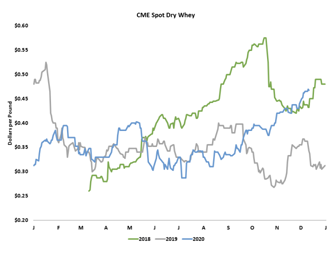 Both cheese and whey contributed to the Class III comeback. CME spot whey added another half-cent and reached 46.75ȼ per pound. Both foreign and domestic demand for whey has been strong, helping to tighten stocks and lift prices consistently.
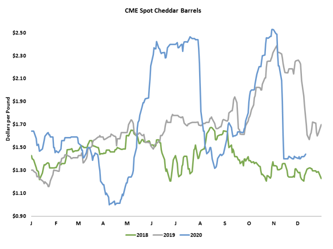
Despite a late-week setback, CME spot Cheddar blocks advanced 3.25ȼ this week to $1.6175 per pound. Barrels climbed 4.25ȼ to $1.4425. The cheese markets seem to have fallen far enough for now. These values are low enough to compete for exports and to perhaps entice end users to catch up on purchases they put off this fall, when the spot markets were unpalatably high. Even so, demand remains a concern. The industry will have to move a lot of cheese through retail and export pipelines to make up for all the holiday parties and restaurant visits that simply won’t happen this season.
 Dairy traders with ties to Washington, D.C., suggest that the incoming Biden administration would consider another round of the Farmers to Families Food Box program. This was the largest of several government efforts to purchase surplus food products to donate to those in need, and it is winding down quickly. Many food bank suppliers have already used up their share of the $500 million allocated for November and December, and government-funded cheese orders have dried up. Hopes for renewed government purchases in 2021 likely contributed to this week’s rally. However, the
  next round of the program would take some time to administrate and would require more funding from Congress, which is far from guaranteed. President-elect Biden has nominated Tom Vilsack, the current head of the U.S. Dairy Export Council, to return to his former post as Secretary for the Department of Agriculture. But after watching the damage that sky-high cheese prices caused to U.S. export opportunities, and their uneven benefits to dairy producers, Mr. Vilsack may not be inclined to rubber stamp the program. The market could be counting its food boxes before they are packed.
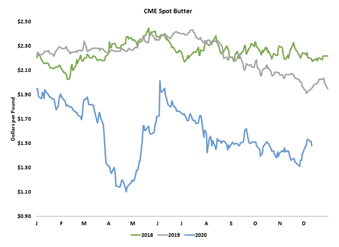
 The food box program is not the only avenue for government aid. Last Friday, USDA pledged to spend $110 million using Section 32 funds in 2021. The spending is a pittance compared to the totals expended via all USDA food programs in 2020, but thankfully the funds will be directed where they might be most helpful and least disruptive. USDA plans to purchase fluid milk and butter. The unexpected news gave the butter markets a temporary lift this week, but it didn’t last. Butter was ultimately weighed down, once again, by heavy supplies and soft demand. Cream is abundant, and churns are running hard. CME spot butter held steady this week at $1.48. The futures finished lower.
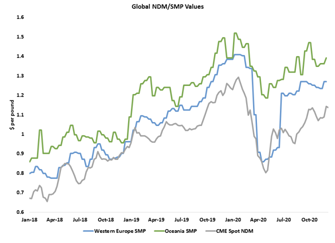
CME spot nonfat dry milk (NDM) slipped from last week’s pandemic-era highs. It closed today at $1.1275, down 2.25ȼ from last Friday. Foreign demand for milk powder has been strong, and American NDM is a bargain. That’s helped to keep U.S. NDM inventories in balance despite robust output.
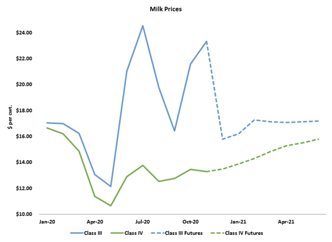 The driers are likely to stay busy. Dairy slaughter volumes remain low, and dairy producers in the cheese states have every incentive to expand. After several massive milk checks, they likely have the capital and credit to make good on their ambitions. Meanwhile, investments in better facilities and advances in breeding are translating to noticeably more milk. The mild start to the winter is also helping milk yields. Surplus milk is likely to weigh most heavily on Class IV markets, just as it did this week. January and February Class IV lost 42ȼ and 40ȼ, respectively, while other contracts suffered more modest losses. December and January Class IV continue to flounder below $14 per cwt. and most 2021 contracts are well below dairy producers’ cost of production. The wide spread between Class III and IV suggests that dairy producers in regions with high Class IV – or
The feed markets were uncharacteristically quiet this week. March corn settled today at $4.235 per bushel, up 3ȼ from last Friday. January beans closed at $11.605, down 2.5ȼ. January soybean meal lost about $5 per ton and finished at $380.30 per ton.
USDA updated its feed balance sheets on Thursday. The agency made no changes to its U.S. corn supply and demand estimates, and pushed its assessment of U.S. soybean demand slightly higher. The markets greeted the report with a collective yawn.
U.S. crop exports remain strong. South American weather has improved, but there are still plenty of dry soils and farmers are hoping for more regular rains. The western half of the U.S. is terribly parched, but that’s unlikely to meaningfully impact crop values until spring, at the earliest.
Original report at: https://www.jacoby.com/market-report/class-iii-markets-came-roaring-back-this-week

Be the first to comment