
The T.C. Jacoby Weekly Market Report Week Ending September 4, 2026
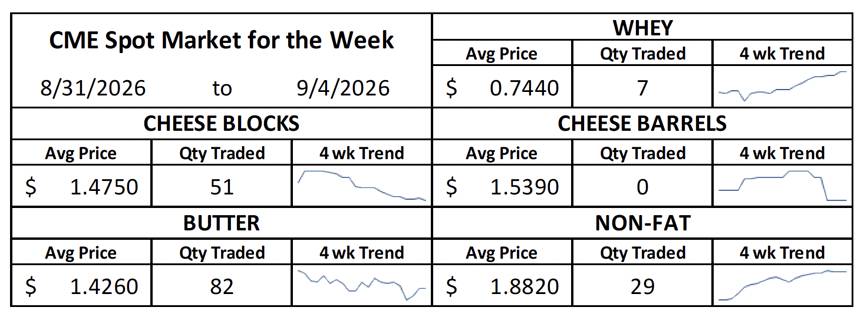
Relentless growth in milk output and sky-high components kept dairy manufacturers busy in July. Dairy processors made 2.1% more cheese 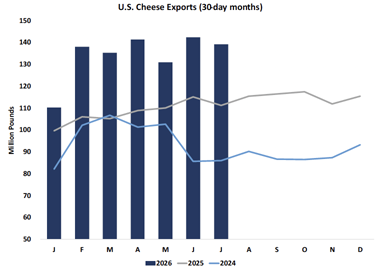 and 5.5% more butter than in July 2025. Domestic demand is not keeping pace with this growth, and neither are exports. Despite another month of record-smashing cheese shipments, year-over-year growth in January through July cheese exports was 19.5 million pounds smaller than the increase in cheese output. Meanwhile butter exports fell short of year-ago volumes in July. In the first seven months of the year, butter output outpaced 2025 volumes by 86 million pounds, while exports grew just 36 million pounds. It’s no surprise, then, to see these markets remain under pressure. CME spot butter fell 2.25ȼ this week to $1.44 per pound. CME spot Cheddar blocks retreated 1.75ȼ to a two-month low of $1.465.
The trade has assumed that greater whey protein concentrate (WPC) and whey protein isolate (WPI) production has restrained dry whey output. Manufacturers are indeed making as much WPC and WPI as possible, but there’s still whey leftover for dryers. Production of dry whey for human consumption topped prior-year volumes by 18.7%, and it’s up 12% for the year to date. 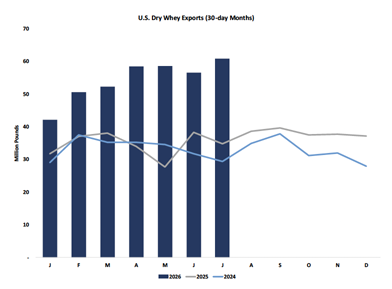 Exports are the real story. The rest of the world is hungry for protein too, and the U.S. is the supplier of first choice. Dry whey exports jumped 75% year over year in July. For the year to date, whey powder exports are record high, up 57% from the first seven months of 2025. Exports are lapping up all the growth in output and then some. In fact, whey exports grew nearly three times faster than output in January through July. Robust international demand – particularly from China – has pushed CME spot whey powder to calendar-year highs. This week it rallied a penny and a half to 75.25ȼ.
While Class II and III manufacturers fired on all cylinders in July, Class I bottlers did not. Aside from the seasonal summer slowdown in fluid milk demand, the 10-day outage at all four Fairlife facilities pushed more milk to balancing plants. Combined production of nonfat dry milk (NDM) 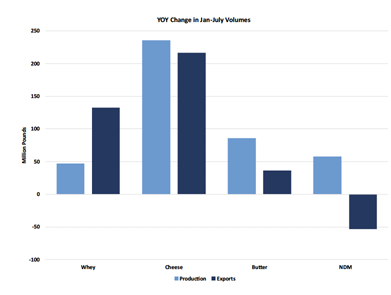 and skim milk powder (SMP) reached 187 million pounds, up 7% from July 2025. Exports were weak, as sky-high spring prices deterred international buyers. Nonetheless, the milk powder market is feeling tight once again. After the July hiccup, Fairlife is converting raw milk into a premium product as quickly as it can and other bottlers have ramped up output to supply school milk cartons. And summer heat has restrained milk yields. In the Central region, dryers are running on fumes. Seasonal declines in global milk output and better demand from China have boosted international values. Skim milk powder prices jumped 5.3% at the Global Dairy Trade auction to the equivalent of NDM at $1.79. CME spot NDM climbed another 1.5ȼ this week to $1.88.
Strength in the protein sector was not enough to offset declines in the rest of the dairy 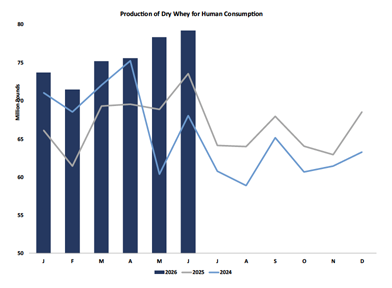 complex, and milk prices faltered. September Class III fell 31ȼ to $16.16 per cwt. Fourth-quarter contracts plunged roughly 70ȼ and settled in the mid-$16s. Most Class IV contracts dropped 20ȼ or thereabouts. The September through November contracts clung to the $19 mark while deferred futures hovered in the mid- to high-$18s.
Cattle futures gained a little ground this week, but for most dairy producers, cattle revenues did not. Crossbred calves are changing hands for $600 to $700 less than they did a couple months ago. They’re on par with – rather than dramatically above – year-ago prices for the first 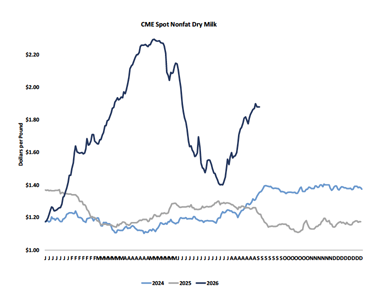 time since early 2023. Meanwhile, lean beef prices are dropping seasonally. With two slaughterhouses shutting their doors, packers in the East and Midwest have dropped their bids. The price they’re willing to pay for dairy cull cows is fading quickly. Beef revenues are still substantial. But they’re not padding the bottom line to the same extent that they did earlier this summer.
Anxieties about U.S. crop yields, drought, and Black Sea grain exports lit a fire under the feed markets in August. Now they’re smoldering as LaSalle Street awaits USDA’s September 12 supply and demand assessment. December corn settled at $5.3675 per bushel, up a half-cent for the week. December soybean meal rallied $6 to $354.80 per ton.
Original Report At: https://www.jacoby.com/market-report/relentless-growth-in-milk-output/


Be the first to comment