Production perspective:
There is no crystal ball to accurately predict the future. However, knowing the farm’s current finances and considering the possible events unfolding, planning realistic strategies is doable. It doesn’t appear that the pandemic is going away any time soon. Supply chain problems will probably continue throughout the new year and inflation is on the rise. Also, several states will be implementing a higher minimum wage, which could significantly impact cash flow. Feed costs will probably be comparable to 2021, but a lot will depend on weather conditions across the country. What will this all mean for the dairy producer?
The good news as of right now, the Class III milk price average for 2022 is slightly over $20/cwt. Add on a $2.00 basis, and a gross milk price of $22/cwt appears to be within reach. This is good news considering that for the past 5 years, the gross milk prices have hovered around $18/cwt. In Pennsylvania, the average breakeven milk price has averaged $19.50/cwt. It does appear that 2022 might allow producers to pay down debt and possibly reinvest in the business.
With good news comes the bad news, potentially. Dairy operations still need to focus on their cost of production, or the margin needed to cash flow. With cost of production increases reported around 6 percent, this could weaken margins quickly. Using financial data collected from the Extension Dairy Business Management Team from the last 3 years, total expenses for feed, directs, overheads and owner draw were increased by 6 percent. Focusing solely on the dairy enterprise, the group of producers with a breakeven milk price ranging between $18 and $20/cwt will need to keep average milk production above 70 pounds per cow on average to cash flow. This group tends to average between 73 and 76 pounds of milk, so they are positioned to take advantage of the predicted high milk price.
The operations that will be at a disadvantage with high inflation this year will be the farms that have historically maintained a breakeven milk price over $20/cwt. Using the financial data compiled by the dairy team and increasing expenses by 6 percent, those operations will need an average milk production greater than 85 pounds per cow. These herds typically average around 65 pounds of milk, so it is unlikely they will cash flow in 2022.
On the surface, it appears 2022 may provide some financial relief to producers. Even though there has been a lot of press related to rising costs due to inflation, the current projected milk price will help keep margins in check while providing some excess cash. If the milk price were to drop and come closer to the last 5-year average, then the outlook will be completely different. Now is the time to examine 2021 financial numbers and make the necessary adjustments for income and expenses moving forward. With so many unknowns, it would be worthwhile to conduct a mid-year assessment to confirm milk income is on track and that estimates for expenses are in line.
Economic perspective:
Monitoring must include an economic component to determine if a management strategy is working or not. For the lactating cows, income over feed cost is a good way to check that feed costs are in line for the level of milk production. Starting with July 2014’s milk price, income over feed cost was calculated using average intake and production for the last six years from the Penn State dairy herd. The ration contained 63% forage consisting of corn silage, haylage and hay. The concentrate portion included corn grain, candy meal, sugar, canola meal, roasted soybeans, Optigen and a mineral vitamin mix. All market prices were used.
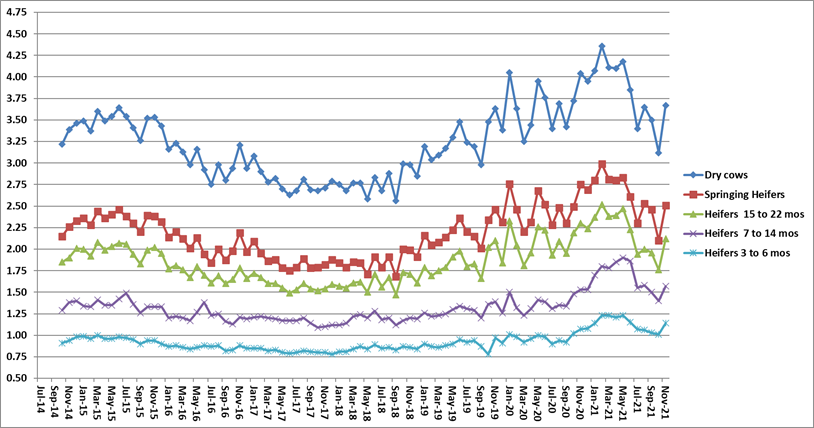
Also included are the feed costs for dry cows, springing heifers, pregnant heifers, and growing heifers. The rations reflect what has been fed to these animal groups at the Penn State dairy herd. All market prices were used.
Income over feed cost using standardized rations and production data from the Penn State dairy herd.
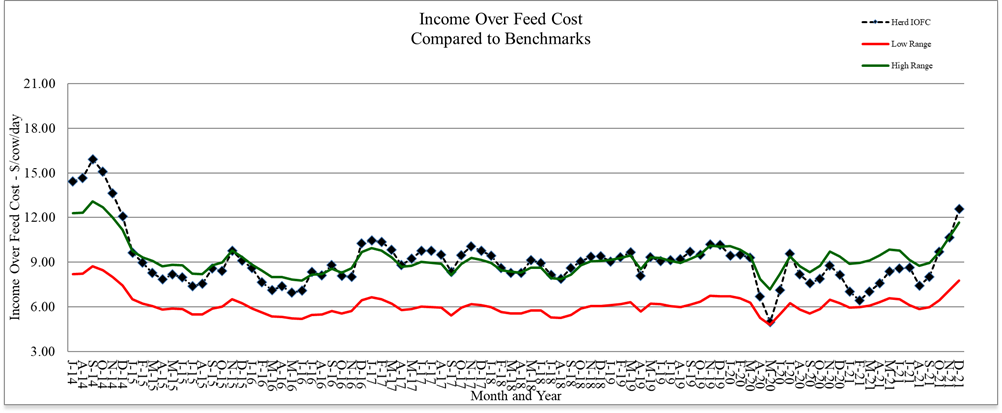
Note: December’s Penn State milk price: $23.13/cwt; feed cost/cow: $6.85; average milk production: 84 lbs.
Feed cost/non-lactating animal/day.



Be the first to comment