
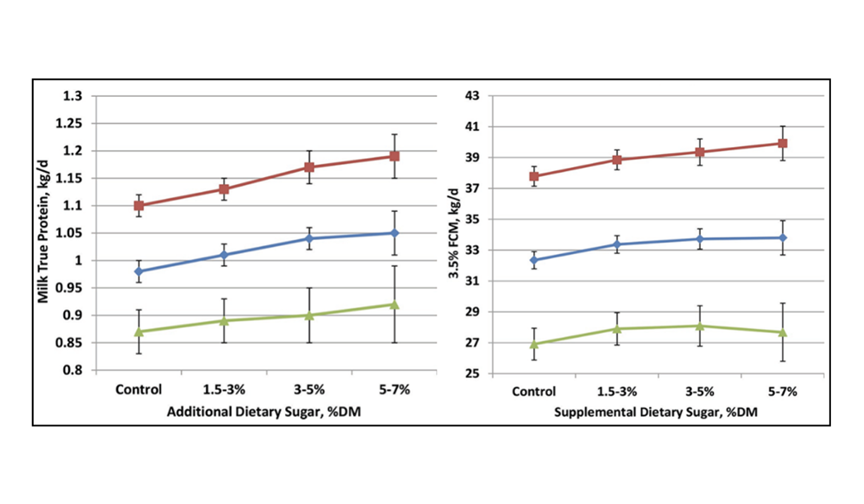
Balancing the supply of rumen fermentable NDF, starch, and sugar sources may be key to optimizing milk component production. Feeding high quality, highly digestible forage NDF is a great opportunity to optimize the rumen and supply adequate energy to the cow. In addition, balancing the dietary starch plus sugar to be 32 to 35 percent DM with 5 to 7 percent DM sugar and 25 to 28 percent DM starch may be beneficial to optimize microbial protein and milk component synthesis. Feeding dietary sugar up to 7 percent DM has been reported to increase milk fat and protein yields compared to lower sugar diets, and replacing starch sources with sugar sources has had positive effects on rumen pH and milk fat production8. Dietary sugar can be increased by feeding citrus and beet pulp, molasses, table sugar, candy and bakery by-products and whey.
As the genetic capacity of the modern dairy cow continues to increase, it is important that we feed her a balanced diet that meets the demands for lactation and allows for maximum milk component production. Often, dietary ingredients in the appropriate ratio and concentration have positive dual effects that increase both milk fat and protein such as the few that were outlined above. In unison with optimal diet formulation, management practices that allow for adequate feed intake, lying and rumination time, reduced stocking density, and adequate cooling systems are needed to maintain healthy and high performing cows for maximal milk component production.



Be the first to comment