
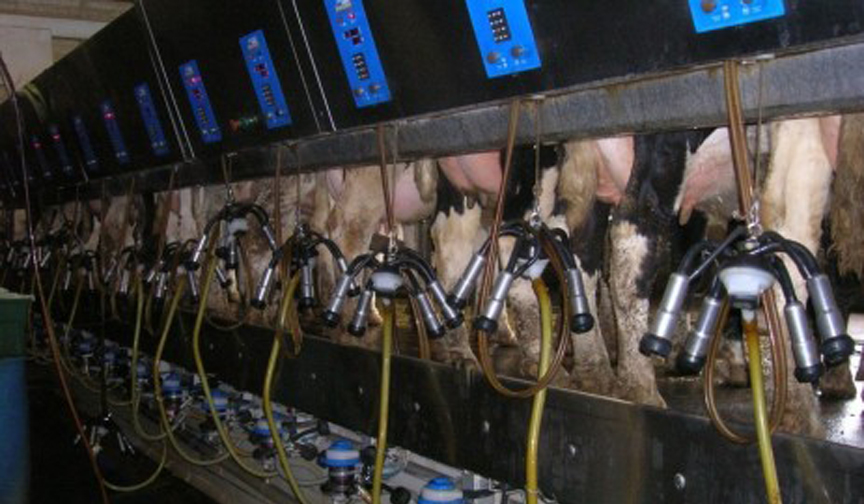
Training milking crews and parlor managers on the importance of correcting common milking equipment issues can prevent problems.
In the process of doing all these tasks, problems with the in-parlor milking equipment may sometimes be overlooked. So, in addition to training milkers to do all the aforementioned tasks, milkers should also be trained to assess the basic condition and function of the milking equipment.
Some of the most common things that they should be looking for include blocked air bleed vents, cracked pulsation (short air) tubes, twisted inflations, and pinched hoses. While this may seem like an extensive list of things to check, once a milker is trained to be observant for these things, it can become second nature and does not require a lot of dedicated time or effort.
Air vents in the claw or in the inflation are intended to create a deliberate ‘leak’ of air into the claw, to promote milk flow away from the claw and teat, and into the milk hose. These vents are designed to allow a specific amount of air into the claw, and if they are clogged with hair, bedding and/or manure, they will not function as intended. The milkers should not only understand the importance of having clean/patent vents, but they should also know where they are located, and how to check to be sure they are functioning. A small hiss of air can usually be heard being admitted into a functional vent, but if they are not sure if a vent is functioning properly, a small piece of a glove can be held up to the vent. If the vent is open, the glove should ‘stick’ to the vent (Figure 1).
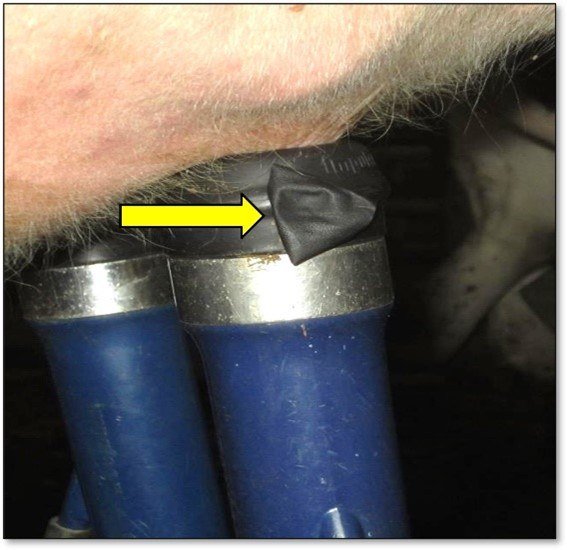
Figure 1. The yellow arrow shows a piece of a (black) milking glove sticking to a vent in the mouthpiece of an inflation, indicating that the vent is not clogged/blocked.
The proper tools should be available so that the milkers or parlor manager can clear a clogged vent or replace it with a new or cleaned vent. This should ideally be done as soon as a problem is discovered. At the very least, if a blocked vent is discovered by a milker, a note should be made on a white board, or a text sent to the parlor manager, alerting her/him to this problem.
It would seem that a cracked short air tube would be something that should be very obvious to a milker, but obviously worn, dry-rotted, and/or cracked tubes are still often discovered in parlors. (Similar problems can occur in the
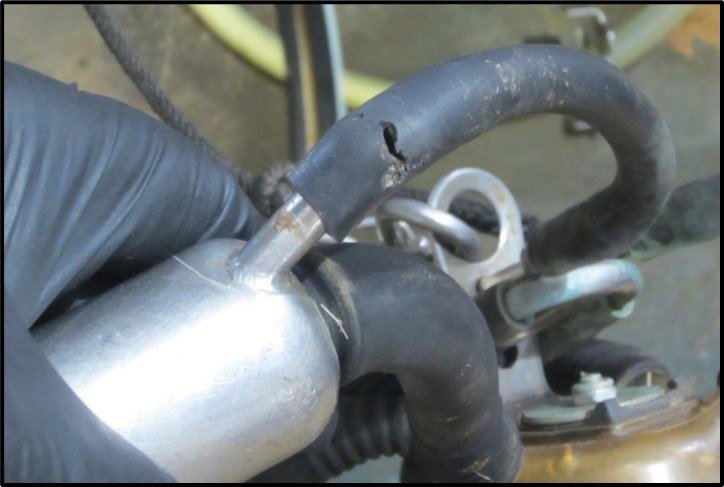
Figure 2. Cracked short air (pulsation) tube.
Milkers should know where they can get new short air (pulsation) tubes, and that they should replace them immediately when they observe a problem.
I’m surprised at the number of milkers (and even parlor managers!) that do not know the importance of having the liners/inflations properly aligned within the shells. This could happen because milking equipment companies often provide a service of placing new liners into an additional set of shells on a regular schedule so that the milkers simply replace the shell and inflation as one unit. While this is a convenient service, it may mean that milkers and/or parlor managers never go through the process of replacing inflations, and so they may not even be aware of the importance of aligning the marks on the inflations at the top and bottom of the shell.
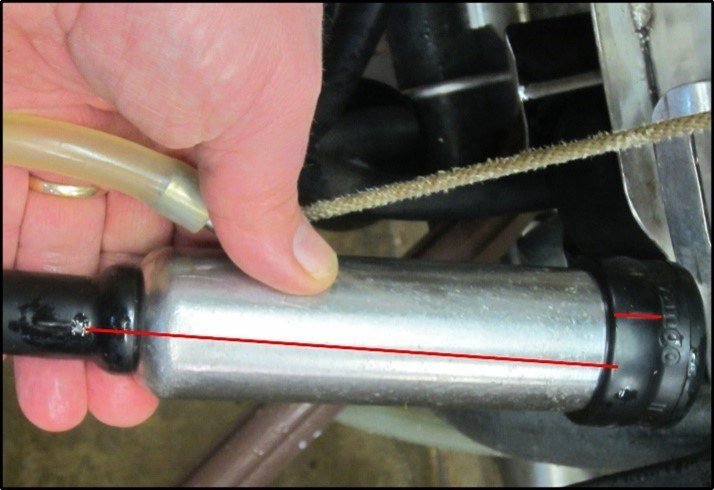
Figure 3. Inflation (liner) misaligned in stainless steel shell. Red lines indicate location of alignment marks on inflation, above and below the shell.
Whether it is a round, triangular, square, or otherwise-shaped liner, having them aligned in the shell is critical to having them go through a proper milk:massage cycle. Even a slight (1/8 or more) twist in the inflation (Figure 3)
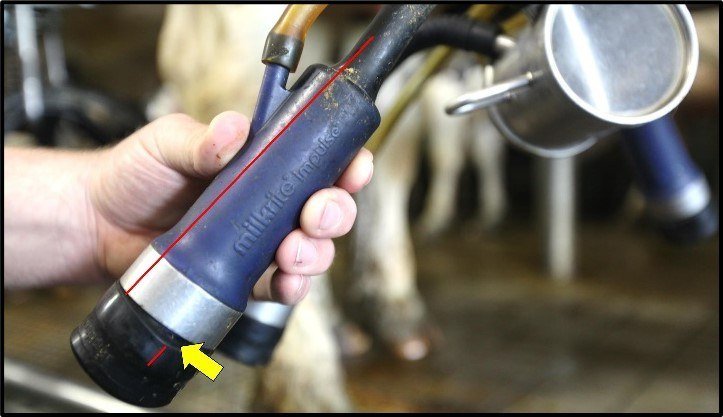
Figure 4. Inflation (liner) misaligned in plastic shell. Red lines indicate location of inflation alignment marks, above and below the shell. Yellow arrow shows obvious gap between liner and shell.
Pinched (milk/pulsator) hoses can have a severely reduced carrying/flow capacity, whether the pinching is a temporary or permanent condition. This may happen if a hose is repeatedly pinched by a (vacuum) shut-off valve, if a hose is too short or too long, if ‘zip-ties’ are applied too tightly (especially to pulsator hoses), or it may occur as they lose their shape as they age (Figure 5.). Milkers should be trained to watch for any restrictions/deformations in any hoses and immediately report them to the parlor manager. Regular inspections of all hoses (every 2-4 weeks), and a regular replacement schedule are useful to prevent problems, and/or allow for early identification.
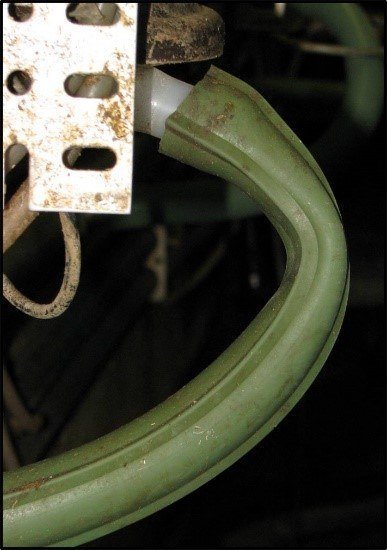
Figure 5. Kinked milk hose.
Although there are other equipment maintenance and failure issues to address (eg. pulsators), these are a few of the more common ones which milkers can and should monitor, and which can affect udder health and milking performance. Training milking crews and parlor managers on the importance of these issues, and how to solve them, will help to prevent significant problems from developing or persisting.



Be the first to comment