
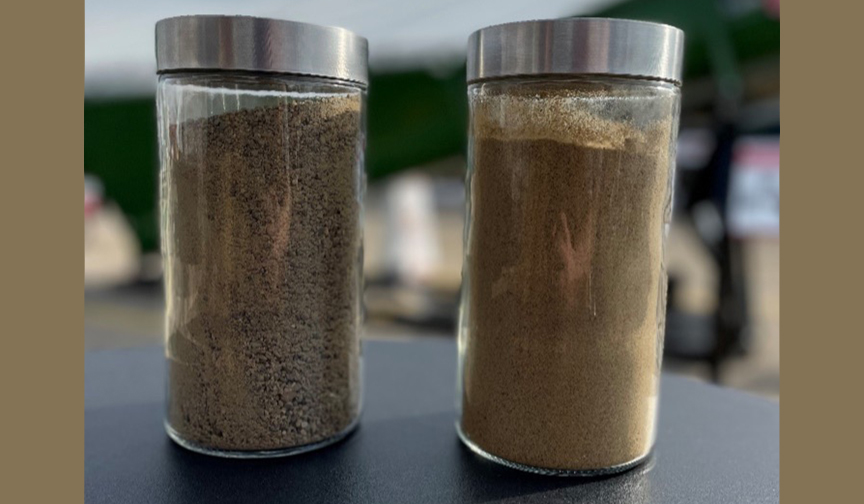
Sand is sand is sand, correct?
Not really, especially when it comes to choosing sand bedding for your dairy. There may be subtle or substantial differences in sands depending on the source.
As a result, not just any sand will offer a comfortable place for cows to lie while providing the drainage necessary to keep stalls cleaner and drier for longer. Nor does all sand allow for efficient removal from manure prior to storage or anaerobic digestion.
What are your goals?
Will you separate the sand for recycling, or will you need it to stay in suspension throughout your entire system and not be reused? Your answer affects the optimal weight, density and particle size of your target sand, as well as how you source it.
The important thing to remember is that not all sand is created equally, so be aware of what you are getting with your sand purchases.
Sand makeup differs
Optimal dairy cow bedding sand should not contain large particles that can harm hooves. Keep in mind larger particles can be excessively abrasive, become wedged between hooves or cause soft tissue injuries. At the same time, sand must be coarse enough that it separates from manure for efficient recycling.
Plus, the ideal sand should contain minimal fine material and organic material such as clays and slits, which can cause the sand to pack in the stalls, making them hard and uncomfortable and increasing stall maintenance and labor costs.
Most washed concrete sand meets these criteria and is generally the preferred type of sand bedding for most farms. It is widely available and contains a good mix of particle sizes ideal for cow comfort, cleanliness and sand separation.
Concrete sand is characterized by the American Standard for Testing Materials specification ASTM C-33. It is also known as construction sand, torpedo sand or 2NS.
Drainage matters
Select sand that contains minimal fine material, which helps it stay loose in the stalls and readily drain away urine and dripped milk that can lead to the growth of mastitis-causing bacteria.
Stall drainage is important because, over time, bedding quality decreases as it becomes contaminated with urine, milk and feces. These bedding contaminants are associated with increased organic matter and decreased dry matter, all of which can compromise cow health and comfort.
Clean, dry beds are more comfortable for cows, and more comfortable stalls lead to cows experiencing longer bouts of lying time. Generally speaking, the more time cows spend lying down, the more milk they make, adding to your farm’s profitability.
On average, cows spend about 10 to 12 hours lying in free stall barns.[2] Research shows stall surface can influence lying time, with sand a preferred bedding option for cows.
For example, dairy cows from herds with sand-bedded stalls showed significantly higher lying time compared to herds with mattress stalls (12.7 versus 11.5 hours per day). Furthermore, herds with deep-bedded stalls have a significantly lower prevalence of lameness compared to herds with mattress stalls.[3]
Economic factors
Given the rising cost of transportation, most dairies are interested in nearby sand sources. In some cases, this is an excellent option.
Keep in mind local sand may contain undesirable levels of too-fine or too-coarse particles, decreasing cow comfort and sand recovery efforts. It may also contain high concentrations of organic matter and bacteria, defeating the purpose of bedding with sand.
When you first source your sand, ensure that you have it tested to understand the quality of sand. Even after finding a quality and reliable source, test periodically to ensure the quality of your sand is not changing.
Also, regardless of sand origin, there are always costs involved.
A dairy must handle and haul the sand to its facilities even from an owned pit, meaning the farm incurs fuel, labor and depreciation costs. Additionally, the sand must be taken out of storage facilities, incurring labor, fuel, equipment and depreciation costs during these activities as well.
Keep the basics of cow comfort in mind when making sand selections, as well as important sand factors like source, proximity and price.
Ultimately, bedding should enhance cow comfort by providing a clean comfortable resting place. Since it’s inorganic and granular, concrete sand meets these needs to a T.
[1] Cardoso P, Rivelli I. 2015. Bedding Quality is Associated with Milk Quality in Illinois Dairy Farms. University of Illinois. Available at: https://dairyfocus.illinois.edu/newsletter-issues/bedding-quality-is-associated-with-milk-quality-in-il-dairy-farms/#:~:text=Cows%20should%20be%20bedded%20with,when%20they%20are%20deep%20bedded.
[2] Tucker CB, Jensen MB, de/Pasille AM, Hanninen L, Rushen J. 2020. Invited review: Lying time and the welfare of dairy cows. J Dairy Sci. https://doi.org/10.3168/jds.2019-18074.
[3] Pineiro J, Spencer JA. 2020. Lying Time of Dairy Cows: Importance of a behavioral need. Texas A&M University. Available at: https://texasdairymatters.tamu.edu/files/2022/01/Lying-Time-of-Dairy-Cows.-Importance-of-a-behavioral-need.pdf.



Be the first to comment