
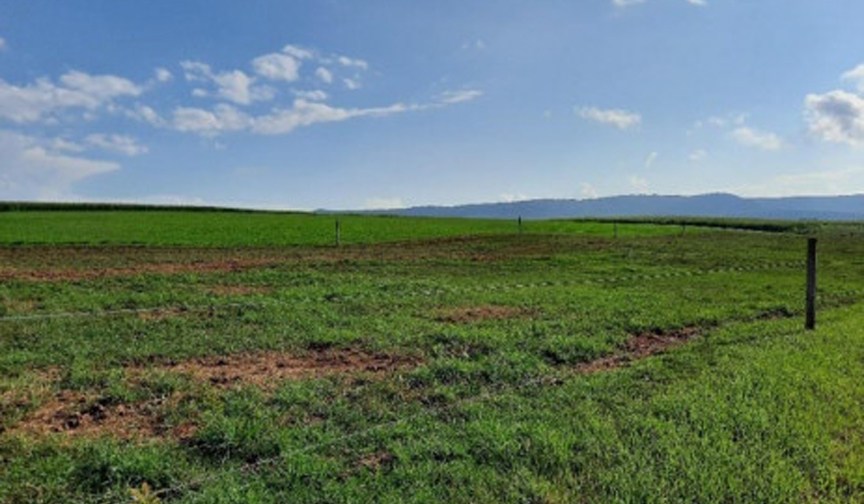
During hot, dry weather, such as the summer months, we need to adjust our grazing strategies to maintain pasture longevity and soil health.
First, maintaining 3-4 inches is the general rule of thumb for grazing practices, but it is especially important during this time for various reasons. Above ground biomass is so important to grazing systems because what you see above ground is reflected belowground. Research has shown that if grass is grazed very short repeatedly, the root system dies back significantly, and the stand declines. This is critical during the summer months as grasses try to scavenge for limited water sources. Most problematic pasture weeds have taproots, which makes them excellent water scavengers because that taproot grows deeper than the fibrous root system of grasses. Research shows, that grazing too short during the summer slump, as would occur in a continuous grazing system, results in increased weed populations and exposed soil which results in increased soil erosion and nutrient runoff. Further, soil health degrades because it depends in great degree on vigorous root systems. Grazing too aggressively negatively impacts the grass’s ability to regrow as temperatures cool in the fall.
Second, just like tall, thick forage stands can help to protect crowns and tillers from freezing, these kinds of stands can also shade them from high temperatures. If grazed too low, tillers could be exposed to temperatures as high as 95°F compared to temperatures in the mid-70s°F under a well-developed canopy. Those high temperatures could cause tillers to die and result in thin stands.
Implementing a rotational grazing system is one of the best ways to maintain sufficient grass height. Separate a large pasture into smaller sections with permanent or temporary fencing and rotate animals out when grasses reach that 3-4 inch height. They can then be rotated back into an already grazed paddock when forage height reaches 6-8 inches or more. As temperatures continue to climb and rainfall becomes less prevalent, there may come a time when grazing animals should be taken off cool season pasture to help maintain its quality and resiliency. To supply summer forage, it is ideal to have a portion of the farm in warm season annuals and/or perennials. These forages are adapted to high temperatures and dry soils. Examples are millets, sudan- and sorghum sudangrass, teff, sunn hemp, cowpea, forage soybean, switchgrass, big bluestem, Indiangrass, etc. If you only have cool season pastures, bringing animals into a dry lot and feeding hay for a few weeks can allow the grasses to regrow, which will help to increase stand longevity and reduce the need to reseed a stand that has become thin from overgrazing. If a dry lot isn’t an option, consider using a section of pasture that is in poor condition and needs some Tender-Loving-Care as a sacrifice lot. The extra nutrients provided from the animals and imported hay material can supply nutrients and, if necessary, the pasture can be reseeded in the fall once the animals are removed. Be sure to use an area with adequate fencing, whether it is permanent or temporary, as animals will be prone to push fence and try to get to “greener” pasture. It is also important to ensure the area is adequate distance from surface and groundwater and to consult your local Conservation District as to any local runoff and erosion regulations.
Check out Extending the Grazing Season with Plant Diversity , for alternative forage options during the summer slump or Alternative Forages for Spring and Summer Planting , to review some summer planting options or Harvesting and Feeding Warm-Season Annuals for Forage , to find more details on utilizing warm-season annuals.


Be the first to comment