
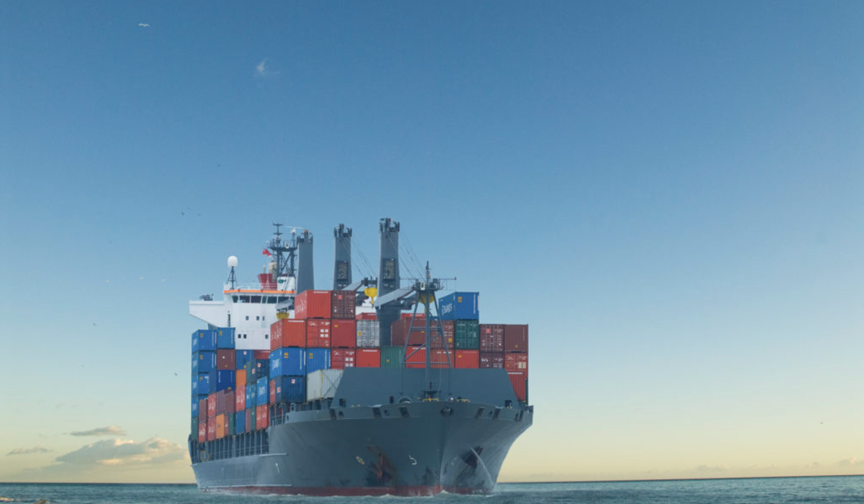
IDFA submitted comments to the U.S. International Trade Commission regarding the effects on the U.S. economy of revoking China’s Permanent Normal Trade Relations status.
Comments:
Office of the Secretary
U.S. International Trade Commission
Attn: Tamara Gurevich
500 E Street SW
Washington, D.C., 20436
To Whom It May Concern:
I write today in reference to Investigation Number: 332 – 609, Effects on the U.S. Economy of Revoking China’s Permanent Normal Trade Relations Status on behalf of the International Dairy Foods Association (IDFA).
IDFA fully supports a trade agenda which prioritizes a reduced reliance on China and pursues a more diverse range of trading partners. IDFA members share this goal and are working to diversify their own export market opportunities. However, it is simply not feasible to ignore or easily substitute a market of China’s size and global influence. Many U.S. dairy processors rely on specialized products from China to produce the safe, affordable, and nutritious dairy products which feed millions of Americans. Certain critical products are unavailable through other suppliers outside of China.
In the event of a revocation of China’s Permanent Normal Trade Relations (PNTR) status, no segments of the U.S. dairy industry would be immune to double-digit cost increases on the supply side. Among other important dairy processing and packaging material, tariffs would be elevated from 0 percent to between 30 to 35 percent for can-sealing, beverage aeration, commercial stoves and ranges, filling/capping/closing machines. Casein glues would also spike from 6 percent to 30 percent. IDFA members report sourcing Vitamin D concentrates and derivatives from China, an ingredient with a tariff rate which would rise from 0 percent up to 25 percent if China’s PNTR status were revoked. All of these such products are currently sourced from China without an existing or realistic replacement. The tables below summarizes several key ingredients and equipment which U.S. dairy processors report sourcing from China:
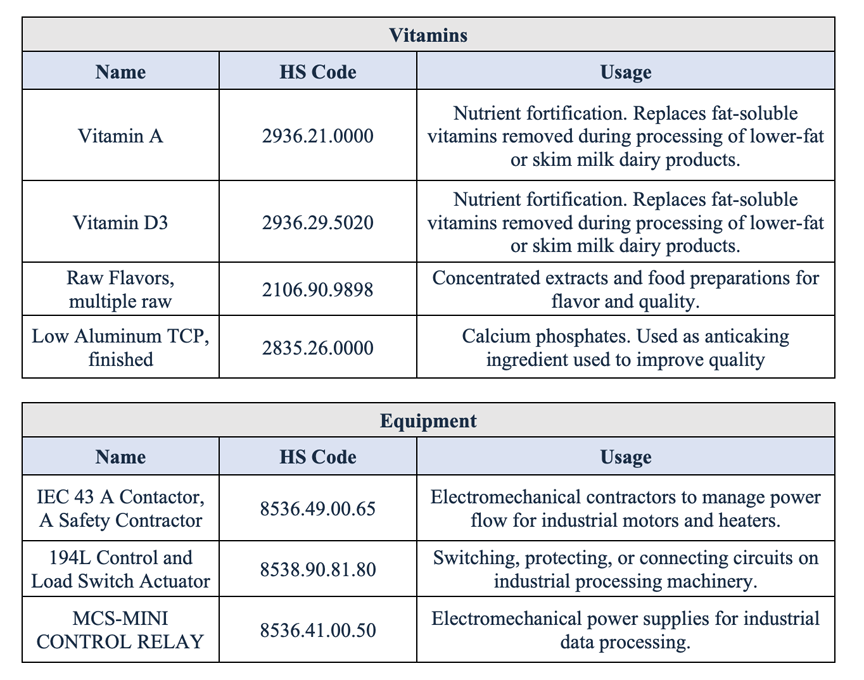
According to dairy industry procurement specialists, the tariff increases from a revocation of China’s PNTR status would yield significant direct and indirect impacts across the entirety of the dairy processing supply chain.
In some spaces, there are no realistic non-China alternatives for important inputs, such as chemicals and amino acids or spare parts for production.
Past experience with constraints on trade with China resulted in supply shift risks for U.S. dairy. In many cases, Chinese customers rapidly substituted U.S. suppliers for those from the EU and Oceania. These shifts can be difficult to reverse and cause unintended consequences, such as slowed development of value-added products and limited expansion of U.S. dairy brands in markets across Asia. Taken together, these impacts could leave the industry vulnerable to supply bottlenecks and consumers vulnerable to potential product shortages.
- The U.S.-China trade agreement framework announcement in November extended exclusions from Section 301 Tariffs on 178 imported Chinese products. These exclusions have been particularly helpful and encouraging to the U.S. dairy industry. While IDFA is fully supportive of rebalancing the trade relationship with China, we encourage the Administration to maintain those strategic exclusions.
- IDFA supports the Administration’s Executive Orders that exclude certain imported agricultural products from tariffs. Going forward, we encourage continued usage of these policies as a basis for consideration of tariff exclusions on Chinese goods.
- IDFA respectfully requests USTR consider the development of an administrative process for consideration of additional, future category and product-specific tariff exclusions for critical goods that support the health, safety, and availability of the American food supply. A formal exceptions framework would allow U.S. manufacturers to provide clear and compelling evidence of how imported inputs advance both American manufacturing and innovation when domestic supplies are unavailable.
- Thank you for the opportunity to provide comments on Investigation Number: 332 – 609. Please contact Becky Rasdall Vargas (brasdall@idfa.org) or Elena Clark (eclark@idfa.org) with any questions or requests for further information.
Becky Rasdall Vargas
Senior Vice President, Trade and Workforce Policy
International Dairy Foods Association (IDFA)

Be the first to comment