
As Spring progresses, a variety of pests are active in many crop species; Here I consider black cutworm, alfalfa weevil, and cereal leaf beetle.
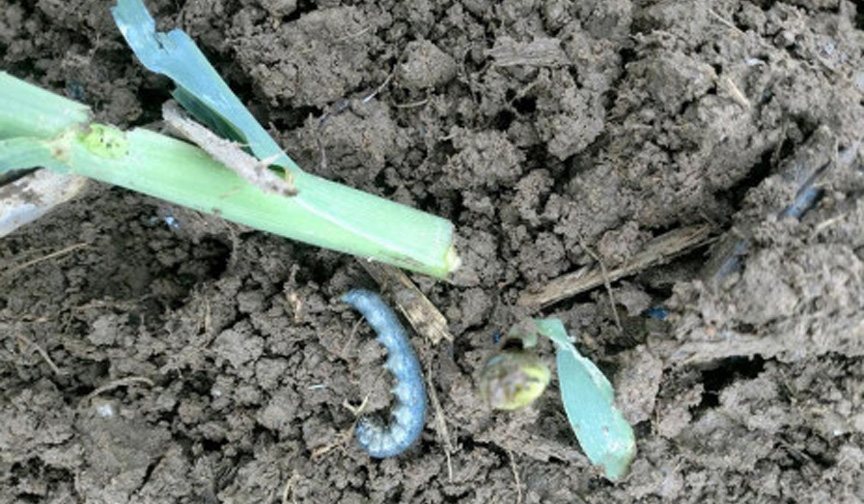
First, as mentioned in previous weeks, in many parts of the state black cutworm caterpillars are likely to have developed to the point where they will be cutting corn plants (Figure 1). Now is the time to scout your fields now looking for cut plants. Black cutworm caterpillars are nocturnal so you may not see them, but a caterpillar will cut a plant and then consume it, often in an underground burrow; a caterpillar can cut as many as five plants during their larval life. To confirm the culprit, dig in the soil near cut off plants and try to find the caterpillar, but they can be elusive. Sometimes cut corn plants can be caused by birds, but in this case beak marks are often evident on the remaining stems; do your best to identify the cause of cut plants. If you find 2, 3, 5, and 7 caterpillar-cut plants per 100 seedling-, V2-, V3-, and V4-stage plants, respectively, your field will likely benefit from an insecticide application. Keep in mind, however, that if cutting damage is only evident in a portion of the field, you can restrict your insecticide application to that area. Continue to scout until plants reach V5, when they are rarely troubled by black cutworm.
Second, we have received reports that damage from alfalfa weevil is evident in some fields, and in some cases the damage is severe. Alfalfa weevil has only one generation per year and is usually only a pest of the first cutting of alfalfa. To scout your fields, assess the number of weevil larvae on 30 plants from across the field. Weevil larvae are green with a white stripe down their back (Figure 2). If populations exceed economic threshold, which can be found on our fact sheet , consider cutting the crop or applying an insecticide. If you cut because the damage was heavy, you should scout the stubble to assess the risk of damage to the regrowth. If you see two or more larvae per crown, then spraying the stubble will likely be warranted. If you treat for alfalfa weevil, it is unlikely that the insecticide will have any benefit for controlling potato leafhopper, which usually arrives in early June.
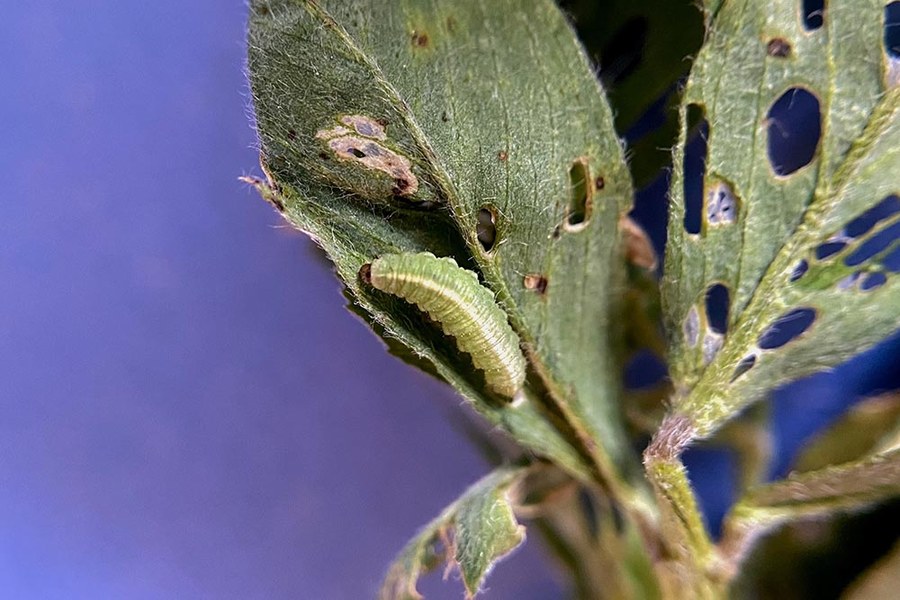
Figure 2. Alfalfa weevil larvae with the distinct white line down their backs, and a view of their damage. (Photo by Adriana Murillo-Williams, Penn State Extension)
Lastly, we have heard of reports of cereal leaf beetle larvae being active in some wheat fields (oats, barley, and rye can also be infested), particularly in eastern Pennsylvania. Cereal leaf beetle larvae are easily identified because the
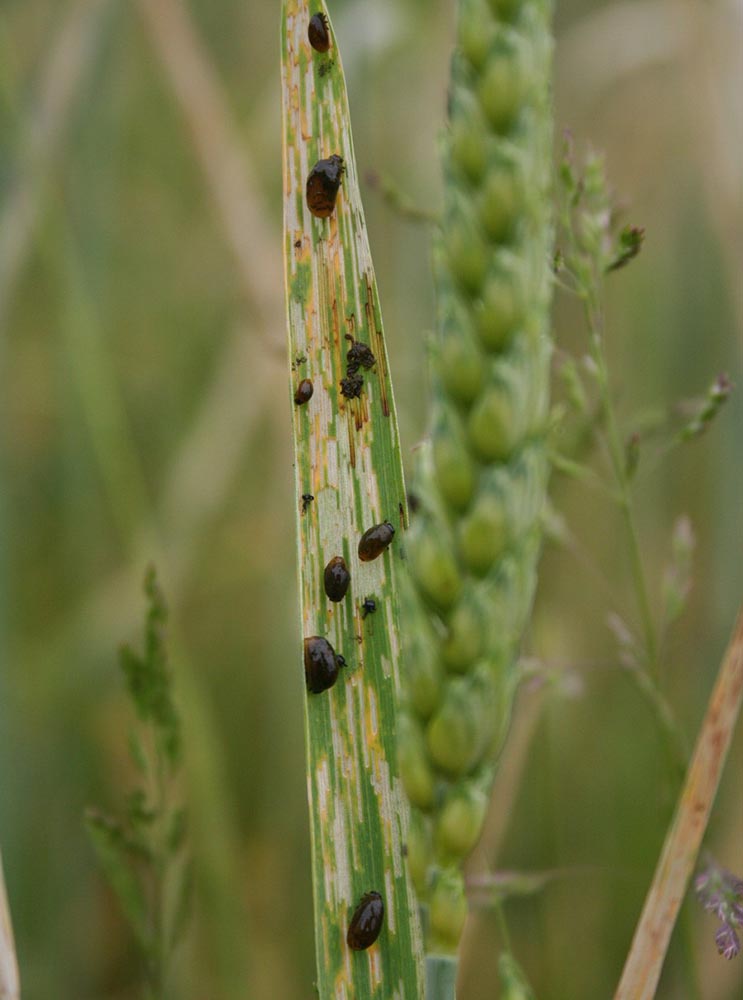
Figure 3. Several cereal leaf beetle larvae feeding on the flag leaf of wheat. These are not slugs, (which are nocturnal), but beetle larvae covered with mucus and their own feces as a defense against other insects that might want to eat them! (Photo by Mike Fournier, Penn State Extension)



Be the first to comment