
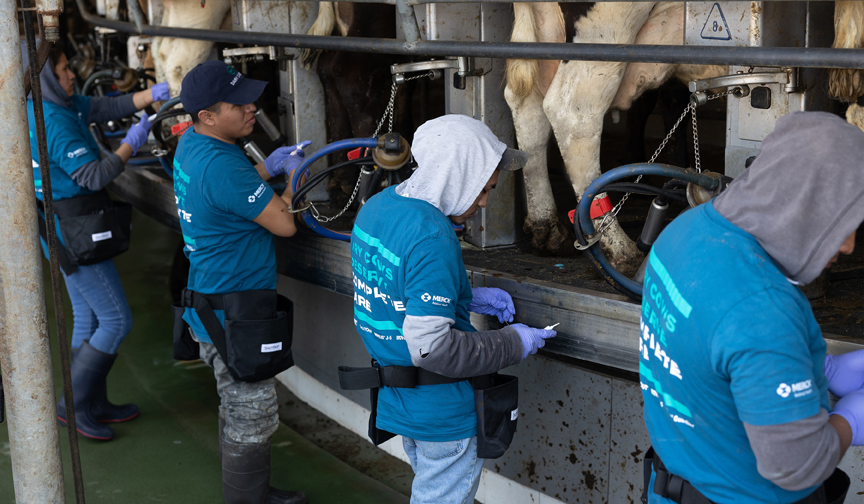
Protect your cows from mastitis
Mastitis is the most common disease in dairy cattle, affecting 99.7% of dairy farms and one in every four dairy cows nationwide.1 Mastitis causes both direct and indirect revenue loss due to diagnostics, therapeutics, non-saleable milk, veterinary services, labor, death loss and other factors.2
Have you considered how dry cow management might affect mastitis incidence in your herd? The risk of new intramammary infections can be up to 10 times higher over the dry period than during lactation, with a peak of cases occurring around involution of the mammary gland just after drying off and during the transition from pregnancy to lactation.3 Revisiting your routine dry-off procedure with staff could lead to less mastitis, more productive cows and can also contribute to healthier calves. Here are reminders of key dry-off best practices:
· Clearly identify dry cows. Apply a leg band or other clear means of identification before starting the dry-off process. This step identifies cows to be moved to the dry pen and prevents their milk from entering the bulk tank. Establish processes to ensure milkers understand and follow the proper milk discard period after freshening. At the same level of importance, make sure to record events (vaccination, dry-off) into the farm’s management software and the products used in each event. This information can be used to assess the efficacy of the dry cow therapy and vaccination protocols used at dry-off and during the dry period.
· Administer dry cow antibiotics. Treating cows with an intramammary antibiotic at dry-off can help cure existing subclinical infections and prevent new infections from occurring during the early dry period. Dry cow therapy is a valuable tool but must be administered properly to avoid introducing pathogens into the teat canal that could cause new infections
The teat canal is the only path for bacteria to enter the mammary gland and cause an intramammary infection. To prevent infection, thoroughly clean and dry the teats and disinfect teat ends with a 70% alcohol wipe before infusing a dry cow antibiotic.
It’s also important to follow the correct order of disinfecting teat ends (starting from the furthest to nearest) and infusing antibiotics (nearest to furthest) to avoid contamination of
teats that have already been disinfected. Using an antibiotic tube that offers a short tip option, or a partial insertion method can reduce the risk of new intramammary infections by up to 50%.4
· Apply an internal teat sealant (ITS). An ITS provides a physical barrier to prevent environmental mastitis-causing pathogens from entering the udder during the dry period. The use of ITS has been associated with reduced incidence of subclinical mastitis at calving and clinical mastitis within 30 days in milk.5
Sanitation of the teat ends is critical to avoid introducing bacteria into the udder when the sealant is administered. This becomes even more important in dry-off programs selectively using antibiotics in cows with mastitis or at higher risk of having intramammary infections. After infusing the ITS, cover each teat with a post-milking disinfectant.
· Vaccinate against disease. The dry period is a crucial time to vaccinate cows against infectious diseases, including a core antigen vaccine to protect against coliform bacteria that cause clinical mastitis and a vaccine to increase colostrum antibodies against neonatal diarrhea.
Follow standard vaccine administration protocol, including checking the product expiration date, storing the product at the proper temperature and confirming the injection technique. Set protocols for needle and syringe size based on the dose and route of administration. Make sure workers are trained on proper techniques for subcutaneous and intramuscular administration, frequency of needle changing, vaccine storage prior and during vaccination, and how to properly dispose of needles and leftover vaccines.
· Maintain proper environment and hygiene. Moving cows into a clean, dry and comfortable environment is the last step of dry-off. Set protocols for frequency of applying new bedding in dry cow, close-up and maternity pens.
Cow hygiene scoring is another tool that dairies can use to monitor pen cleanliness. A clean, comfortable, and dry pen can prevent infectious diseases in both cows and newborn calves.
Hold regular training and refresher sessions.
Education in dry-off procedures should be standard for new and tenured employees. It’s often beneficial to set aside a certain day each month for training. Include dry-off as a recurring topic in the training plan.
· Provide hands-on training. When teaching dry-off steps, it’s helpful for workers to first watch a task being completed correctly by a well-trained and experienced individual.
Then ask trainees to do the task themselves under the watchful eye of the manager. This allows the manager to check the individual’s proficiency in completing the task and make corrections if needed. To reach the highest level of understanding, workers should be able to “teach back” the skill to the manager.
· Use online resources. Visit DairyCare365.com for access to training materials and sample SOPs on dry cow management and many other topics. DAIRY CARE365® is an industry collaboration that provides comprehensive online training resources in English and Spanish to help dairy producers provide exceptional care for their animals.
Regularly visiting dry-off protocols leads to a more vigilant workforce, resulting in a healthier, more productive and profitable herd.
References:
1. National Animal Health Monitoring System, Health and Management Practices on U.S. Dairy Operations, 2014.
2. Rollin E, et al. The cost of clinical mastitis in the first 30 days of lactation: An economic modeling tool. Prev. Vet. Med. 2015. 122:257-264.
3. Bradley, A. J., and M. J. Green. 2004. The importance of the nonlactating period in the epidemiology of intramammary infection and strategies for prevention. Vet. Clin. North Am. Food Anim. Pract. 20:547–568.
4. Boddie RL, Nickerson SC. Dry cow therapy: Effects of method of drug administration on occurrence of intramammary infection. J. Dairy Sci. 1986. Vol. 69, No. 1.
5. Pearce SD, Parmley EJ, Winder CB, Sargeant JM, Prashad M, Ringelberg M, Felker M, Kelton, DF. Evaluating the efficacy of internal teat sealants at dry-off for the prevention of new intra-mammary infections during the dry-period or clinical mastitis during early lactation in dairy cows: A systematic review update and sequential meta-analysis. Prev. Vet. Med. 2023. Vol. 212.


Be the first to comment