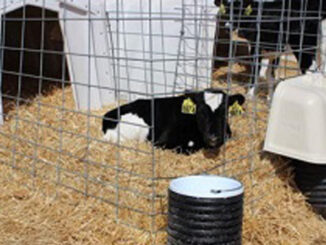
Six new USDA studies in the October issue of JDS focus on preweaned heifer calves
The United States Department of Agriculture-National Animal Health Monitoring System (USDA-NAHMS) conducted a survey of 2,545 preweaned heifer calves across 104 dairy operations in 2014. The study, which took place in 13 states over 18 months, covered a large cross-section of management of preweaned heifer calves in the United States, and the results have been published in six new articles in the October issue of the Journal of Dairy Science.
“Results from the study contain the latest information on the health and management of preweaned heifer calves in the United States. The information in these publications will help to improve the health and well-being of preweaned dairy heifer calves,” said Jason Lombard, DVM, of USDA-Animal and Plant Health Inspection Service-(APHIS)-Veterinary Services (VS) Center for Epidemiology and Animal Health, NAHMS, Fort Collins, CO, USA.
The articles included in the October issue of the Journal of Dairy Science include survey results on descriptive characteristics of preweaned heifer raising practices, colostrum quality and passive transfer status, Cryptosporidium and Giardia infections, the presence of Escherichia coli, morbidity and mortality, as well as average daily gain. These studies provide dairy producers with a wealth of information to help them improve their calf-rearing practices in terms of outcomes and efficiency. The authors hope that the results may also be used to guide education programs and improve overall calf health.