

One disease that robs future productivity more than any other is Bovine respiratory disease (BRD), still the number one cause of death in pre-weaned dairy calves. BRD prevention starts with building immunity in the calf, reducing disease pressure from the environment, and analyzing success in order to improve over time.
Colostrum is the key
The prevention of BRD starts with colostrum, and the making of quality colostrum starts in the cow. Colostrum production starts in the cow about five to six weeks prior to calving. If cows are vaccinated before colostrum development happens the cow has time to build antibodies that can be transferred to the colostrum and subsequently to the calf.
Shortly after birth, the calf needs four liters of colostrum as soon as possible, followed by two liters, each feeding, for several feedings. Second and third milking transition milk can be fed to calves as a transition to continue to bathe the gut with immunoglobins and protect the calf from pathogens.
Once calves are a few days old, target feeding a gallon of milk three times each day. Get enough nutrition into the calves so they have the energy to grow at your goal rate and fight off disease pressures as they arise.
Nutrition Can Build Immunity
Remember that the right nutrition can help calves build immunity and enhance performance. A postbiotic can support not only faster growth but also immune function so calves are better protected to fight off disease challenges.
An Iowa State University study (Mahmoud et al., 2020) fed calves starting at one or two days old containing a postbiotic feed additive in milk replacer and top dressed on starter feed. On days 19 to 21 calves were challenged with BRSV. Calves fed the milk replacer and starter with the postbiotic feed additive had reduced clinical signs related to respiratory health post-infection and lower lung pathology scores compared to control-fed calves that did not receive the supplement.
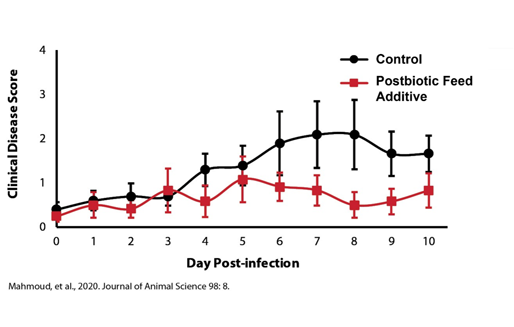
Research-proven feed additives like the ones offered in the Iowa State research can help with inflammation and help calves deal with the stresses and challenges they face every day.
Create a Clean Environment
Even when colostrum and feeding protocols are strictly followed, calf immunity can be overwhelmed if the environment subjects calves to high pathogen loads. Create a low-stress dry cow environment that reduces pathogen shedding, and provide ample space for cows to eat, drink, and rest. Maintain a clean, dry calving environment.
Move newborn calves to housing that has been disinfected to reduce pathogen load. Keep the housing area clean, dry, and well ventilated to continue to keep pathogen loads at a manageable level. Ammonia in the housing environment can challenge lung function, so it’s important to keep air moving around the calf to keep air clean. Make special considerations when seasons change by changing ventilation to accommodate the temperature and humidity changes.
Analyze Your Success
As calf management protocols are followed, collect data that tracks disease challenges, especially the calf’s age and type of pathogen causing health issues. Know where calves are under stress that could allow pathogens to take hold. If scours hit your calves, identify the stress points that allow pathogens to overwhelm the calf. If respiratory issues are affecting your calves, look at what may be happening in the cow herd to get an idea of what is affecting your calves and heifers.
Work with your veterinarian to build an effective nutrition and immunology program. Also, consider asking your veterinarian to perform thoracic ultrasounds on your calves to better understand lung health and function. Lung ultrasound analysis can pick up subclinical disease seven to 14 days prior to the onset of clinical disease. When done throughout the year, ultrasound results can pinpoint when your calves are at greatest risk and adjust management accordingly.
Even if you identify pathogens that could be causing disease in your youngstock, it’s important to understand what brought you to the point where pathogens were overwhelming the system and the factors that may have led to increased pathogen exposure.



Be the first to comment