
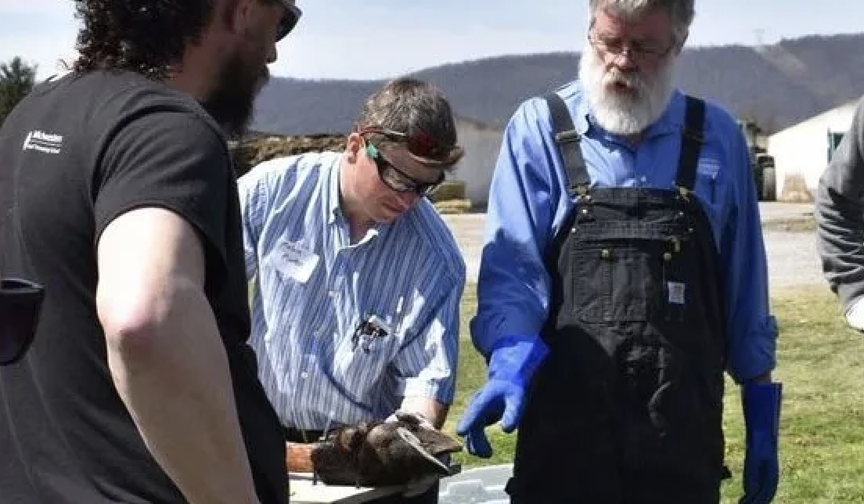
Lameness can have negative implications beyond cow comfort. Lameness contributes to reduced milk production, reduced reproduction and increased costs related to treatment and prevention.
To calculate the cost of a disease, expenditures and losses must be considered. Expenditures are the cost of treatment and prevention, and losses are the indirect costs, such as reduced milk production or reproduction (Dolecheck and Bewley, 2018). Dolecheck and Bewley (2018) summarized many studies estimating the cost of lameness and found that lameness can cost between $76 and $533 per case. A recent study published in the April 2023 edition of the Journal of Dairy Science (Robscis et al., 2023) investigated the economic impacts of lameness in dairy herds. The model used in this study considered reproductive status, milk production, parity, stage of lactation, and interaction with other diseases. This model also considered whether the cow was newly or chronically lame. When considering how much lameness costs a farmer, Robscis et al. (2023) included a loss in milk production, changes in reproduction, and treatment costs. This study suggested that it costs an average of $336.91 per case of lameness. Digital dermatitis was the largest cause of lameness and cost almost $100 more than other causes of lameness. For each additional week that a cow remained lame, it cost the farmer $13.26 more per week.
In this study, the scenario with the lowest rate of lameness (26%) included housing with concrete floors, preventative foot trimming, a foot bath, and automatic scrapers scraping alleys at least eight times daily. The scenario with the highest rate of lameness (98%) did not include any of these parameters. In this model, cows that became lame were lame for almost a week longer if they had not received a preventative hoof trimming during their lactation.
Robscis et al. (2023) showed that accurate lameness detection is essential in preventing and treating lameness. Short-term actions laid out in this study to improve lameness include proper foot bath usage and better lameness detection. The earlier that lameness is detected, the earlier it can be treated. Lameness can be detected through visual observation with several scoring methods or activity monitors. Many dairies in Pennsylvania house cows in tie stalls, where lameness detection may be more difficult. Leach et al. (2009) suggest that lameness can be determined in tie stalls by watching for cows shifting from side to side, uneven weight bearing between legs, and the resting of a foot.
Copper sulfate is a standard footbath solution to control digital dermatitis. A study investigated the frequency of copper sulfate usage (Speijers et al., 2012). It showed that a copper sulfate footbath should be used once weekly for four consecutive milkings to control digital dermatitis. Another study investigating the usage of 5% or 2% copper sulfate solution showed that a 5% solution is more effective (Speijers et al., 2010). While it may be costly to use a 5% copper sulfate footbath for four consecutive milkings each week, it is the most effective way to prevent digital dermatitis.
Lameness can be prevented with regular hoof trimmings; cows should be trimmed at least twice per year. Barn scraping can also help prevent lameness in dairy herds and save money in the long run. Implementing these practices can improve animal welfare and help producers save money in the long run.
References
Dolecheck, K. and J. Bewley. 2018. Animal board invited review: Dairy cow lameness expenditures, losses and total cost. Animals. 12:1462-1474.
Green, L. E., V. J. Hedges, Y. H. Schukken, R. W. Blowey, and A. J. Packington. 2002. The Impact of Clinical Lameness on the Milk Yield of Dairy Cows. J. Dairy Sci. 85:2250-2256.
Leach, K. A., S. Dippel, J. Huber, S. March, C. Winckler, and R. Whay. 2009. Assessing lameness in cows kept in tie-stalls. J. Dairy Sci. 92:1567-1574.
Palmer, M. A. and N. E. O’Connell. 2015. Digital Dermatitis in Dairy Cows: A Review of Risk Factors and Potential Sources of Between-Animal Variation in Susceptibility. Animals. 5:512-535.
Robcis, R., A. Ferchiou, M. Berrada, Y. Ndiaye, N. Herman, G. Lhermie, and D. Raboisson. 2023. Cost of Lameness in Dairy Herds: An integrated bioeconomic modeling approach. J Dairy Sci. 106:2519-2534.
Speijers, M. H. M., G. A. Finney, J. McBride, S. Watson, D. N. Logue, and N. E. O’Connell. 2012. Effectiveness of different footbathing frequencies using copper sulfate in the control of digital dermatitis in dairy cows. J. Dairy Sci. 95:2955-2964.
Speijers, M. H. M., L. G. Baird, G. A. Finney, J. McBride, D. J. Kilpatrick, D. N. Logue, and N. E. O’Connell. 2010. Effectiveness of different footbath solutions in the treatment of digital dermatitis in dairy cows. J. Dairy Sci. 93:5782-5791.
Warnick, L. D., D. Janssen, C. L. Guard, and Y. T. Grohn. 2001. The Effect of Lameness on Milk Production in Dairy Cows. J. Dairy Sci. 84:1988-1997.



Be the first to comment