
The Cattle on Feed report provides monthly estimates of the number of cattle being fed for slaughter. For the report, USDA surveys feedlots of 1,000 head or more, as this represents 85% of all fed cattle. Cattle feeders provide data on inventory, placements, marketings and other disappearance.
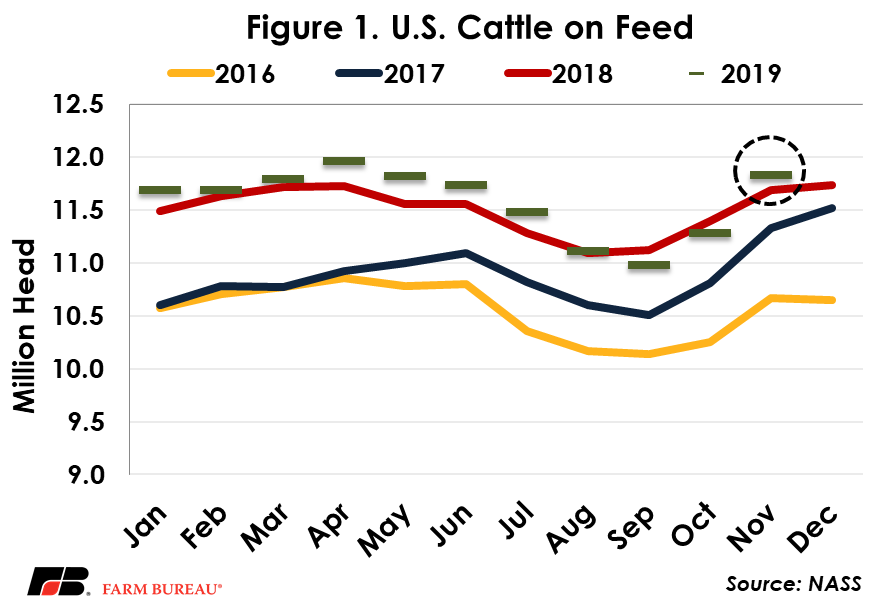
The report showed a total inventory of 11.831 million head for the United States on November 1. This year-over-year increase of 1.2% is right in line with analysts’ expectations of an average increase of 1.3% in feedlot inventories. This month’s increase follows two months of year-over-year decreases.

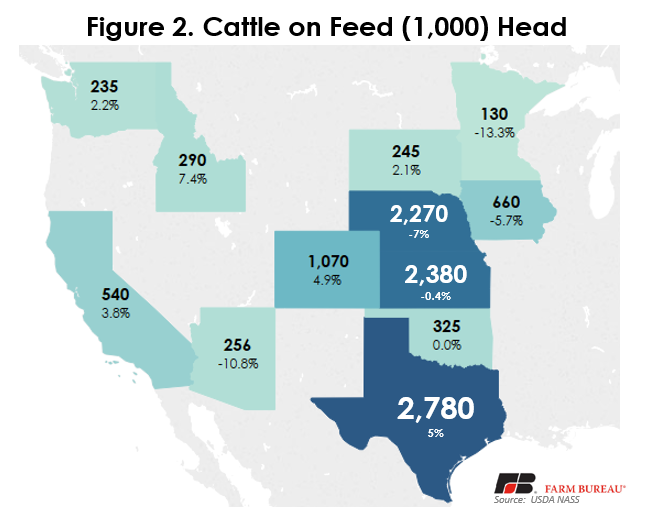

As usual, Texas, Kansas and Nebraska lead the way in total fed cattle numbers, accounting for over 7.8 million head, or approximately 66% of the total on-feed inventory in the country.
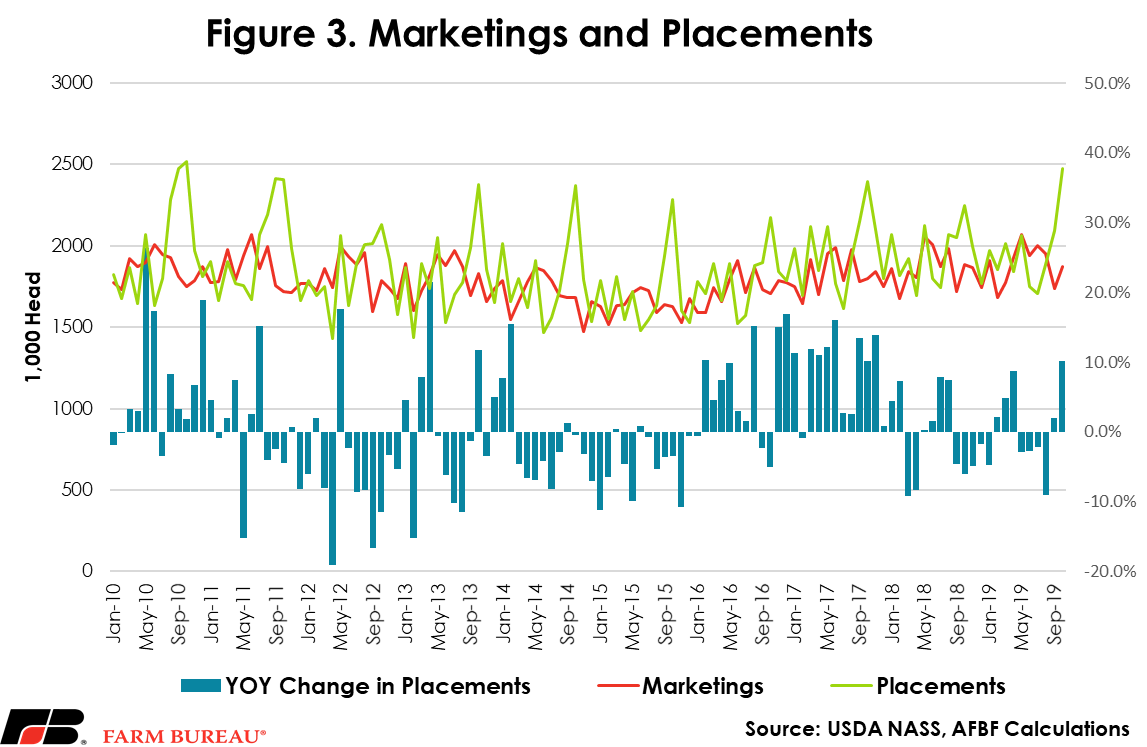
While total inventories are an important component of the report, other key factors include placements (new animals being placed on feed) and marketings (animals being taken off feed and sold for slaughter). Marketings in October were 1.875 million head, down 0.6% from a year ago, exactly matching the average analyst expectation.
However, in the day leading up to the report’s release, feeder cattle futures showed significant weakness, dropping $3.45 for the January contract on Friday, Nov. 22. It seems that the expected higher placements and on-feed numbers were enough of a concern that day and may have driven some profit taking. Overall this report is considered relatively neutral, but the large placement number will push production up in the first half of next year. This production increase has to be met with strong demand to prevent weakness in the cattle market, although improved conditions are anticipated as the closed Tyson plant is expected to resume operations in early December.

Be the first to comment