
Are your spring seeded cool-season forages getting close to harvest? Remember that the management of these crops now can determine the longevity of these stands in the future. These tips can help promote thicker stands and faster regrowth.
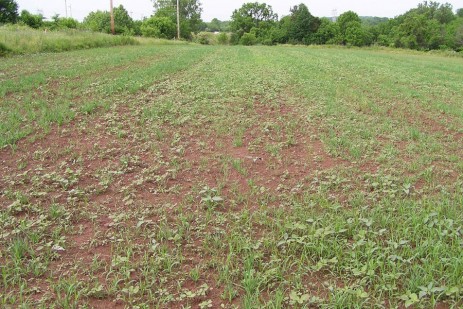
New establishments of forage crops are planted in either the fall or the spring, depending on management and rotation of the operation. Both plantings take special management; however, spring plantings are often the most susceptible to failure due to over utilization during the planting year. Traffic, harvest management, and fertilization are the largest concerns associated with seeding failure.
Travel on newly planted fields
Grazing or mowing
Mowing and grazing management should be based on timing and forage physiological development. If the planting majoring legume, it should not be mowed until the at least early flowering. If grasses, wait at least 70-days from planting. This harvest delay allows the roots and crowns time to develop and support the plant during regrowth after harvest. If weeds become and issue, these harvests can be moved up, but mowing or grazing height is very important. Do not mow legumes less that 3” and grasses less than 4” in the first year. This will allow the plants to recover and return to vegetative growth quicker.
Fertilization
If you have a legume forage, nitrogen is not recommended as it will reduce legume fixation and promote grasses to out compete the legumes. Grasses will need some fertilization after the first cut, but it is not the same amount as a maintenance application. Apply 50 units of nitrogen after harvest to accelerate growth, but not too much to take away from root development. Phosphorous and potassium fertilization in the late summer or fall will help with root development, tilling, and winter hardiness, resulting in a better survivability and green-up in the subsequent spring.
If the seedling is planted with a nurse crop, like oats, there is often a desire to fertilize with nitrogen to increase the oat yield. An issue here can be that we are increasing travel on the stand, we are increasing nitrogen on a newly developed forage, and we will thicken the oats, which will reduce light and nutrients to the forage crop. The way to look at this is that the oats are a one-time crop, while the forage stand is going to be there for multiple years. It is most important that we do the most to nurture and support the forage, rather than the oats that will be removed by August. In this situation, we split the difference. We would have planned for additional nutrients at planting for the oats.
For more information on forage fertility management read Soil Fertility Management for Forage Crops: Establishment . For more information on mowing and razing heights read Cutting Height in Forages: How Low Can You Go? and Grazing Residue Height Matters.



Be the first to comment