
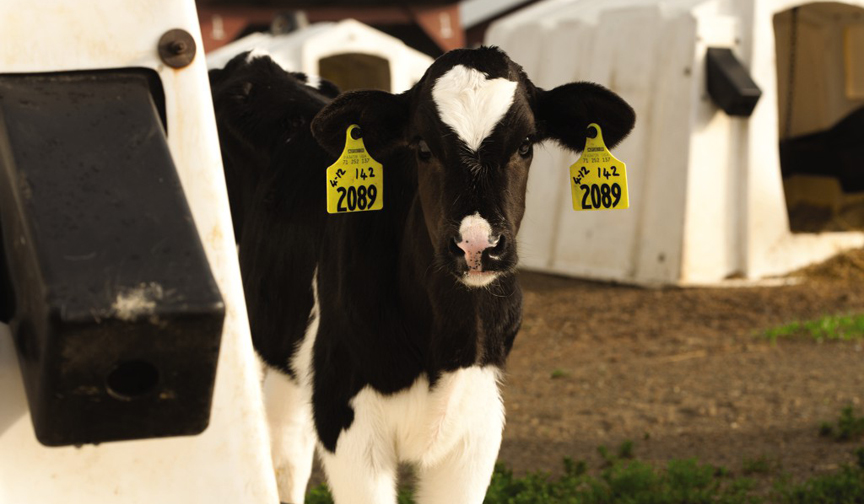
While producers may not be able to control all the stressors in a calf’s life, it’s imperative to have a plan to help manage them. Different types of stress can make calves more susceptible to diseases such as pneumonia and scours, stunting their potential before they’ve even entered the milking herd. Calfhood pneumonia can equate to 1,000 less pounds of milk in the first lactation while scours can impact average daily gain and first-service conception risk.1,2
There are several strategies that can help calves get off to a good start, but there’s one that I’d prioritize in the birth-to-weaning phase: aggressive nutrition programs.
Pushing the Envelope in Milk Nutrition
Nutrition is a critical piece of the puzzle in preventing calf disease and managing stress. Having pre-weaned calves in a strong, healthy body condition can help them manage potential stress effectively.
A strategy to improve nutrition in dairy calves is to increase their milk intake, specifically in the first five to seven days of life. While dairies often increase milk in their feeding programs after two weeks, early and aggressive milk nutrition can help calves handle a potential bout of pneumonia or scours. For example, in a 2012 study, after being challenged by disease, calves that received more than four quarts per day maintained hydration, grew faster and converted to feed with greater efficiency when compared with calves that received four quarts per day.3 More recently, in 2021, farms in Germany that fed higher volumes of milk during the first week of life had a lower risk of scours when compared with other farms that fed four or less quarts per day.4 Ultimately, there are benefits to increasing milk intake sooner rather than later.
The immediate pushback I receive when making this recommendation is the obvious rise in cost. The first two months of a calf’s life are the most expensive, and with rising input and milk prices, each dairy must prioritize the best fit for their operation. What I do encourage producers to do is see their calves as an investment. They are the future of an operation, and it’s crucial to set them up for success in the first 60 days of life. Even a little can go a long way, and investment in nutrition can be seen beyond calfhood.
There is a strong correlation between average daily gain in the first eight weeks of life and milk production. Four quarts of milk per day can be assumed to result in about 1 to 1.2 pounds average daily gain depending on the type of milk replacer or pasteurized milk. For every quarter-pound increase in average daily gain beyond this benchmark, we can expect 600 pounds more milk in the first lactation.5 Just increasing average daily gain to 1.5 pounds can bring large improvements. The upfront investment in the first two months of a calf’s life can be paid off throughout its life.
Making Smooth Transitions From Milk to Feed
When calves are drinking more milk, they won’t eat as much starter feed. It’s important to incorporate a step-down period to develop calves’ rumens for grain and prep for a successful weaning transition. Drastically cutting milk intake and introducing new feed will leave calves stressed and sick. A step-down period prior to weaning includes at least two cuts in milk intake that last five to seven days each and can encourage calves to eat more starter feed. Ensure the starter feed used is high quality, with at least 22% protein. This distinction helps calves stay energized as they consume both milk and feed.
Here’s an example that assumes calves are receiving eight quarts of milk per day and the weaning process will take place at eight weeks:
- First cut: six weeks, step down to six quarts
- Second cut: seven weeks, step down to three quarts
Once weaned, keep calves on the same starter feed for one to two weeks. This not only continues to help with rumen development but also can help ensure a smooth transition into group housing and a calf’s new environment. While they’re adjusting and experiencing a variety of stressors, they have a familiar nutrition plan to fall back on. In order to not overwhelm the calves and cause stress, it’s important to have a plan for spacing these changes out.
One Change at a Time
There are various contributors to stress that a calf will experience, and body condition created in the first two months of life can help them handle those stressors. However, farm teams must remember that nutrition is just one slice of the pie and is only as effective as other management practices. Work with your veterinarian to revisit your overall calf wellness program and nutrition regimen and determine what’s right for your dairy. Even a little change can go a long way to help improve future production and profitability.
1 Stanton AL, Kelton DF, LeBlanc SJ, Wormuth J, Leslie KE. The effect of respiratory disease and a preventative antibiotic treatment on growth, survival, age at first calving, and milk production of dairy heifers. J Dairy Sci. 2012;95(9):4950-4960.
2 Donovan GA, Dohoo IR, Montgomery DM, Bennett FL. Calf and disease factors affecting growth in female Holstein calves in Florida, USA. Prev Vet Med. 1998;33(1-4):1-10.
3 Ollivett TL, Nydam DV, Linden TC, Bowman DD, Van Amburgh ME. Effect of nutritional plane on health and performance in dairy calves after experimental infection with Cryptosporidium parvum. J Am Vet Med Assoc. 2012;241:1514-1520.
4 Lorenz I, Huber R, Trefz FM. A High Plane of Nutrition Is Associated with a Lower Risk for Neonatal Calf Diarrhea on Bavarian Dairy Farms. Animals. 2021;11:3251.
5 Soberon F, Van Amburgh ME. Lactation Biology Symposium: The effect of nutrient intake from milk or milk replacer of preweaned dairy calves on lactation milk yield as adults: a meta-analysis of current data. J Anim Sci. 2013;91:706-712.
All trademarks are the property of Zoetis Services LLC or a related company or a licensor unless otherwise noted.
© 2022 Zoetis Services LLC. All rights reserved. GDR-00831


Be the first to comment