
· What is the nutrient profile of your herd’s whole milk?
· What are your farm’s goals for calf growth and health?
· What is needed in the form of milk enhancers or fortifiers so the herd’s whole milk achieves the farm’s goals?
A common challenge when feeding whole milk is managing its nutrient consistency, which will be the focus of this article. I could fill this page and many more discussing the importance of proper collection, handling, storage, and delivery of pasteurized milk…. Just know that the above must be done right for any additive to be effective. There is no “band aid” that can mask poorly processed pasteurized milk.
It is also important to note that a balanced calf feed must accompany your milk feeding program. Most calves on whole milk typically will not consume the adequate amount of grain needed to meet their requirements until they are around a month old. And as anyone that has worked with calves knows, the first month of life is a critical time for calves and their health.
Analyzing the nutrient content of your whole milk can start by comparing it to the requirements set by the National Academies of Science Engineering and Medicine (NASEM).
Anatomy of Whole Milk
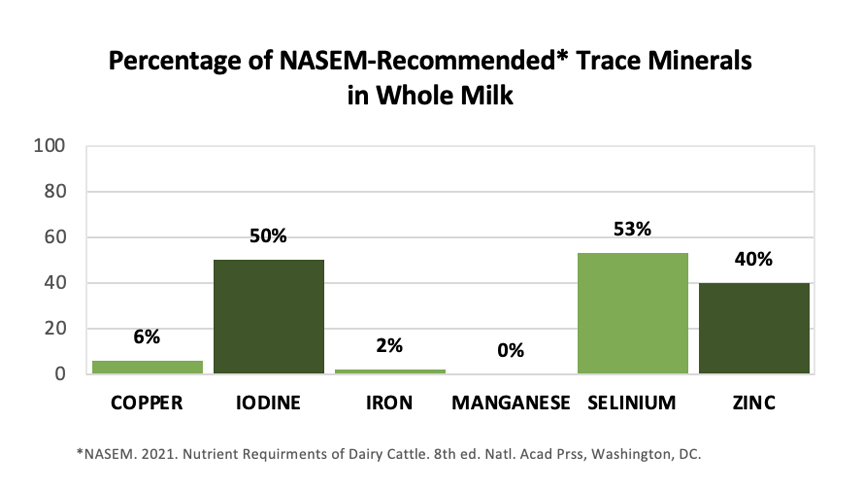
Previously known as the NRC (National Research Council), NASEM has updated the nutrition requirements for dairy cattle, and they include significant updates for feeding calves. Based on these new requirements, Charts 1 and 2 show that whole milk is deficient in several vitamins and trace minerals.
Chart 1
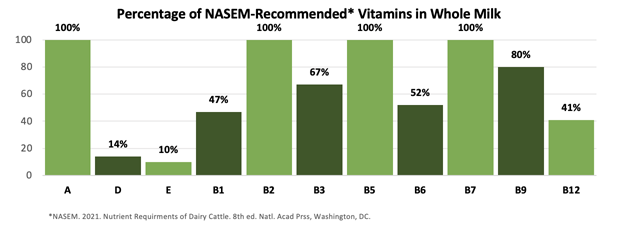
Chart 2
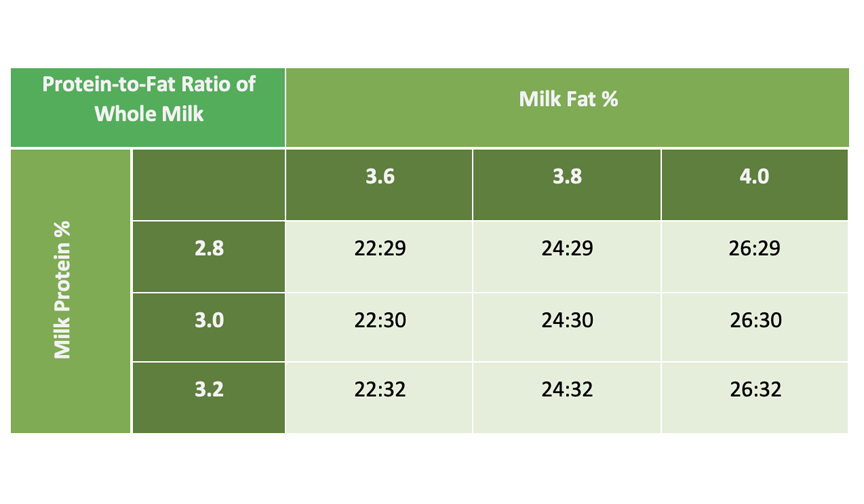
With whole milk you are always feeding more fat than protein because that is milk’s natural makeup. However, milk replacers have a higher protein to fat ratio compared to whole milk. Before switching to whole milk, figure out the amount of protein and fat your milk has. Table 1 shows the dry matter protein to fat ratio for whole milk at varying component levels, assuming 12.5% milk solids.
When to Add a Fortifier
A fortifier is a vitamin/mineral additive that supplements the calf with the required levels needed for adequate growth and development. Many fortifiers also have a coccidiostat, seasonal fly control, and a gut health additive. Fortifiers tend to have lower feed rates that range from 10-50 grams/head/day. They do not typically supply any added calories— the sole purpose is fortification.
It is safe to say that no matter your farm’s goals, when feeding whole milk, a fortifier should be added. Often, for simplicity’s sake, I see a single feed rate given for the entire milk feeding program (calves ranging from two-days-old to two-months-old). But if there are several batches of milk being fed to varying ages of calves, older calves that have started to consume adequate amounts of starter can be given a lower amount of fortifier and save you some cost.
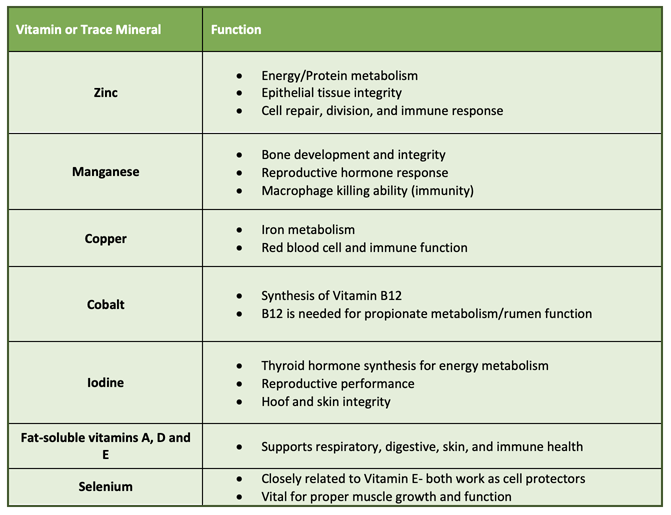
Table 2 shows the value that vitamins and trace minerals have when provided to calves through a well formulated fortifier.
When to Add an Enhancer/Balancer
Feeding whole milk with a protein-to-fat ratio below a 1.0. can become a problem if not balanced. For example, feeding a higher percentage of protein in milk encourages lean tissue growth and greater stature in calves. Opposed to the opposite of a higher fat ration where calves may be shorter and fatter, and potentially not meet the targeted breeding criteria as heifers.
Whole milk enhancers/balancers are a protein and vitamin/mineral additive and are designed to correct this ratio. Additionally, consider whether your milk enhancer/balancer contains coccidiostat, seasonal fly control, and a gut health additive.
It is important to note that if you are feeding a high majority of transition milk, or your percent of solids consistently run higher than 12.5%, a milk enhancer/balancer may cause more harm than good. Avoid adding more solids to any milk that is 15% solids or more—this is just one reason why understanding your milk’s nutrient content is so important.
When deciding on a feeding rate, typically a milk enhancer/balancer product ranges from a fourth to a half of a pound feed rate. If you are using a half of a pound feed rate product and
only feeding it at a fourth pound feed rate, you are only supplying the calf with half the vitamins, minerals, and coccidiostat needed. Knowing your feeding rate and determining if it matches your current calf feeding program can help fill holes in nutrition.
Summary
Milk fortifiers and enhancers/balancers are tools we can use to add and balance the nutrient content of whole milk. When choosing an additive, work with your nutritionist to avoid over or under feeding certain nutrients. With the right gameplan, you can meet your goals when it comes to feeding whole milk. You can contact Brynn Raduechel at Brynn_Raduechel@cargill.com.



Be the first to comment