
Kansas Farm Bureau: The U.S. Department of Agriculture’s (USDA) Animal and Plant Health Inspection Service confirmed New World screwworm (NWS) in Texas and New Mexico. While there has not been a confirmed case in Kansas at this time, being diligent about checking livestock and other warm-blooded animals for this pest is crucial.
“While this new confirmed case in Texas is a serious concern, we have been preparing for this scenario for over a year, and we have confidence in the response plan that is in place,” said Dr. Justin Smith, Kansas Animal Health Commissioner. “We appreciate the awareness across the state and the help of livestock owners, veterinarians, pet owners and other stakeholders who are important partners in preventing NWS in Kansas.”
Background
The New World screwworm is a fly that lays eggs on a warm-blooded animal and the larva feed on the animal. If left untreated, it can be deadly. While the spread of NWS is not animal to animal, mitigating flies can be difficult. Increasing the production and dispersal of sterile flies should be a top priority, which is the only known method of eradicating NWS.
What to watch for
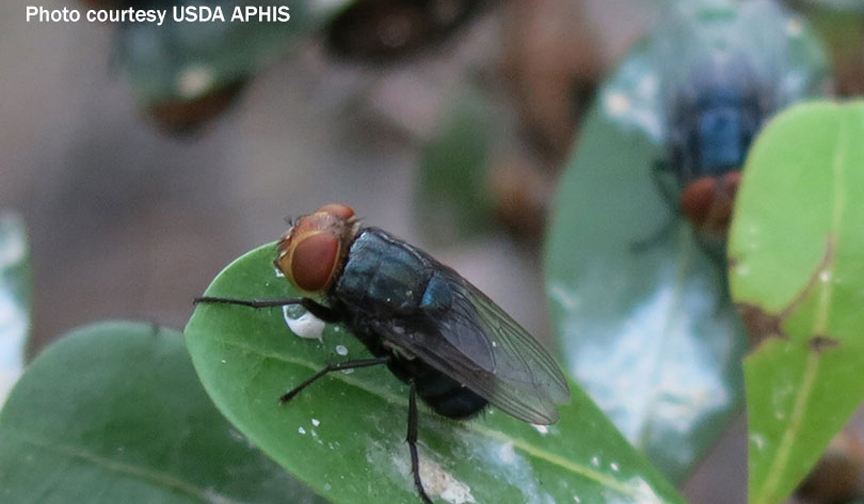
The maggots of the screwworm burrow into a wound on a warm-blooded animal and feed as they go. This can cause serious, deadly damage to the animal. The flies have orange eyes, metallic blue or green bodies and three dark stripes along their backs.
Signs of a screwworm infestation include:
- Irritated behavior of the infected animal
- Head shaking of the infected animal
- The smell of decay
- Presence of larvae in wounds
If you suspect an animal is infected, call your veterinarian and the Kansas Department of Agriculture’s (KDA) Division of Animal Health at 785-564-6601.
Human health and food security
The risk to people is low and any animal being treated for NWS is prevented from entering the food supply for a specific time period under established protocols. It is important to emphasize that NWS does not threaten the safety of the U.S. food supply. The United States maintains one of the safest food supplies in the world, supported by multiple layers of animal health, food safety and disease surveillance protections.
The threat of NWS is serious, and livestock owners are committed to ensuring a safe food supply. The USDA, KDA and other government agencies are working to respond to the confirmation of NWS in the U.S. through restricted movement of animals and other preventative measures.
To learn more about NWS, visit www.screwworm.gov. Kansas Farm Bureau will continue to monitor the situation and inform its members as necessary.
Be the first to comment