
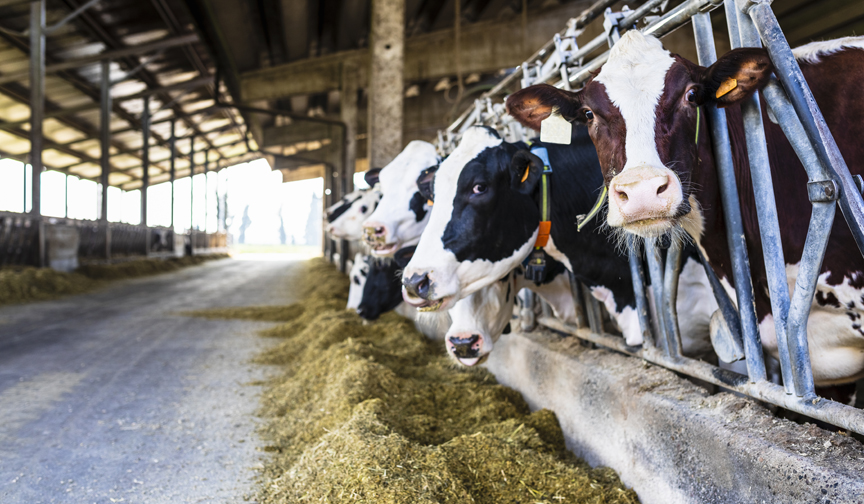

Enteric methane emissions, the scientific term used to describe what can basically be labeled as cow burps, is a subject that isn’t going away. While some consumers may chuckle at the term cow burps, it’s a controversial topic that’s gaining increased attention as scientists and politicians work to curb greenhouse gas emissions. There’s much discussion over global warming, its impact and what various sectors can do to curb emissions.
Caught in the middle are dairy farmers, trying to balance the threat of increased regulations with the desire to provide beneficial dairy products. It can be a difficult tightrope to walk…and frustrating, especially as ongoing on-farm environmental stewardship and sustainable business practices often go unrecognized.
Feed additives discussion…
There has been a fair amount written about development-stage products promising enteric methane reduction, but these products have limited long-term research, no promise of an ROI and no substantiated safety track record in the United States. Product safety and cow health, it goes without saying, are non-negotiable.
One blend of scientifically selected and proven essential oils offers a win-win. It is the only additive certified to reduce enteric methane while also improving feed efficiency. And it’s supported by more than 30 trials – many of them published in peer-reviewed journals. The scientific and financial benefits are aimed at benefiting dairy farmers, their cows and the environment.
Agolin Ruminant® is the result of more than three decades of research into essential oil compounds. All active ingredients are GRAS (Generally Recognized as Safe) by the FDA, ensuring there is no negative impact on animals, humans or the environment. The product naturally alters the rumen bacterial population and can positively influence performance.
“When carbohydrates enter the rumen, they are broken down my microbes, producing energy for growth and milk,” says Peter Williams of Feedworks USA. “But they also produce methane, much of which is belched out and lost…which is a waste of energy. One of Agolin’s features is to be able to capture some of that methane and convert it to milk production.”
Agolin Ruminant is fed to more than two million dairy cows across the globe, including over 300,000 in the United States. It was originally launched in 2007 as a product to improve energy-corrected milk and feed efficiency, but the emphasis recently given to methane reduction created additional interest in the product. The potential gains of 72 cents per cow per day from feeding Agolin Ruminant dwarf the 4 to 6 cents cost per day. Producers are seeing a proven 14:1 return on investment, based on improved milk production. “Soon we’ll be able to add to that ROI with carbon credit payments,” adds Williams.
To learn more about Agolin Ruminant and the research behind it, visit TheAgolinStory.com.



Be the first to comment