
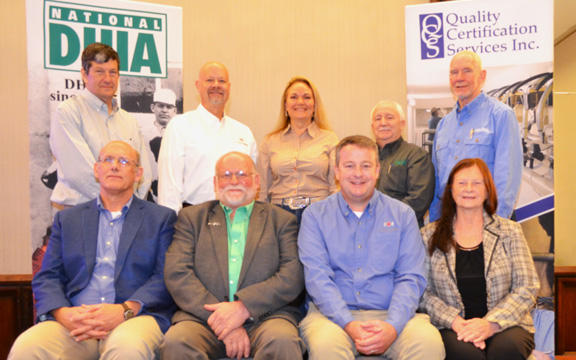
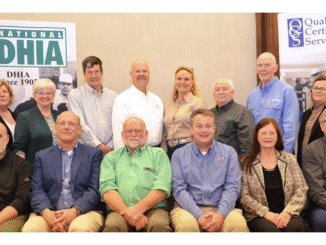
 NDHIA BOARD OF DIRECTORS AT THE 61st ANNUAL MEETING Seated from left are John Gloss, treasurer; Allen Chester, president; Kevin Haase, vice-president; and Susan Lee, secretary. Standing from left are Directors Dan Nodolf, Jeff Horning, Julee O’Reilly, Dave Scapanski and Bob McKaig. Photos are by Joel Hastings, DairyBusiness News
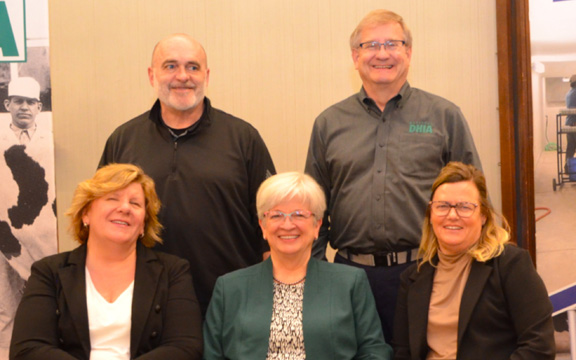 NDHIA / QCS STAFF Seated from left are Leslie Thoman, Business Operations; Mary Mattison, EarTagCentral; and Kim Hill, Herd Portal. Standing are Steven Sievert, QCS, left, and Jay Mattison, CEO.
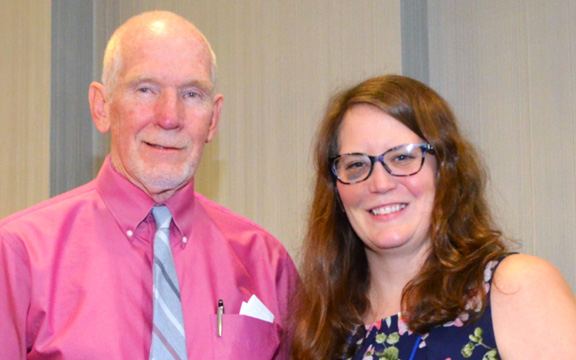 WILSON / JOACHIM LEADERSHIP AWARD Bob McKaig presents to recipient Elizabeth Straw, manager of Indiana State Dairy Association and longtime chair of the Scholarship Auction.
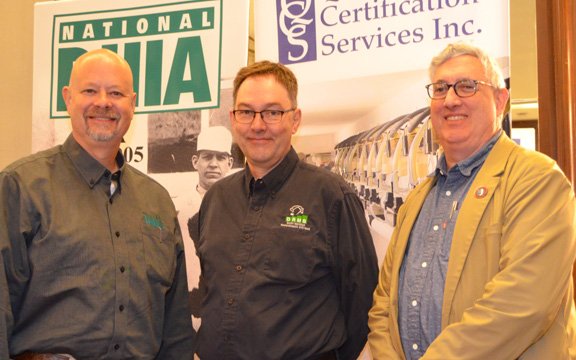 ANIMAL ID AND USE OF RECORDS Session mc Jeff Horning, left, is shown with Robert Fourdraine, center, and John Cole.
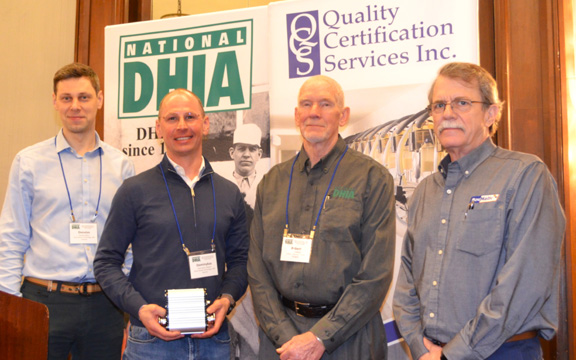 BROLIS MILK GENIUS BY BOUTMATIC From left are Brolis executives Donatus Majus and Dominykas Vizbaras with Steve Pretz, CEO at Boumatic.
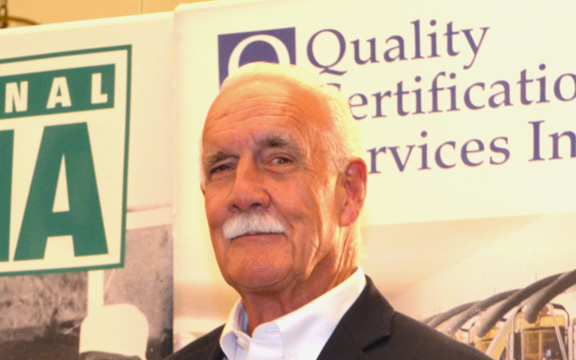 STAN ERWINE Dairy Management, Inc.
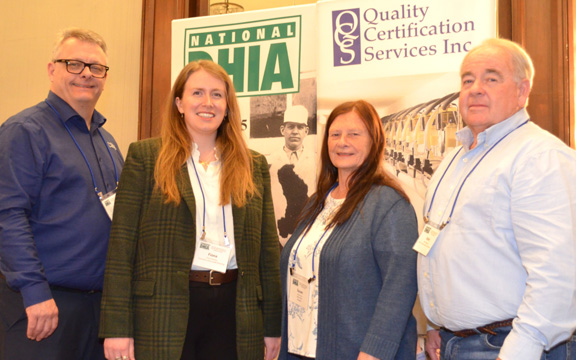 CDCB PRESENTATIONS From left are Joao Durr, CEO, with Fiona Guinan, Susan Lee, mc, and Kent Buttars of the producer advisory board.
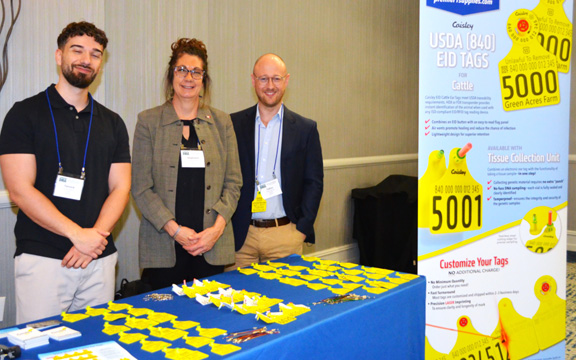 CAISLEY EAR TAGS This new product available only through EarTagCentral. Representing the company were, from left, Yanick Dekkers, sales team leader; Stephani Sexton, Premier 1, U.S. distributor; and Tobias Bollmann, Co-CEO.
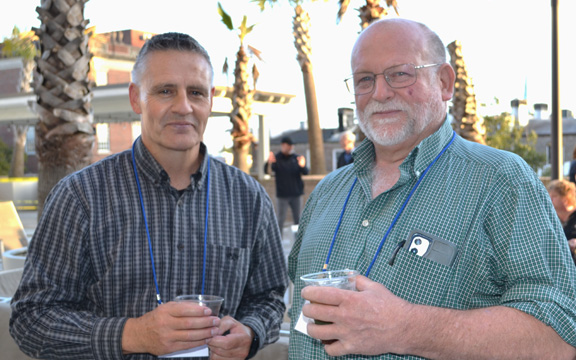 DATAMARS HOSTS THE RECEPTION Hosting the annual reception as always was Datamars Livestock. Shown here are Brett Ellis from headquarters in New Zealand, left, with Allen Chester, NDHIA president.
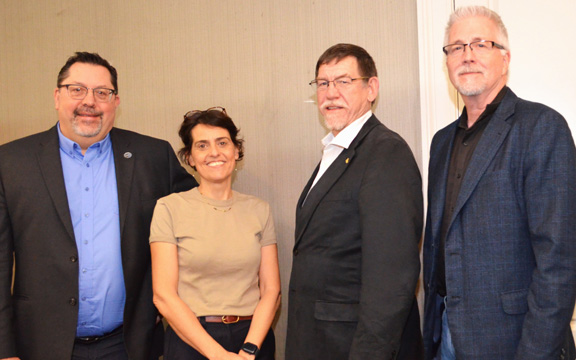 INDUSTRY UPDATES Speaking about their respective organizations were, from left, Daniel Lefebvre, Lactanet Canada; Ana Granados Chapatte, ICAR; Dr. Randy Baldwin, AGIL/ARS/USDA; and Jay Weiker, NAAB.
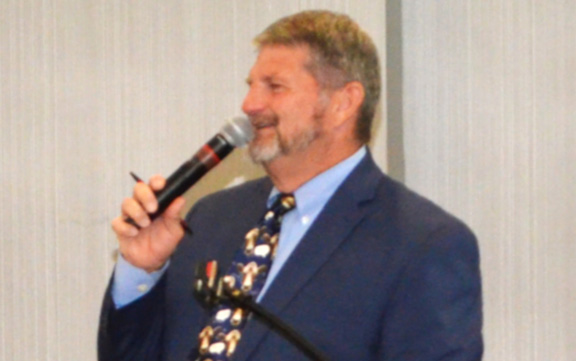 LYNN LEE Auctioneer for the Scholarship Auction.
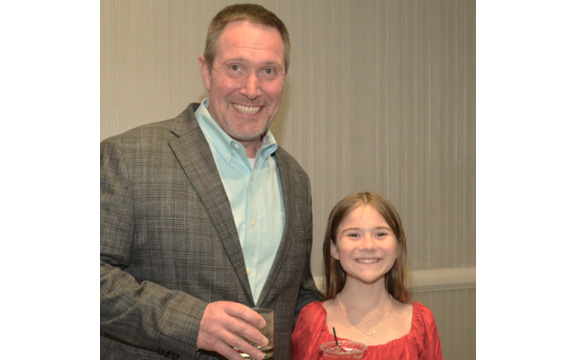 AT THE AUCTION Wisconsin delegate Nate Gartman is shown with his 10-yr-old daughter, Hazel, who ran slips at the auction.
The mild spring weather of historic Savannah, Georgia, with its stately old homes and live oak trees draped in Spanish moss, provided the backdrop for the 61st annual meeting of the National Dairy Herd Information Association, held along with the annual leadership conference.
The event brought together about 100 leaders representing not only milk recording and dairy farming but also records processing, animal identification and genetic research and evaluations for the U.S. and global dairy industry. The meetings were held March 3 – 5, 2026. NDHIA is a trade association based in Verona, Wis., currently including 14 milk recording organizations serving dairy herds across the U.S.
DHI Managers Meeting – Tuesday, March 3
Pam Thom of Central Star Cooperative welcomed the DHI managers, whose meeting typically is held on day one. The group introduced themselves and reelected Ms. Thom as chair. Steve Sievert, manager of the NDHIA subsidiary, Quality Certification Services, Inc., was the recording secretary. This year it began with a closed session in which the details of the new milk sampling device were presented. Now labeled “iCOW” it is designed to fit modern milking systems of all types, providing DHI technicians greater ease of sampling, automating and improving the quality of the milk sample, saving labor, providing clean working conditions and reducing the disturbance of test day on the dairy. Some of this detail was presented over the next two days at the annual meeting with a prototype on display and with photos included in the annual report.
The project is a partnership NDHIA and milk recording organizations in three other countries – Denmark, Germany and Ireland and Holland. Each partner is providing an equal share of the six-million-dollar investment. A myriad of patents have been obtained and arrangements for production and distribution are being planned. CEO Jay Mattison had introduced this topic and there were presentations via Zoom from Niels Henning Nielsen of RYK in Denmark along with Rudie Lammers, a dairy farmer in the Netherlands and an ag engineer who has been key to building this technology. Niels Henning emphasized that the strength of this project is it is farmer owned and farmer driven.
More dairy technology was the topic presented by Dom Vizbaras, CEO and co-founder of Brolis Sensor Technology of Lithuania. He and his chief engineer, Donatas Majus, described their “Milk Genius Sensor” which is installed in the milk line and can calculate the amount of milk, fat, protein and lactose from the cow’s milk as it flows to the tank. The two men described the company’s founding built around laser technology. Their device is available to U.S. dairy farmers through Boumatic.
Another multi-national activity international Dairy Data Exchange Network (iDDEN)was described by CEO Mattison when he brought the group up to date on data exchange among equipment manufacturers, dairy data organizations, farm service providers and farm operators on a worldwide basis. Currently the seven owners – dairy records firms in seven countries including NDHIA – represent 35 herd recording organizations serving some 20 million cows in 200,000 herds. Three milking equipment companies – Lely, GEA and DeLaval – are participating along with three specialized manufacturers – CowManager, smaXtec, and Afimilk. The mission here is to insure DHI is participating and facilitating as more and more technologies gather data on dairy farms.
In the afternoon session, Julee O’Reilly, lab manager of DHI Cooperative, Inc., based in Columbus, Ohio, led a discussion of personal retirement as well as organizational planning for succession. Then Mattison and new staff member Kim Hill gave an update on the Herd Portal program, aimed at confirming and establishing the identity of dairy farms assigning an eight-digit code which is tied into the state and county with a four-digit herd code. Hill had broken out lists of herds corresponding to the DHI organizations and invited help confirming herds still active, those no longer milking and newly established herds. This effort dates back to 1953 and the USDA brucellosis eradication program.
Mattison finished up with a review of the purpose of the uniform DHI operating procedures for records publicity and for access and use of transmitting data to the Council on Dairy Cattel Breeding (CDCB).
The first day concluded with a rooftop reception with refreshments provided by long time sponsor Datamars Livestock. Regional manager Brett Ellis was representing the company from its New Zealand headquarters.
Leadership Session – Wednesday, March 4
NDHIA President Allen Chester who farms with his family in Lisbon, N.Y., welcomed the audience which in this session included both DHI leaders and delegates along with industry participants. Chairing the first session was Director Jeff Horning, a Michigan dairy farmer representing CentralStar Cooperative. He introduced Robert Fourdraine of DRMS and John Cole of CDCB who spoke about the connection between animal identification and the use of dairy records in the National Cooperative Database for genetic evaluations among other performance metrics. The presentations showed that currently 8.3 percent of cows in DHI have missing official ID which means their records cannot be included in the national database. Cole pointed out that in 2024 there were 466,000 cows with missing ID’s so these records cannot be submitted. After these detailed presentations, Don DeHart, manager of Lancaster DHI, commented that producers, especially those in smaller herds, need to be shown “what’s in it for me” regarding individual animal ID and allowing records to be used in the national database.
After a break, NDHIA Director Bob McKaig, an Indiana dairy farmer representing the Indiana State Dairy Association introduced the Brolis leaders, Vizbaras and Majus, described above, with their “Milk Genius” technology. They pointed out it can provide health data for individual cows and groups providing warnings on negative energy balance, milk fat depression and mastitis identifying animals that may be regarded as healthy but whose conditions are changing. The technology allows the producer to quickly see the results of feeding or management changes.
Steve Pretz, Boumatic president and CEO, said that this technology “adds life to DHI” providing real time information. He said the company wants to share this data and is working with DRMS, the North Carolina based records processing center, to add costs to inputs and prices received so there are results in dollars, not just pounds.
Providing an update on the FARM program was Jamie Junker, chief scientific officer for National Milk Producers Federation. FARM – Farmers Assuring Responsible Management – was founded in 2009 in partnership with DMI (the dairy checkoff organization). Open to all processors, cooperatives and dairy farmers, the program is designed to provide verification to consumers and milk buyers that U.S. producers are committed to producing safe milk responsibly with care for the cows, people and the environment. Junker says this program allows the industry to have one system, rather than having Walmart, McDonalds, Nestle and other food companies each have its own program. He said with 99 percent of the U.S. milk supply covered, it allows programs that are truly what’s best for the cows rather than what a milk buyer says they want it. The standards are science based with trained appraisers working with producers. Topics evaluated are animal care, including antibiotic stewardship and biosecurity, workforce development and environmental stewardship. He said the managers of the program would welcome using DHI data to further inform milk buyers what is going on at the farm.
After lunch, the third session was chaired by Director Dan Nodolf, Wisconsin dairyman from AgSource. A presentation on the iCOW sampler was first up with the addition of a Zoom presentation from Danish DHI technical manager Uffe Lauritsen, speaking from his home in Denmark. A frequent participant in this meeting, he has been the coordinator of this project from its beginning. He said the goals of the project have been to provide a tool that makes life easier for DHI technicians and dairy farm workers, meets the needs of modern milking systems and attracts DHI labor.
Next up was Stan Erwine providing an update from Dairy Management, Inc. He introduced the website dairycheckoff.com where producers can find details about the work of the organization promoting dairy both domestically and internationally. He identified positive trends for dairy as consumers are returning to butter and focusing on protein, aided by the use of GLP-1 weight loss products. The opportunity to provide whole milk in schools and the continuing recommendation for three servings daily for dairy in the new dietary guidelines are also important. He said 2025 was the second-best year for dairy exports, only behind the 19 percent achieved in 2022.
Rounding out this session, the group heard from Mary Mattison with her update on EarTagCentral. Then Jeff Cox reviewed ear tag products from Y-Tex, a longtime meeting sponsor based in Cody, Wyoming. From the Caisley company, Co-CEO Tobias Bollman provided an overview while Stephanie Sexton of Premier 1 described her company’s role in sales, production and distribution. The short video demonstration use of the tag was presented, featuring Allen Chester’s daughter, Brittany, herd manager at the family farm.
The day’s final session was chaired by Director Susan Lee, manager of Idaho DHIA. She introduced Joao Durr, CEO of the Council on Dairy Cattle Breeding (CDCB) whose presentation covered a lot of ground. He opened with a new video then spoke of the ongoing project for new lactation factors being developed with DHI records. He described new traits being developed for genetic evaluations for calf health, hoof health and mobility. He said the introduction of the single step BLUP incorporating pedigree, records and genomics in the process will allow monthly genetic evaluations with an annual base change beginning in 2027, an increase from the three annual evaluations currently.
Utah dairyman and past NDHIA president Kent Buttars was here for CDCB too, as a member of the producer advisory board. He said his group of nine producers meets in person twice a year with additional Zoom sessions. He said they recommended the increase in frequency for evaluations and the annual base change. They had expressed concern about the weighting of fat and protein and input costs in the Net Merit index. They also considered what incentives can be offered to producers to participate in allowing their yield, event and type data to flow to the national database.
The meeting concluded with Dan Nodolf as committee chair introducing a draft of three resolutions which would be considered at the annual meeting the next day.
That evening was the annual banquet with the presentation of the Martin Wilson / Victor Joachim Distinguished Leadership Award made to Elizabeth Straw, manager of the Indiana State Dairy Association. Fellow Hoosier Bob McKaig introduced her. She has been chairing the Scholarship Auction for many years, securing donations and organizing the event here. Lynn Lee, Tennessee-based auctioneer and Ayrshire enthusiast, cried the sale with his unique blend of arm twisting and humor. He had received the Outstanding Service award last year. The sale brought in over $22,000 providing funds for scholarships to dairy students across the country.
Annual Meeting – Thursday, March 5
Robyn Buttars opened the annual meeting by leading the Pledge of Allegiance. She then shared a stirring video of the song written by her, “These are the Stars”, a tribute to U.S. service men and women across the years. Her husband, Kent, led the invocation
Board Secretary Susan Lee called the roll of delegates, established a quorum existed, and invited approval of the minutes of last year’s meeting.
NDHIA collaborators each gave brief updates from their respective organizations. Daniel Lefebvre spoke about Lactanet which incorporates the DHI system and genetic evaluations in Canada. He said there are 8976 dairy farms in his country with 5349 on milk recording. Of those, 21 percent are now using robotic milking systems with an average herd size of 131 cows. To maintain market share, a new program for these herds has been introduced, eDHI, grabbing the milk production virtually. However, this information is not included in genetic evaluations.
Dr Randy Baldwin, program leader at USDA’s Animal Genomics and Improvement Laboratory (AGIL) in Beltsville, Md., reminded the group of the AGIL mission: “… discovers and develops improved methods for the genetic and genomic evaluation of economically important traits of dairy animals and small ruminants and conducts fundamental genomics-based research aimed at improving their health and productive efficiency.” To accomplish this work, the staff currently consists of ten dairy geneticists with four open positions. Also working are five post-doctoral students, three support scientists, four technicians and an administrative professional. Projects underway now include studying the effects of dairy cattle size and production on feed intakes and improving feed efficiencies through genomics and other novel technologies. He also referenced his own work studying the impact of gastrointestinal tract activity. He explained the research dairy herd numbers at the Beltsville station have been reduced to 41 used in several ongoing studies but the herd is scheduled to be closed.
Director Nodolf presented four resolutions for delegate consideration. The first instructs NDHIA staff to work with the industry to include validation by QCS and ICAR of sensor data from technologies monitoring animal performance. A second reaffirmed the request for financial support from USDA for implementation of electronic ID in dairy animals. The third reaffirmed NDHIA support for the iCOW sampler project with reports to the partners at least four times annually. And the fourth gave approval to the NDHIA / QCS staff for its work at this meeting and throughout the year. All the resolutions were approved and the full text appears below at the conclusion of this report.
As chair of the nomination committee, Kent Buttars explained that three board seats are open – two for producers and one for a manager. Current directors Allen Chester and Bob McKaig had filed for these seats and with no others expressing intent, these two were reelected by acclamation. Kevin Haase of CentralStar was eligible for reelection and Leslie Gravatt of Ag Source also wished to be considered. Each made appropriate introductory remarks. A secret ballot vote was taken with Haase selected.
Allen Chester gave his president’s report citing the projects underway including the iCOW sampler, the support for the Caisley ear tag and the Herd Portal to strengthen data quality and documentation. He said, “We [NDHIA] see ourselves not just as a service provider but also as a partner with producers and a collaborator with industry.”
Citing his personal experience expanding in beef production initially from using beef on dairy in his herd, he said, tongue-in-cheek, “We’re beef farmers with a hobby of milking cows.” Even so, he said the milk sample and resulting genomic test provides the information needed to determine which cows to keep, which to breed to beef and which to cull.
The newly appointed CEO of ICAR, Ana Granados Chapatte, said that her organization provides “the universal language for animal production” through subcommittees and working groups. It provides the “global standard for livestock production” she affirmed. She said one of the current projects is creating standards for the exchange of animal data, taking into account the new technologies that are applied to herd management. It is anticipated that she will be moving ICAR headquarters to Brussels where she resides with her family.
News from the AI industry – that is, artificial insemination, not artificial intelligence – was presented by Jay Weiker, CEO of the National Association of Animal Breeders (NAAB), the animal breeding industry’s trade association and partner in CDCB. He introduced a new and functional website – usacattlegenetics.com. He said that last fall, NAAB had suspended seven associate members in China because that country no longer allowed semen to be imported. He said research conducted at Texas A & M had concluded that H5N1 or bird flu did not shed virus in bull semen so their need be no concern about disease transmittal. Bulls cannot be infected with the disease, he said.
He reported two Doak graduate fellowships had been awarded to students at the University of Minnesota and UW River Falls. He confirmed that CSS, the inspection arm of NAAB, continues its audit of AI facilities every year which allows U.S. bulls to meet the import requirements of countries around the world, while guaranteeing the health, safety and quality of all frozen semen from NAAB members.
He offered some statistics of AI sales based on the first nine months of last year, with beef on dairy “exploding” up to 5.8 million units in that time period. He said over the past five years, domestic units of conventional semen had declined by almost half, replaced by units of sexed semen. Conventional remains in demand internationally. The market in China had accounted for about eight million in annual sales, but the closure has not had as big an impact as initially feared.
For the year ahead, preparing for monthly genetic evaluations in 2027 and the recruitment of a new international program director will be priorities.
At this point, Jay Mattison introduced new NDHIA member Capstone Dairy Data Services headed by Josh Wooley and field managers Jacob and Mitch Freitas, of Freitas Milk Testing based in New Mexico who have been expanding testing services in the Southwest. Mattison also invited audience members to sign a shirt and extend best wishes to longtime DHI leader Mark Adam who is experiencing health difficulties.
Committee Chair Dave Scapanski along with Robert McKaig and Kevin Haase comprise the NDHIA finance committee which reported a clean audit for the 2025 financials and presented budgets for 2026. For the year ahead, income for NDHIA is forecast at $692,950, Quality Certification Services at $587,640 and DHIA Services, offering ear tags and the OriCollector robot milk samplers, at $493,197. Nearly $18,000 raised from the annual benefit auction will be given as scholarships to university students studying dairy. Scapanski characterized the organization’s financial standing as “solid” and made some adjustment in fees for the various services offered.
Having met briefly during a meeting break, the board announced the officers for the year ahead, with Allen Chester president, Kevin Haase vice president and Susan Lee secretary, all reelected. John Gloss of Dairy One was elected the treasurer, replacing Dave Scapanski who stepped down after six years of service on the finance committee.
In his annual manager’s report, Jay Mattison emphasized that providing herd management data is the key element in the DHI system. He said that QCS, which monitors, trains and reviews all aspects from collecting milk samples to processing records, is not the sheriff writing tickets but instead is a process for continuous improvement.
He reported that 3.8 million cows in the DHI system across the country contribute data to the National Cooperative Database used to produce genetic evaluations. Nearly 64 percent of those cows are in herds of 1000 head or more. Of the herds themselves, 75 percent have 250 cows or fewer.
He showed slides depicting the locations of 20 testing organizations and meter centers that have 78 certified technicians using 68.000 milk meters to collect samples. Another slide identified the 35 laboratories that evaluate and test the 5.81 samples monthly. And finally, he showed the four data centers that process the records sent to dairy farmers, all part of the national system and all evaluated by QCS. He said in the year ahead communications will be improved as regional meetings are held for managers and staff. He concluded saying, “We are doing the job today and getting ready for the job tomorrow.”
Meeting sponsors were companies that provide services to the DHI system – Bentley Instruments, Brolis, Caisley, Eurofins DQCI, Foss, Paramount Group and Y-Tex. The meeting was adjourned at 11:45 a.m.
Resolutions Adopted at the NDHIA 61st Annual Meeting
Resolution 1
To ensure accuracy and reliability of management data, and to encourage the inclusion of new data sources, be it resolved that the delegates instruct NDHIA/QCS management to work with industry to ensure that novel sources of sensor data be validated by ICAR and performance is validated by QCS before data is included in the National Cooperator Database.
Resolution 2
Be it resolved that the National DHIA delegates affirm continued support for the resolution put forth at the 58th National DHIA Annual Meeting which stated: “Whereas, animal identification is recognized as the foundation for data in the dairy production, management, genetics, animal health, and public health sectors and whereas, animal identification needs to be addressed on behalf of the DHI system to ensure quality data for management and the further advances in research that benefit DHI System herds. Whereas the DHI System and its participants see the benefit of increased uptake by producers; and, whereas there is a cost to farmers in time and money; therefore, be it resolved that USDA increase funding for the continued and timely implementation of electronic ID.”
Further, be it resolved that NDHIA increase its efforts to provide education, support, and encouragement for the full adoption of 840 Electronic identification tags for all cows enrolled in DHI system.
Resolution 3
Given that a stable source of equipment to collect an accurate milk weights and representative milk samples are critical to the management of farms, and a robust database for research, the delegates reaffirm their support of the iCOW project. Further it is resolved that the delegates request that the iCOW organization and National DHIA provide information and communication to investing organizations on the status of the project at least four times annually.
Resolution 4
Be it resolved that the 2025 National DHIA delegates and guests express our gratitude with a round of applause to the National DHIA staff for their efforts in planning and implementation of this meeting and their efforts throughout the year.


Be the first to comment