
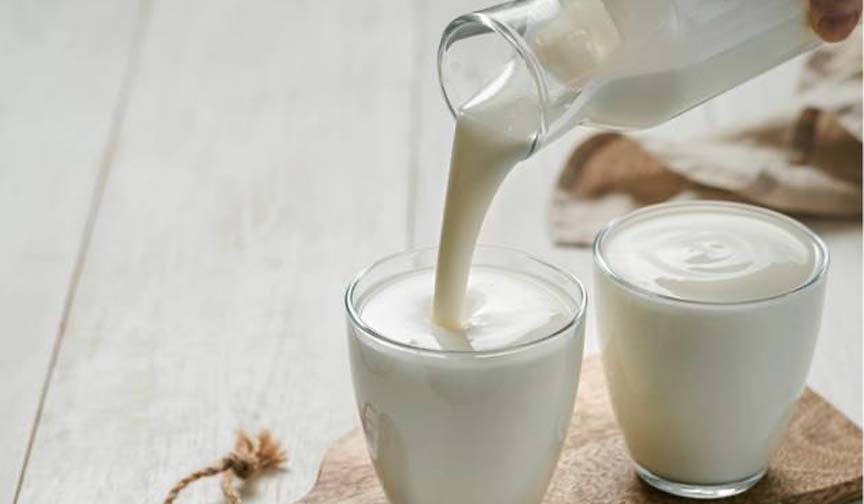
Models to characterize and accurately predict yeast growth have the potential to reduce economic losses due to food waste and influence management decisions in the yogurt industry, according to a new report in the Journal of Dairy Science®
Between 11% and 25% of dairy products are wasted globally, in part due to fungal spoilage. One method to reduce fungal spoilage is to add food cultures known to have bioprotective effects that delay growth of unwanted microorganisms during shelf life. The authors of this study were the first to develop Monte Carlo simulation models to estimate yogurt spoilage caused by yeast that included the initial contamination level, different yeast species, storage conditions, and the addition of food cultures with bioprotective effects.
“These predictive models allowed for prediction of yogurt spoilage caused by different yeast species, as well as the effect of including bioprotective culture in a yogurt product to reduce yeast spoilage,” said first author Line Nielsen, PhD, Department of Food Science, University of Copenhagen, Frederiksberg, Denmark. “Such models can help yogurt producers understand how different parameters influence product quality and use these results to support decision making in yogurt quality management.”
Nielsen added, “If a dairy has a problem with a yeast strain known to have a similar growth-inhibition pattern in the presence of a bioprotective culture as one of the yeast strains tested in this study, the data from this strain can be used in the model to predict an expected spoilage level relevant for the specific dairy; therefore, the predictive model can be used as a tool that allows the industry to better evaluate the potential of improving control of fungal soilage by using bioprotective cultures at specific production settings.”
The study presents a valuable tool to assist in management decisions that can help to reduce economic losses due to food waste. Additionally, the methods used for model development can be used further for creating new and improved models.
About the Journal of Dairy Science
The Journal of Dairy Science® (JDS), an official journal of the American Dairy Science Association®, is co-published by Elsevier and FASS Inc. for the American Dairy Science Association. It is the leading general dairy research journal in the world. JDS readers represent education, industry, and government agencies in more than 70 countries, with interests in biochemistry, breeding, economics, engineering, environment, food science, genetics, microbiology, nutrition, pathology, physiology, processing, public health, quality assurance, and sanitation. JDS has a 2020 Journal Impact Factor of 4.034 and 5-year Journal Impact Factor of 4.354 according to Journal Citation Reports (Source: Clarivate 2021). www.journalofdairyscience.org
About the American Dairy Science Association (ADSA)
About FASS Inc.
Since 1998, FASS has provided shared management services to not-for-profit scientific organizations. With combined membership rosters of more than 10,000 professionals in animal agriculture and other sciences, FASS offers clients services in accounting, membership management, convention and meeting planning, information technology, and scientific publication support. The FASS publications department provides journal management, peer-review support, copyediting, and composition for this journal; the staff includes five BELS-certified (www.bels.org) technical editors and experienced composition staff. www.fass.org
About Elsevier
As a global leader in information and analytics, Elsevier helps researchers and healthcare professionals advance science and improve health outcomes for the benefit of society. We do this by facilitating insights and critical decision-making for customers across the global research and health ecosystems.


Be the first to comment