

Introduction: The Dawn of Sustainable Materials at Penn State
The urgency for sustainable materials has never been more pronounced, particularly in the realm of packaging. Our planet is grappling with an escalating crisis of plastic pollution, where traditional, fossil-based plastics persist in the environment for centuries, clogging landfills, polluting oceans, and fragmenting into microplastics that infiltrate our food chains. According to recent data from environmental agencies, only a fraction of plastic waste is recycled globally, underscoring the pressing need for truly biodegradable and eco-friendly alternatives. Studies show that this persistent accumulation is not only detrimental to ecosystems but also poses long-term health risks to both humans and wildlife.
Here’s an interesting fact: this pioneering work by Penn State researchers, led by Federico Harte, a professor of food science, and Gregory Ziegler, a distinguished professor of food science in the College of Agricultural Sciences, stands as a testament to the power of interdisciplinary scientific advancement. Their innovative use of electrospinning to create these novel fibers from readily available biological sources—milk protein (casein) and plant-derived cellulose (hydroxypropyl methylcellulose or hypromellose)—positions Penn State at the forefront of sustainable materials science. This achievement is significant not only for its immediate potential in eco-friendly food packaging but also for its broader implications in fields ranging from wound dressings and cosmetics to advanced filtration systems. This research perfectly aligns with Penn State’s unwavering commitment to addressing some of the world’s most pressing challenges through scientific inquiry and practical application. The university’s dedication to fostering solutions for global issues, particularly within agrifood systems and sustainable development, is consistently highlighted, as evidenced by their involvement in initiatives like the UN Science, Technology, and Innovation Forum and the establishment of the Youth Food Lab. This groundbreaking work on edible fibers is a prime example of how academic research can translate into tangible, environmentally beneficial outcomes, setting the stage for a more detailed exploration of the technology itself and its far-reaching implications.
Penn State’s Breakthrough: Electrospinning Milk Protein and Cellulose
Your scholarly editor is now ready to delve into the intricate details of Penn State’s revolutionary electrospinning process, the very heart of this sustainable material breakthrough. At its core, the innovation lies in the meticulous application of electrospinning, a sophisticated technique that utilizes a powerful electric field to draw a liquid polymer solution into incredibly fine, solid fibers. Here’s an interesting fact: the researchers successfully fabricated nanofibers that are approximately 1,000 times thinner than a human hair, a testament to the precision and control achieved in this process. This method involves applying a high voltage to a liquid solution, forcing it into a cone shape – often referred to as a Taylor cone – from which a fine jet of material is ejected. As this jet travels through the air, the solvent rapidly evaporates, leaving behind a solidified nanofiber that is then collected as a continuous mat.
Studies show that previous attempts by the Penn State group to electrospin casein, the primary protein in milk, either alone or in combination with carrageenan (a seaweed-derived food additive), yielded fibers that were disappointingly weak and brittle. This inherent fragility presented a significant hurdle for practical applications. Pay attention here! The breakthrough came with the strategic incorporation of hydroxypropyl methylcellulose, or hypromellose, a plant-derived cellulose compound. The researchers hypothesized that hypromellose would impart much-needed strength and flexibility to the protein-based fibers, a hypothesis that, as published in the Journal of Colloid and Interface Science, proved unequivocally correct. As Professor Harte explained, the primary objective was to create robust, stand-alone mats based on casein, a feat not previously accomplished, and the interaction between casein and cellulose achieved the desired optimization of mechanical properties. This addition transformed the fragile casein fibers into robust, versatile nanofibers suitable for a wide array of applications.
According to recent data from their published research, the Penn State team meticulously explored various casein-to-cellulose ratios to identify the optimal composition for electrospinning. They found that a combination of casein enriched with hypromellose could be successfully electrospun up to a cellulose-to-casein ratio of 1:4. However, for fibers exhibiting the most desirable characteristics—specifically, fewer beads (which are thickened, irregular sections that can compromise structural integrity) and a greater overall surface area—the optimal solution was discovered to be one with a cellulose-to-casein ratio of 1:12. This precise understanding of material ratios is crucial for scaling up production and ensuring consistent material quality.
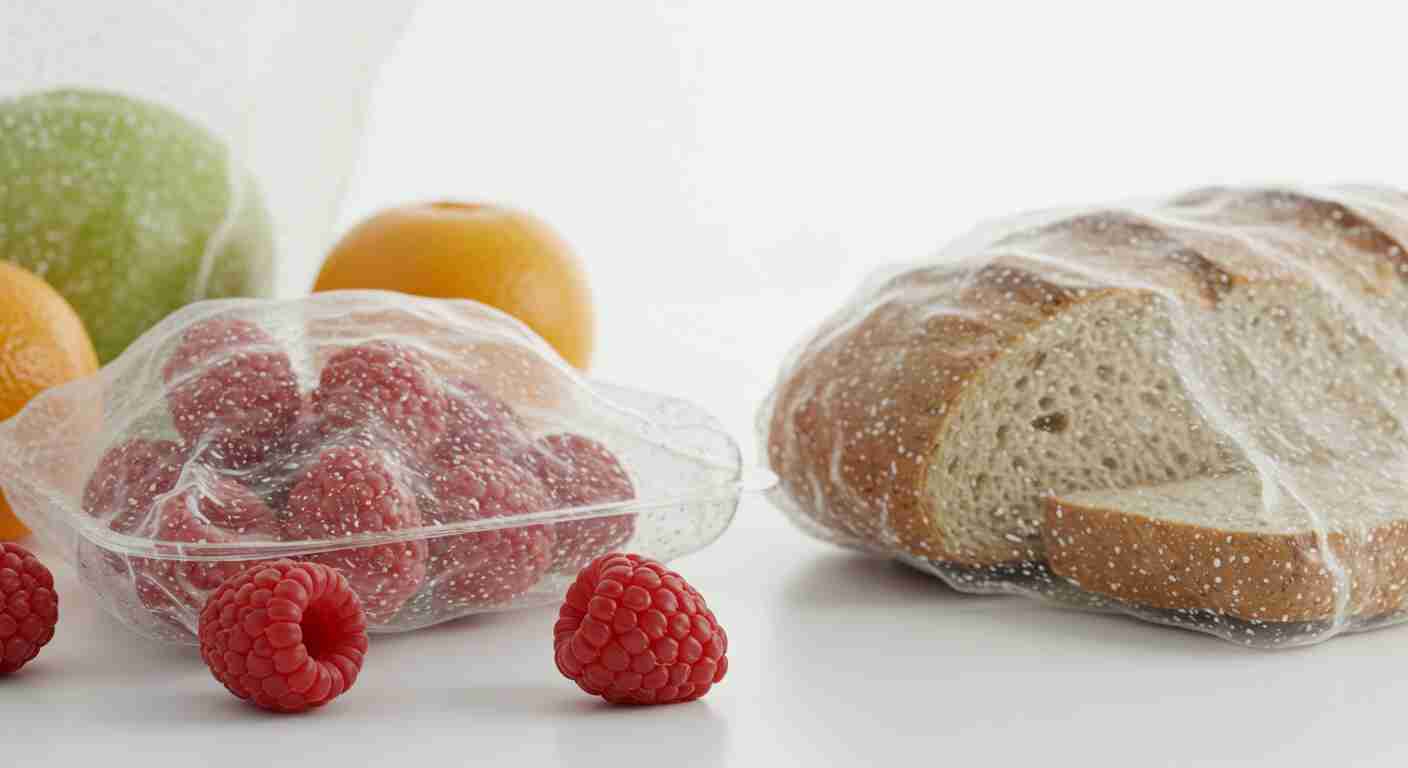
Perhaps one of the most remarkable and promising discoveries in this study is the fibers’ unique ability to chemically react to moisture. The researchers observed that when exposed to 100% relative humidity, these electrospun fiber mats readily transformed into clear films. This inherent reactivity suggests considerable potential for their use as a novel, eco-friendly food wrap, capable of adapting to environmental conditions. Imagine a food packaging that not only biodegrades but can also form a protective, clear film when it encounters the moisture from the food it encapsulates, offering a superior barrier.
While the immediate and most intuitive application for these edible, biodegradable nanofibers is sustainable food packaging, Your scholarly editor must emphasize that the versatility of this technology extends far beyond. Studies show that protein-based electrospun nanofibers are highly sought after for their diverse utility across various fields. For instance, in the biomedical sector, their potential is enormous. These fibers, due to their morphological similarity to the extracellular matrix, high porosity, and large specific surface area, are ideal for applications such as advanced wound dressings. They can facilitate healing by providing a scaffold for cell growth and delivering active agents. Beyond that, the technology holds promise for cosmetics, serving as a biodegradable base for various products, and for advanced filtration systems, where their incredibly thin and high-surface-area structure can efficiently capture particles or remove contaminants. Casein itself has a long history of diverse applications, from enhancing food textures and nutritional values to its use in glues, paints, paper coatings, cosmetics, and pharmaceuticals. This new research significantly expands its utility by transforming it into a nanofiber form, opening up entirely new avenues for its application. The potential for these innovative fibers to contribute to sustainable solutions across multiple industries is truly vast and continues to be explored by the research team.
Broader Horizons: Edible Packaging and Sustainable Solutions
Here’s an interesting fact: while Penn State harnesses milk protein and cellulose, other researchers are exploring equally ingenious bio-based solutions. Consider, for instance, the innovative use of spent coffee grounds (SCG) to create edible, biodegradable films. Studies show that the world consumes billions of kilograms of coffee annually, generating an enormous amount of SCG—estimated at 60 million tons per year. Traditionally, this by-product has been largely incinerated or landfilled, contributing to environmental issues, including methane emissions from decomposition. However, new research highlights SCG as an ideal raw material for edible films due to its rich composition, including polysaccharides, phenolic compounds, and lipids. Incorporating SCG oil into a K-Carrageenan base polymer, researchers have successfully produced biofilms that are not only biodegradable and edible but also possess high antioxidant and polyphenol content, offering enhanced food preservation capabilities. This approach cleverly transforms a significant waste stream into a valuable resource, addressing both waste management and packaging sustainability.
Pay attention here! Penn State’s work with casein-hypromellose nanofibers and the spent coffee grounds approach both underscore the immense benefits of these sustainable alternatives over conventional plastics. The overarching advantages revolve around environmental impact, biodegradability, and enhanced food preservation. Unlike traditional plastics, which persist for centuries and pollute ecosystems, these bio-based materials are designed to naturally decompose, often returning nutrients to the earth. This inherent biodegradability dramatically reduces landfill burden and microplastic contamination. Furthermore, many of these edible films, including those derived from milk proteins, exhibit excellent gas barrier properties, which is crucial for oxygen-sensitive foods. Studies show that milk protein-based packaging can effectively act as a carrier for various functional ingredients like antioxidants and antimicrobials, extending shelf life and maintaining food quality. This “active packaging” functionality, as highlighted in a review in Frontiers in Nutrition, allows for controlled release of bioactive substances, offering a superior protective barrier against spoilage and contamination compared to inert plastic wraps.
Comparing and contrasting, Penn State’s milk protein-cellulose fibers excel in their novel nanofiber structure, which offers a large surface area and unique moisture-reactive film-forming capabilities, potentially making them highly adaptable as a food wrap. General milk protein-based packaging, as a broader category, is lauded for its superb biodegradability, non-toxicity, and thermal stability. While casein films can be susceptible to moisture due to their hydrophilic nature, this can often be mitigated by incorporating active ingredients or through multi-layered designs. The spent coffee ground films, on the other hand, boast high antioxidant and polyphenol content, directly enhancing the protective qualities of the packaging while simultaneously addressing waste valorization. Each approach leverages distinct biological resources, showcasing the diverse pathways materials science is exploring to achieve sustainable packaging.
However, Your scholarly editor must also highlight the significant economic and regulatory challenges that innovative sustainable materials face in reaching commercial scale. While the scientific breakthroughs are compelling, transitioning from laboratory proof-of-concept to widespread industrial adoption is a complex undertaking. Studies show that many novel materials, including mycelium composites and bacterial concrete in the sustainable building sector, are often costly and produced in limited quantities. This is often due to the initial investment required for scaling up manufacturing processes, which can be energy-intensive or demand specialized equipment. For instance, the intricate electrospinning process, while highly effective for creating nanofibers, requires optimization for mass production to become economically viable for packaging.
Regulatory frameworks also often lag behind scientific advancements, creating hurdles for new materials. There’s a lack of harmonized global standards for biodegradability, compostability, and safety for edible packaging, which can complicate market entry and consumer trust. Furthermore, architects, developers, and, in the case of packaging, food manufacturers, often lack clear, comparative data on performance, life cycle costs, and certification pathways for these innovative materials. This knowledge gap can slow down adoption, as industries tend to stick with established, albeit less sustainable, materials due to familiarity and proven cost-effectiveness. Drawing parallels with sustainable building materials, like the efforts to incorporate biochar into cement or develop self-healing concrete, the journey from breakthrough to mainstream is often protracted, requiring not just scientific validation but also robust economic models, streamlined regulatory approvals, and sustained industry-stakeholder engagement. The promise of a greener future hinges not just on discovery, but on the capacity to bridge this gap between innovation and commercial reality.
The Role of Electrospinning in Biomedical and Beyond
Building on this technical foundation, Your scholarly editor will now expand the discussion to the diverse applications of electrospun nanofibers, moving significantly beyond food packaging to highlight their immense potential in biomedical and other interdisciplinary fields. Pay attention here! The unique properties of electrospun nanofibers—such as their striking similarity to the extracellular matrix (ECM), their exceptionally high porosity, and their inherent ability to incorporate and precisely release active agents—make them exceptionally versatile. This showcases the profound interdisciplinary nature of materials science, illustrating how breakthroughs in one area, like advanced food packaging, can directly inform and accelerate progress in seemingly disparate fields, such as therapeutic interventions.
Studies show that the electrospinning technique, so critical to Penn State’s edible fiber breakthrough, is also a cornerstone in the development of advanced wound dressings. Here’s an interesting fact: a recent study published in Scientific Reports detailed the fabrication of novel nanofiber-based wound dressings composed of Soluplus (Sol) and soy protein isolate (SPI) loaded with mupirocin (Mp) for antibacterial properties. These Sol/SPI/Mp nanofibers demonstrated optimal water absorption capacity and water vapor permeability, essential qualities for effective wound healing. Crucially, they exhibited remarkable antibacterial efficacy against common pathogens like S. aureus and E. coli, attributed to the controlled release of mupirocin. Furthermore, biocompatibility tests showed superior cell proliferation and adhesion, suggesting that the presence of SPI, with its ECM-like peptides, significantly enhances cellular behavior, mimicking the body’s natural healing environment. This parallel highlights how the delicate architecture achieved through electrospinning can directly support biological processes, making these materials ideal scaffolds for tissue regeneration and repair.
According to recent data from Frontiers in Bioengineering and Biotechnology, electrospun nanofibers are also proving to be incredibly versatile carriers for a wide array of sensitive biological products, including microorganisms, stem cells, proteins, and nucleic acids in diverse therapeutic contexts. Imagine the possibilities! Live cells, particularly probiotic bacteria like Lactobacillus, have been successfully encapsulated within nanofibers to improve their stability and viability, addressing significant challenges in their oral administration and wider application. This encapsulation protects these fragile organisms from harsh environmental conditions, enabling their targeted delivery.
Moreover, stem cells—such as mesenchymal stem cells (MSCs) and adipose-derived stem cells—greatly benefit from nanofiber scaffolds. These scaffolds are instrumental in maintaining cell viability, promoting proliferation, and guiding differentiation, which are critical processes for effective tissue engineering and regenerative medicine. The nanofibers provide a biomimetic environment that encourages cells to grow and organize, accelerating the repair of damaged tissues. Proteins, including hormones like insulin and growth factors, and enzymes such as lysozyme, are also effectively delivered via nanofibers. These carriers protect sensitive biomolecules from degradation, prolong their half-life, and enable controlled release kinetics, which is vital for sustained therapeutic effects. For instance, insulin-loaded nanofibers have shown promise for non-invasive delivery, overcoming the challenges posed by the gastrointestinal environment.
Your scholarly editor must emphasize that this sophisticated ability to integrate and precisely release active agents is a hallmark of electrospun nanofibers. Whether it’s antimicrobial drugs in wound dressings, fragile probiotics for gut health, or growth factors for nerve regeneration, the nanofiber structure provides an unparalleled platform for targeted delivery and sustained bioactivity. This precise control over release profiles is achieved by tuning the nanofiber’s material composition, porosity, and surface chemistry. The very same principles applied to create edible packaging that reacts to moisture can be adapted to develop nanofibers that release therapeutic compounds in response to specific physiological cues, such as pH changes or enzymatic activity at a wound site. This remarkable adaptability underscores why electrospinning is not just a technique for packaging but a foundational technology driving significant advancements across materials science, from sustainable food solutions to cutting-edge biomedical therapies.
Conclusion: Penn State’s Leadership in a Sustainable Future
Your scholarly editor now brings our comprehensive exploration to a close, synthesizing the multifaceted discussions and reiterating the truly transformative potential of Penn State’s pioneering research into edible and biodegradable fibers. This breakthrough, rooted in the sophisticated electrospinning of milk protein and cellulose, is not merely an isolated scientific achievement; it stands as a testament to Penn State’s unwavering commitment to cutting-edge research in agricultural sciences and food science.
Here’s an interesting fact: this specific innovation is inextricably linked to broader, impactful initiatives at the university. Consider, for example, the Penn State Youth Food Lab, a core program of the World Food Forum’s Youth Initiative, which actively engages young individuals in addressing global food security and climate change. Or the annual Global Gallery Symposium, which consistently puts a spotlight on global food systems, fostering interdisciplinary collaboration and showcasing research aimed at tackling complex challenges like food insecurity, poverty, and environmental sustainability. Studies show that these interconnected endeavors highlight how Penn State’s edible fiber research contributes directly to a greener future by addressing critical global challenges head-on—from reducing persistent plastic waste and enhancing food security through novel packaging solutions to fostering sustainable development across agricultural and food systems.
Pay attention here! The collaborative efforts and interdisciplinary approach that characterize Penn State’s contributions to materials science and food innovation are central to its success. This research embodies the power of integrating diverse fields—from food science and agricultural sciences to advanced materials engineering—to create impactful change. According to recent data, academic institutions like Penn State are increasingly vital drivers of innovation, often providing the foundational research that later scales into practical, real-world solutions. By investing in such forward-thinking research, Penn State is not only enhancing its reputation as a leader in sustainable science but also actively shaping a more environmentally responsible and food-secure world for generations to come. The future of sustainable materials, driven by institutions like Penn State, promises a profound shift towards a healthier planet.
Reference:
- Penn State Researchers Develop Edible, Biodegradable Fibers from Milk Protein and Cellulose for Sustainable Packaging and More
- Penn State Researchers Develop Edible, Biodegradable Fibers from Milk Protein and Cellulose for Sustainable Packaging
- Spent Coffee Grounds Make Biodegradable Food Packaging
- Milk Protein-Based Active Edible Packaging: An Eco-Friendly Approach for Food Applications
- Edible, Biodegradable Fibers Made from Milk Protein and Cellulose Hold Promise for Sustainable Packaging and More
- Penn State Researchers Develop Edible, Biodegradable Fibers from Milk Protein and Cellulose for Sustainable Applications
- Antibacterial and Wound Healing Stimulant Nanofibrous Dressing: Soluplus, Soy Protein Isolate, and Mupirocin
- Electrospun Nanofibers: Versatile Carriers for Microorganisms, Stem Cells, Proteins, and Nucleic Acids in Diverse Applications
- Latest Breakthroughs in Sustainable Building Materials
- Penn State’s Youth Food Lab Attends UN Science, Technology, Innovation Forum
- Annual Global Gallery Symposium at Penn State to Focus on Global Food Systems


Be the first to comment