
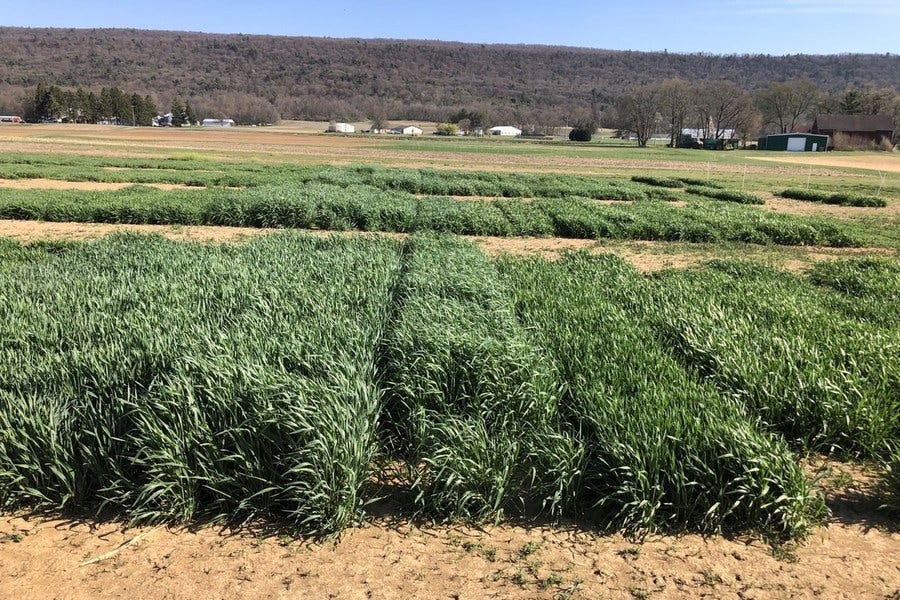
Potential corn silage yield and quality reductions have some producers considering harvesting small grain forages early.
Early Harvest Drawbacks
Elevated Nitrate Content
All grass crops must be given time to allow nitrogen fertilizers to be converted to plant proteins. As plants uptake nitrogen fertilizers as nitrate, be mindful that excessive nitrate content could lead to nitrate toxicity in your herd. Proceed with caution in fields heavily fertilized with nitrogen, especially if you already have elevated nitrate levels in your corn silage under drought. The nitrate concentrates in the lower part of the stems. Harvesting small grain silage with higher stubble height will lower its overall nitrate concentration. With proper fermentation processes, ensiling small grains will convert most of the nitrate to protein. Therefore, nitrate toxicity is less of a concern when ensiling than making dry hay.
Yield Penalty
Early harvest will result in lower forage yields. Producers who typically harvest 2.5-3 tons of dry matter per acre (7-8.5 tons per acre @ 35% dry matter) could expect early harvest yields as low as 1.5 tons of dry matter per acre (4.25 tons per acre @ 35% dry matter). Proceed with caution if this yield penalty will jeopardize your overall forage inventory for the following year.
Poor field conditions
Harvesting small grains early in spring coincides with a high probability of wet soil conditions and frequent spring showers. These field conditions will cause soil compaction with from harvesting machinery and field trips. They can also lower the forage quality sharply due to nutrient leaching and continued respiration within the windrow. Site-specific weather conditions can help producers decide when to harvest small grains.
Early Harvest Benefits
Soil Moisture Conservation
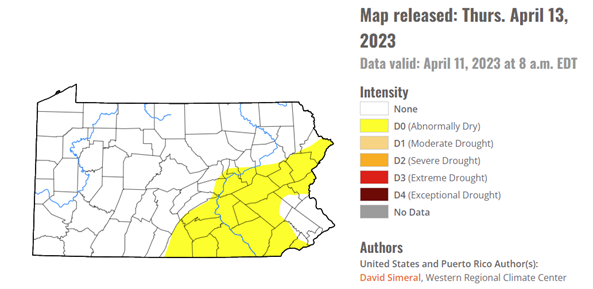
As of this writing, most of southeastern Pennsylvania is rated as “Abnormally Dry” under the U.S. Drought Monitor. If conditions persist, allowing crop growth to continue to the boot stage or later will remove large quantities of moisture from the soil. Ultimately, this moisture demand may impact the germination or establishment of your succeeding corn silage crop. Early harvest may help to conserve your soil moisture for corn crop planting.
Increased Forage Quality
Early harvest of small grains will result in higher crude protein content, lower neutral detergent fiber content, and higher neutral detergent fiber digestibility levels than those harvested at the boot stage or later. This increased quality should work well with drought-stressed corn silage, which typically exhibits elevated neutral detergent fiber (NDF) levels, lowered starch content, and overall depressed net energy for lactation (NEL) content. Early harvest may help improve your ration’s overall protein, energy, and digestibility.
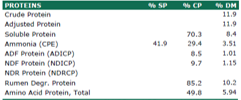
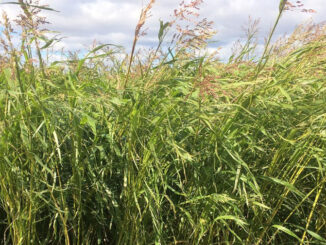
Figure 1. Late Harvested Rye
Late-harvested rye (Figure 1) will typically have a lower crude protein percentage and higher aNDF percentages. In this example, 11.9% is low for crude protein and may need to be supplemented to support desired milk production. Additionally, high levels of NDF with a low 30-hour digestibility will limit milk response when fed to dairy cows. Ash content is reflective of all inorganic materials in a feed sample. Ash content in rye can sometimes be elevated due to harvest practices resulting in high levels of soil contamination. Generally, a good goal would be to have ash below 10% dry matter. Early harvest of small grains can result in feed with high moisture content. When ensiled at a high moisture content, around 72 to 75%, there is a possibility for poor fermentation to occur. Poorly fermented feeds can reduce feed intake at the bunk or increase the incidence of disease in fresh cows.
Suppose unpredictable weather conditions limit your ability to harvest in a timely manner. In that case, careful planning with your nutritionist can alleviate some of the stress associated with harvesting low-quality small grains. Small grains fed to growing heifers can have lower energy values and still be an adequate feed without fattening them. However, implementation of this practice may require multiple storage structures. While small grains make an excellent feed for milking cows and growing heifers, it is important to be careful of potassium and calcium levels if fed to animals as they near calving.
Should You Harvest?
Consider these points when deciding if you should harvest your small grains early. Limiting early harvest to only some of your double-cropped acres may be appropriate. Work with your nutritionist to determine if your ration could benefit from any of these early harvest situations:
- Farms that are not at risk of elevated nitrate levels due to lower nitrogen fertilizer rates.
- Farms that have enough double-cropped acres to make up for lower yields.
- Farms with lighter soils that may become droughty if small grains are not removed.
- Farms that may benefit from improving ration quality with high-quality small grain silages.
Allow the crop to reach Feekes stage 8 before proceeding with early harvest. At this stage, you should see two nodes present on the stem, and the flag leaf will just be beginning to emerge. Wilt the crop rapidly to 65% moisture, and quickly chop, fill, and seal silos to promote a fast fermentation. Consider applying a bacterial inoculant (minimum 100,000 CFU/g) at harvest if conditions are abnormally dry or cool, or if your farm has historically faced issues with aerobic stability at feedout. Although you may be faced with less-than-ideal corn silage quality, harvesting high-quality small grain forages can help improve your ration overall quality. Further guidance for silage-making principles can be found in the Penn State Extension publication “From Harvest to Feed: Understanding Silage Management“, available online or through your county Extension office.

Be the first to comment