
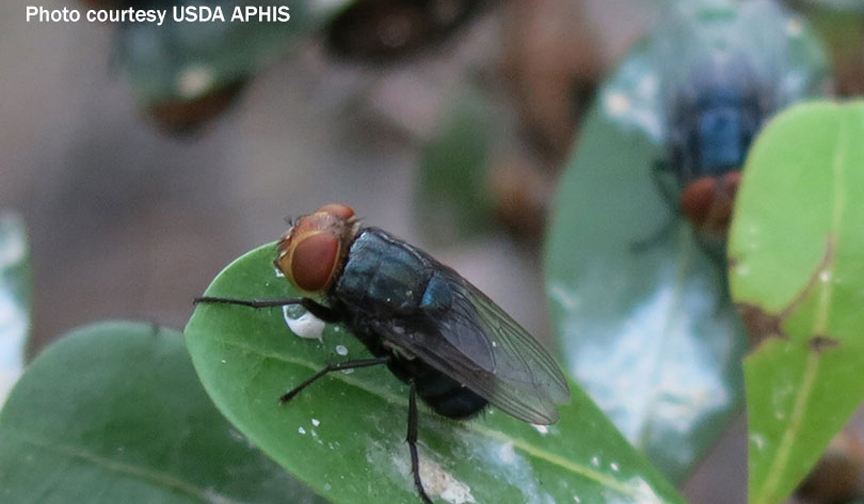
The first case of the invasive parasite in the state was confirmed Wednesday.
On Wednesday, the U.S. Department of Agriculture confirmed the first case of New World Screwworm in the U.S. after a laboratory in Iowa analyzed a sample from La Pryor in Zavala County. The parasite, carried by flies, targets the live flesh of warm-blooded animals, including cattle, pets, wildlife and humans, causing severe wounds or death. Spread of the New World Screwworm could have a major economic impact on the cattle industry in the U.S. along with severe impact to wildlife populations.
“The best thing that livestock producers and animal owners can do to prevent infestation is to put eyes on their animals as often as possible, remain vigilant by implementing enhanced management practices to avoid creating wounds, and promptly report suspicious wounds.”
Experts
Jennifer Koziol, Associate Professor of Food Animal Medicine and Surgery, Texas Tech University School of Veterinary Medicine, (806) 742-3200 or jkoziol@ttu.edu
Chad Cross, Professor of One Health, Texas Tech University School of Veterinary Medicine, (806) 742-3200 or chad.cross@ttu.edu
“Our internal communications team has been working diligently to ensure that we provide information to the public through a dedicated web presence, social media and vetted resources. This efficiently supports New World Screwworm response efforts. Through our communication and educational efforts, we can provide essential information and resources.”
Throughout 2025, continuing education events were held for students, veterinarians and industry partners. Meetings with the Screwworm Coalition of Texas, strategic One Health planning meetings with collaborators and additional training sessions ensured Texas Tech is working diligently to address potential fly incursion.
Any animal, whether it be livestock, household pets or wildlife, that present with suspicious wounds characterized by a foul smell should be reported to the proper authorities. Wildlife presenting those characteristics should be reported to the Texas Parks & Wildlife Department.
In addition to training and strategic planning, the Texas Tech University System is uniquely poised to play a significant role in addressing the New World Screwworm through establishing and enhancing a long-term collaborative One Health interdisciplinary research agenda. To this end, the SVM and partners across the TTU System developed a set of work-ready projects under four priority areas:
- Continuing Education and Communication
- Epidemiological Surveillance and Disease Ecology
- Entomology and Parasitology
- Control and Intervention
The SVM has held mandatory training sessions with Texas Tech veterinary students working throughout the state in clinical rotations. These students, recent graduates and working veterinary professionals from Texas Tech represent the front line in New World Screwworm detection and treatment.
“We would be remiss to forget that this is a One Health concern and that humans can become infected with New World Screwworm. Wound care becomes critically important. The Center for Disease Control must make confirmation of all human cases.”


Be the first to comment