
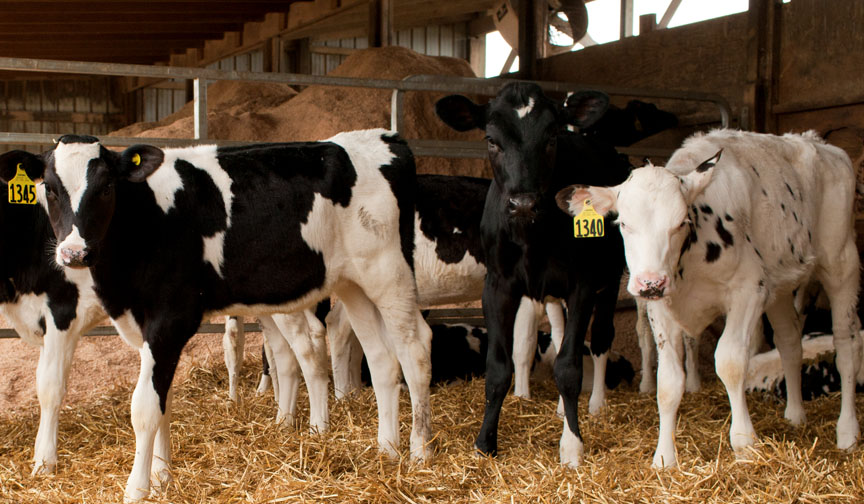
Yet, there are many misconceptions and fears about right-sizing a replacement heifer inventory, leading producers to pour all their time and resources into each animal. Today, raising heifers is about having the right ones for your dairy’s size, needs and goals. With innovations in the dairy industry, such as genomic testing, producers who trust the process can reap the rewards.
The cost of heifer hoarding
Heifer replacement costs are often the second- to third-highest expense on dairies, costing up to $2,200 from birth to springing.1,2,3 Then, remember that a cow doesn’t cover her upfront costs until midway through her second lactation. In order to have the opportunity to make a profit, producers need to make sure that their investments will see them to third, fourth and greater lactations and are resilient to disease and bumps along the way such as lameness, metritis and mastitis. Furthermore, a surplus of heifers potentially pushes out those older, higher-producing cows, and can decrease milk production, raise expenses and overall plummet profits. First-lactation cows typically make 15% less milk compared with second-lactation cows and up to 25% less milk than third- or fourth-lactation cows.4
Do you need an inventory of heifers to maintain your milking herd? Of course. However, the question should be: Are you confident your heifer inventory contains the type of females you need to sustain your herd and help you reach your herd’s productivity and profitability goals? This a matter of striking the balance between quality and quantity. Integrating a genomic testing strategy can provide the opportunity to make informed decisions on which heifers have the genetic potential to help meet these goals.
Building the next generation
The phrase “culling heifers” can bring up anxieties for producers not wanting to do away with the wrong animals. Genomic testing can help ease these nerves and accurately predict which heifers are likely to survive and thrive. Not only can genomics shine a light on predicted milk production, protein and fat, but projected health and reproductive performance.
There is a demonstrated correlation between a dairy’s profitability and the wellness of its milking herd. Wellness traits from CLARIFIDE® Plus help dairies understand if a heifer has a genetic advantage over scours, respiratory disease, lameness, mastitis, metritis and other diseases. A 2021 validation study conducted by Zoetis and using CLARIFIDE® Plus found that, on average, each cow in the top 25% ranked- group compared to the lowest-ranking group:
· Produced 741 more pounds of fat, 583 more pounds of protein and 17,810 more pounds of saleable milk. 5
· Generated $811 more in profit in their lifetime compared with the lowest 25% group.5
· Stayed in the herd for seven months longer. 5
· Experienced 33% less mastitis, 55% less metritis6 and 42% less lameness.5
The long-term benefit of genomic testing is selecting for a herd with genetic advantages for increased longevity, production and profitability. Over time, a dairy will not need an expansive dairy heifer replacement program because the milking parlor is filled with third and fourth-lactation cows that are in their prime. These dairies can experience increased milk production and decreased net herd turnover and heifer-raising costs, leading to operational sustainability. Producers who take this leap will be more confident that the heifers they are keeping are the profitable ones, and resources are being allocated appropriately.
Where to start
When I work with producers on genomic testing strategies and evaluating their heifer inventory, I often ask: “How big of an insurance policy do you want?” Ideally, we want a reasonable one that maintains a steady flow of milk in the tank versus one that racks up unwanted costs. The number of replacements needed is determined by a dairy’s goals, such as expansions, desired culling and turnover rates as well as their efficiency at raising healthy replacements. As a rule of thumb, I do encourage dairies to set long-term goals to reduce culling levels over time to maximize profitability. This will help maintain a fresh source of animals with high-genetic potential while still allowing cows to reach lifetime production peaks. While first lactation animals are our lowest producing lactation groups, I always say, the best thing a first lactation cow can do is become a second lactation cow and reach their potential to profit.
Now that a dairy has determined how many replacements it needs, there should be an established plan on what to do with the heifers that they don’t need. Having genomic data on hand allows producers to make more strategic breeding decisions, such as sexed semen for top-genetic heifers and beef semen for bottom-genetic heifers. Establishing a plan like this can help dairies to create the most valuable calves they can in today’s market for low genetic animals: beef cross calves. The premium generated from these beef cross calves can help cover costs for genomic testing and sexed semen, versus creating more dairy heifers and bulls.
The bottom line
Change can be scary, but our industry ultimately demands change to work toward improved outcomes for dairies. Cows that live longer and produce more lifetime milk lead to more sustainable and efficient outcomes. Taking the leap and incorporating new breeding and culling strategies with genomic testing can unlock untapped potential. Producers who do so can know with confidence that not only do they have the right number of heifers, but they have the right ones to build the herd they wish to see in the future.
1 Overton M, Dhuyvetter KC. Economic considerations regarding the raising of dairy replacement heifers. In: Beede D, ed. Large Dairy Herd Management. 3rd ed. Champaign, IL: American Dairy Science Association, 2017;457-474.
2 Heinrichs J, Gabler M, Tozer P, Schriefer T. Heifer Economics. https://extension.psu.edu/heifer-economics. Updated January 3, 2018. Accessed February 25, 2019.
3 Tranel L. What’s It Cost to Raise Heifers? https://www.extension.iastate.edu/dairyteam/files/page/files/What%27s%20It%20Cost%20to%20Raise%20Heifers%202014.pdf. Accessed February 25, 2019.
4 Lormore M. What Drives Financial Success on a Dairy? Parsippany, NJ: Zoetis; 2018.
5 Zoetis. Association Between DAIRY WELLNESS PROFIT INDEX® (DWP$®) Predictions Generated With the 2018 Formulation and Lifetime Performance. Technical Bulletin No. TI-05711, 2020.
6 Fessenden B, Weigel DJ, Osterstock J, Galligan DT, Di Croce F. Validation of genomic predictions for a lifetime merit selection index for the U.S. dairy industry. Slide 20, October 2020, Zoetis Inc.
All trademarks are the property of Zoetis Services LLC or a related company or a licensor unless otherwise noted.
© 2022 Zoetis Services LLC. All rights reserved. CLR-00548


Be the first to comment