
If you have been around a young child for a while, you may have heard the question “But why?”. Sometimes, the answers are easy to answer, like “Why do I have to drink my milk?”. We can explain the health benefits of dairy. Once the child knows why they must drink their milk, they may be more willing to do so once they understand the why.
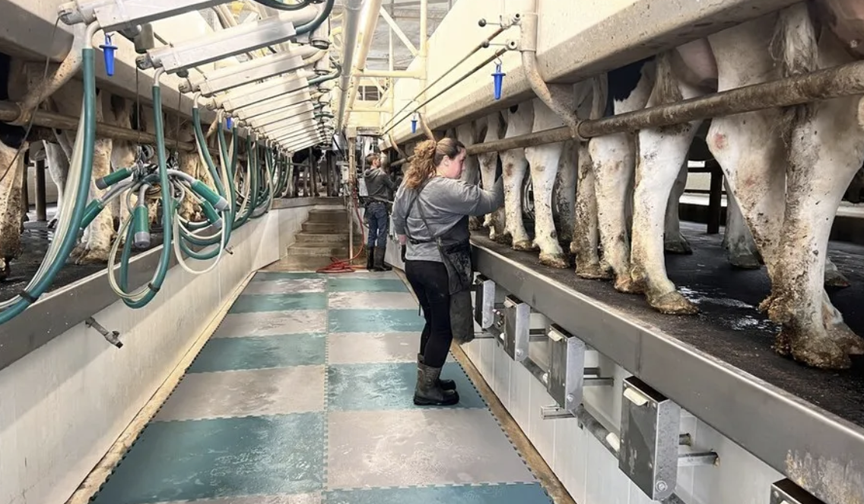
On dairy farms, whether the farm has one or two family members or a team of 10 employees who milk the cows, making sure they know the why behind what they are doing can matter. It can help those milking to have more pride in their job and take accountability for their work, which in turn can help with milk quality.
Several research studies looked at the correlation between on-farm training and the increase in confidence and accuracy in the workplace. For example, a 2019 study found that when farm employees were offered colostrum management training, 78% of the employees felt more confident in their jobs after the training (Hesse, 2019).
When it comes to milking protocols, knowing the importance of each step can ensure cows are milked the same way, each time, every day. Here is a basic milking protocol and why each step is important in the milk harvesting process:
Pre-dip: Most teat dips recommend the dip stay on the teat for at least 20-30 seconds before being wiped off. Pre-dip can be applied with a foamer, spray wand, or dip cup. Whatever method is used, make sure the dip goes at least ¾ of the way up the length of the teat and covers the entire teat end. Be sure to follow the product label recommendations. The pre-dip can prevent the spread of both environmental and contagious mastitis pathogens and must maintain contact with the teat for at least 30 seconds to disinfect the teat end.
Fore-strip: All teats should be fore-striped (3 to 5 streams of milk from each quarter). Fore-stripping serves three purposes. It stimulates the udder for oxytocin letdown; it helps those milking detect abnormal milk and clinical mastitis cases, and it removes the highest somatic cell count (SCC) milk from the teat. This higher SCC milk resides in the teat cistern between each milking. To have proper stimulation you must strip each cow for a total of 10 seconds. Stripping cows for 10 seconds will help with manual stimulation as well as reducing SCC in the herd.
Wipe: Either individual paper towels or single-use cloth towels are recommended to wipe teats and teat ends thoroughly before unit attachment. It is important to dry each teat before unit attachment. Wet teats can lead to liner slips and can be a pathway for bacteria to enter the teat end. The unit should be attached right after the teat end is wiped dry as this is the cleanest the teat end will be.
Lag time: Lag time is the time from the first tactile stimulation to the unit attachment. The recommended lag time is 60 up to 120 seconds. The process of milk letdown, where the milk is released into the milk ducts, involves the hormone oxytocin. The pituitary gland releases oxytocin in response to the stimulation. It takes about 60 seconds after the first stimulation for the cow to release her milk. If milking the unit is applied too early or late, the unit must manually stimulate the cow, which can lead to teat end damage, putting the cow at risk for mastitis.
Post-dip: Every cow should be post-dipped after the milker unit is removed. The post-dip helps stop the spread of contagious mastitis and forms a barrier on the teat to help reduce bacteria contamination between milkings. The teat end is still open at this time and vulnerable to contamination. Cows should remain standing at least 30 minutes after the unit is removed to allow time for the post tip to dry and the teat ends to close.
Research has shown that loud shouting is as averse to a cow as a shock with a cattle prod (Proudfoot, 2016). When moving animals to the milking parlor or working with them in the barn, are employees or family remaining calm, or are they shouting loudly? Every farm is different, and cattle can become accustomed to whistling, but animal handlers should avoid excessive shouting, and rough handling when working with the animals.
The milking protocol doesn’t have to be a complicated process. Whether a farm milks together as a family or has a team of milkers, having them understand the science of milking can help boost confidence in what they are doing. If they know the importance of their role in producing a quality dairy product, everyone can benefit from the employee to the cow to the consumer.
Be the first to comment