
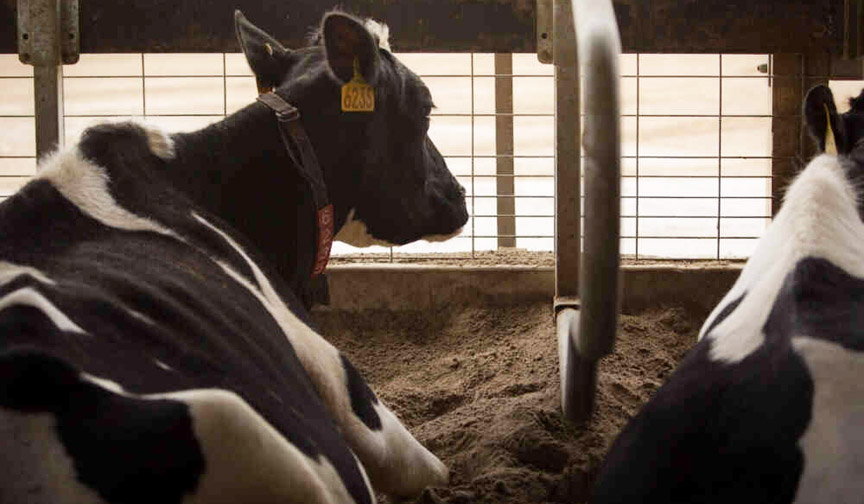
Dairy cow lameness is defined as an abnormal movement usually resulting from pain. Most cases can be attributed to lesions in the rear feet caused by:
· Digital dermatitis – also known as hairy heel warts, an infection of the skin in between the claws
· Sole ulcers – a lesion caused by pressure that compromises the growth of the sole horn and typically affects the rear outer claw
· White line disease – lesions (including hemorrhages, separations and abscesses) that occur in the white line region of hoof claws
These lesions can range from acute to severe and may be caused by a variety of factors varying from nutrition to barn hygiene to overall herd management.
Not only does lameness affect individual cows and the greater herd, but it can also negatively affect dairy profitability in terms of milk production, reproduction and cull rates. These factors can add up to significant economic losses for a dairy farm, whether from discarded milk, treatment costs or the early removal of a cow from the herd if cases become severe.
Your veterinarian will agree that lameness prevention is key for healthy cows and, in turn, increased financial performance by the farm.
Here are some tips to help improve cow foot and leg health from the University of Wisconsin-Madison’s Dairyland Initiative program, headed by Dr. Nigel Cook, professor of Food Animal Production Medicine and chair of the Department of Medical Sciences in the University’s School of Veterinary Medicine.
Create a lameness prevention team
This team should include specialists such as your veterinarian, nutritionist and hoof trimmer. Also bring in members of your day-to-day staff who work closely with the cows and are trained to look out for signs of lameness at designated observation areas.
These individuals should pay particularly close attention to cows’ feet as they walk by, also noting any changes in cow gait or posture.
For example, is the cow bobbing her head as she walks? Is she arching her back? Is the cow’s stride shorter than usual, or are her movements jerky or stiff? Does she seem to favor one leg over another? These are all signs that a cow may be lame and need treatment. The Dairyland Initiative’s Lifestep Lameness Module recommends locomotion scoring on a 3-point scale to identify the degree of lameness in individual cows and to determine herd lameness prevalence.
Emphasize cow comfort
One of the best ways to prevent lameness in your herd is by keeping cow comfort at the forefront of decision-making. This emphasis focuses on creating optimum opportunities to do the things cow’s prefer most – eating, resting and socializing – in the most comfortable environment possible.
Ideally, cows should spend 11.5–12.5 hours lying down per day, on average, for optimum health and milk production. Keeping cows off their feet and not standing on hard concrete surfaces reduces the risk of sole ulcers, white line disease and other foot injuries that can be detrimental to cow health.
Freestall and barn design, heat abatement, time spent out of the pen and stocking density are all cow comfort factors affecting your herd’s and individual cow health.
Take these suggestions into account for each of those cow comfort components.
1. Freestall design and bedding material
Size freestalls to appropriately accommodate the cows in your herd; cow size varies across herds, so consult with experts to be certain your stalls best fit your cows. One size does not fit all. Next, make sure stalls are filled with clean, dry, loose bedding materials. Sand is ideal and often preferred because it is an inorganic material that doesn’t promote bacteria growth. In addition, sand:
· Is cooling and comfortable for cows
· Drains away urine and dripped milk to keep cows cleaner and drier
· Provides traction to prevent injury when cows move to stand up or lie down
· Is abrasive to clean between the toes of the feet
2. Barn design
Along with freestall design and bedding material choice, barn design is crucial for cow comfort. Choose flooring that is non-traumatic and won’t cause the cow to slip or trip.
Consider how cows will be handled when moving them from the barn to the milking parlor. Strive to limit the number of starts, stops and abrupt turns cows will have to make on the way to their destination.
3. Heat abatement
Also, consider the climate and the effect warmer summer months will have on cow comfort. Lameness tends to increase during the late summer since heat-stressed cows will stand more.
Develop a heat abatement strategy that includes air changes and/or misting of the air to keep barns cool, encourage cows to lie down and prevent heat stress.
4. Time out of the pen
Since the goal is to get cows to rest and to keep them off their feet, the amount of time out of the pen should be limited to 3-3.5 hours or less per day and no more than one hour at a time for milking.
Lock-up time for examination or breeding should also be limited to less than two hours, ideally coinciding with feed delivery to reduce time out of the stalls.
Cows being treated for lameness should stand even less.
5. Stocking density
Resting time is affected when the number of cows exceeds the number of beds. Ideally, stocking density allows for one stall per cow. However, this is not always possible.
Aim for lower stocking density for animals in the transition period as much as possible. If you must increase the number of cows per pen, try to do so elsewhere.
Always focus management attention on ensuring cow’s biological needs are being met throughout the herd to minimize the effects of increased stocking density. This includes proper feed management, adequate bunk space, water quality and availability, heat abatement, stall management and reduced time away from feed to help ensure cows are productive and stay healthy.
Put it all together
Cow comfort is key to preventing lameness. Ensure cows have a cool, comfortable and dry resting place since this encourages them to stay off their feet and rest for longer. Follow best practices for barn design, time out of the pen and optimal stocking density to also improve lying time.
Finally, be vigilant about cows’ health by routinely observing their movements and keeping an eye out for signs of lameness. All these factors help to ensure happy, healthy cows, which, in turn, better support your dairy’s profitability.
1 Fread, E. 2023. Lameness: It’s Costing You. Penn State University Extension. Available at: https://extension.psu.edu/lameness-its-costing-you.


Be the first to comment