
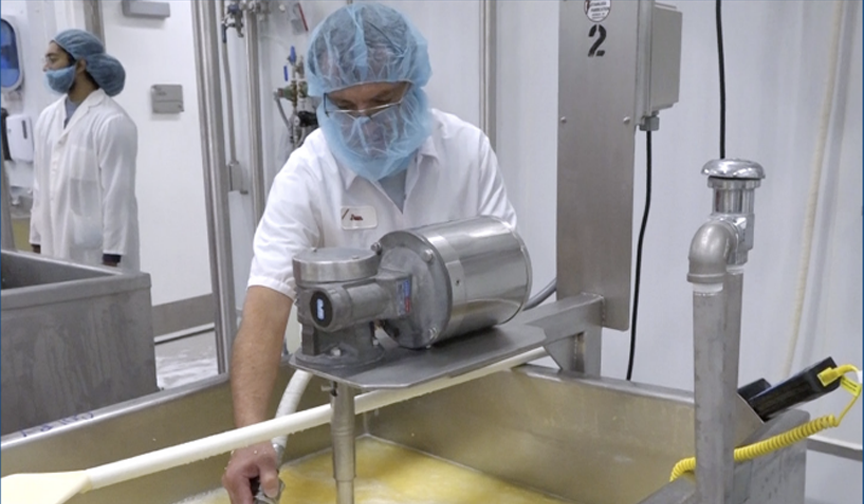
In dairy processing plants, water plays a number of important roles. “You use it to clean your vats, to make salt brines, to rinse off curds and much more—it’s a forgotten ingredient,” said Alex O’Brien, CDR Dairy Food Safety & Quality Coordinator. Water is also used in the dairy plant for purposes such as rehydrating milk powders, as a media for bulk starter, to dilute rennet and calcium chloride, flush out vats, and more. With the many ways in which water comes into contact with equipment and products, it’s important to know what’s in the water.
If using well water, O’Brien recommends checking the UV treatment system to ensure that it is working properly. This can be completed by water quality testing including coliform, yeast and mold, and aerobic plate count. This can be done on a frequency to risk evaluation. A reasonable frequency for sampling would be between monthly and once every 6 months. Preventive maintenance of the UV light bulb life is essential to proper functioning of the system. Similarly, if you’re using a water chlorination system, weekly testing of chlorine levels in the water is recommended. Wells also need to be visually inspected. For example, wells can get cracks in the casing, which is a major source of coliform contamination in well water (1). In fact, physical failure of well hardware is the most frequent cause of bacterial contamination. Physical failures can include:
-
Compromised Well Cap: A loose, cracked, or missing well cap allows insects, small rodents, windborne dust, and surface runoff to fall straight down into the water.
- Cracked Well Casing: The underground vertical pipe can corrode, crack, or split over time, allowing unfiltered shallow groundwater to seep into the well.
- Failed Annular Grout Seal: If the cement or bentonite grout surrounding the outside of the casing shrinks or cracks, surface water will pool and channel straight down the outside of the pipe into your drinking supply.
- Well Pump: The body is jacketed and become cracked and harbor bacteria
If using water from a municipality, it’s important to know how the water is treated. For example, municipalities may chlorinate their water, and chlorinated water should not be used to dilute rennet. Typically, municipalities have water quality reports available. Dairy plants should review those reports to better understand the water that is coming into their plant. For example, if the water is hard, maybe it should be softened before being used in the plant. Hard water can damage equipment and cause accumulation of minerals in equipment. Soft water is suggested for some applications in a dairy plant. This soft water may come from a water softener, or sometimes reclaimed water from a whey evaporator condensate, or reverse osmosis water.
Testing for Safety and Quality
There are also strict regulatory standards that apply to water quality and water testing requirements, both on the farm (Wisconsin ATCP 65.10) and in the dairy plant (Wisconsin ATCP 65.24(8)). Most water quality tests are based on testing for coliforms or fecal coliforms in the water. Product recalls are possible if regulatory agencies determine your water used in your facility is contaminated with coliforms. While coliforms and, specifically, toxigenic E. coli are food safety concerns, there can be other contaminants in water that can cause quality issues. This is why O’Brien recommends running heterotrophic plate count (Similar to Aerobic Plate Count) numbers on water. Enumerating microbes may have different protocols, due to some bacteria going through osmotic shock, leaving you with lower numbers than what may be truly viable. APC, TPC, SPC, HPC – these are tests that show how many organisms are present in the water that need oxygen. One common contaminant that can result in quality issues is:
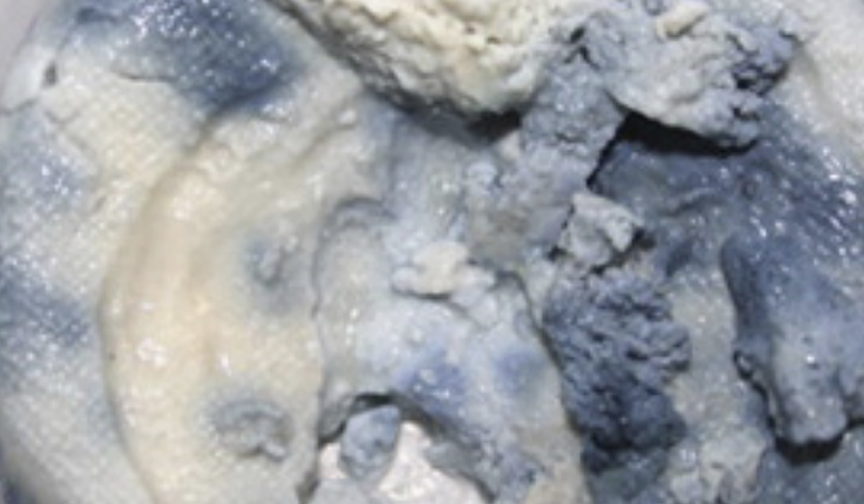
Pseudomonas. These bacteria can cause dairy product quality issues and form biofilms on equipment, which can be tricky to remove. Pseudomonas spp. can also contribute to disturbing rinds in washed-rind cheeses or cause a blue color defect with cheeses like Mozzarella.
Additionally, there are other possible contaminants in water such as radionuclides, nitrates, PFAAS and persistent organic pollutants. However, O’Brien says this doesn’t mean you need to be testing for all these contaminants. This is where a municipal water report is helpful and O’Brien recommends contacting your municipality to get access to your local water reports.
Other Quality Issues
Testing water for microbes is a good start but there are other issues to keep in mind such as turbid water or hard water. Turbid water might be carrying sediment or organic matter that can cause quality issues in your dairy products. Organic matter in your water can also decrease the effectiveness of cleaning chemicals and sanitizers, leading to higher chemical usage and cost. Another issue is hard water, which has a high mineral content. Hard water can cause mineral build up on equipment. Plants with hard water might have to do more acid washes to avoid mineral build up. Once the water is in your plant, it is going through a lot of piping. This is why O’Brien recommends testing water at points of use, like at the end of hose and/or hand-washing sinks. It’s possible that plants might have bad welds in their piping or other damage. O’Brien recommends using a borescope if you’re suspecting any bad welds.
Ancillary Areas
Don’t forget about the water purchased for anything that comes into contact with product (such as reconstituting products, processing aids, etc). Chill water is also a sneaky potential incidental ingredient. Maintaining the chill water/glycol/ice bank will not help with efficiencies but can prevent contamination of product if there are cracks, pinholes or leaks in the chiller plates, tube in shell, jacketed tanks/equipment. If microbial counts are out of specification, keeping of the dosage of the antimicrobial added is sufficient.
For COW (Condensate of Whey)/RO Water/Reclaim water, there are regulatory limits where this water can be used and must be followed. There are also regulatory requirements for monitoring storage of COW/Reclaim. For the exact microbial and storage requirements see ATCP 65.24 (9) and Appendix D part V.
Other Recommendations
Plants should pay close attention to the condition of their hoses. Old/damaged hoses can harbor microbes that contaminate the water. It is also important to keep hose ends off the floor because they can pick up microbes from the floor.
Potable water lines should be adequately marked on the exterior of the pipes to differentiate them from nonpotable water lines such as COW water or RO water that is not potable. There should be no cross connection between potable and non-potable water lines. These are some of the practices and issues to keep in mind when handling and testing water for your plant. It’s important to keep water quality and handling top of mind as it comes into contact with practically every piece of equipment and product in the plant.
Sources:
1. New York State Department of Health. “Coliform Bacteria in Drinking Water Supplies.” https://www.health.ny.gov/ environmental/water/drinking/coliform_bacteria.htm. Accessed 5/27/2026.
2. U.S. Food & Drug Administration. “National Conference on Interstate Milk Shipments (NCIMS) Model Documents.” https://www.fda.gov/food/milk-guidance-documentsregulatory-information/national-conference-interstatemilk-shipments-ncims-model-documents. Accessed 5/27/2026.


Be the first to comment