
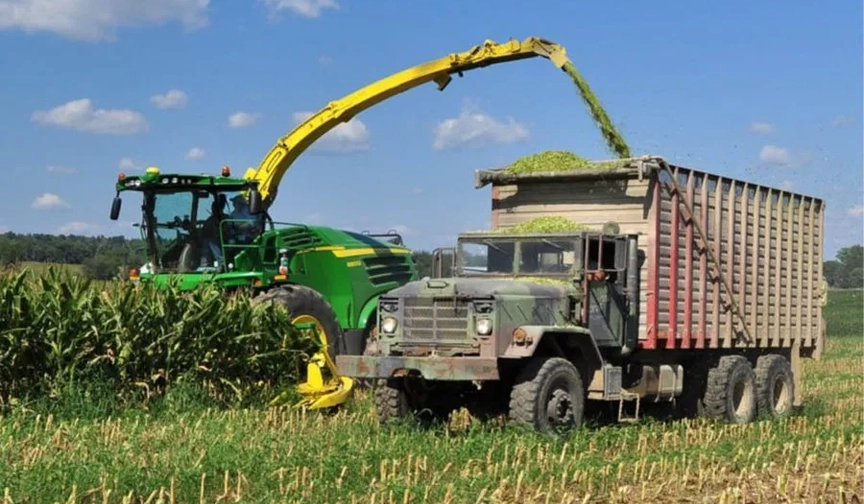
As the 2024 corn silage season comes to a close, consider alternative harvest methods if moisture content is too low.
As of September 16, 2024, all fields in the monitoring program have been harvested for silage; no moisture contents can be provided. A special thanks to Leanna Duppstadt, Kasey Hower, Tosh Mazzone, Tyler McFeaters/Del Voight, and Guojie Wang for participating in this year’s effort.
If you have fields that were planted (or replanted) in late May or early June, continue monitoring field conditions, and be prepared to check moisture levels more often if weather conditions are forecasted for warm, sunny days. For an explanation of how growing degree days affects corn silage maturity progression, see Corn Silage Approaching Maturity – Moving Past Thumb Rules. To ensure your corn is harvested at the proper moisture level, we recommend chopping and drying samples each week to make sure your harvest is conducted in a timely manner.
| Structure | Whole-Crop Moisture % |
|---|---|
| Horizontal Silo | 65-70% |
| Conventional Upright | 63-68% |
| Oxygen-Limiting Upright | 55-60% |
| Bag | 60-70% |
| Pile or Stack | 65-70% |
When moisture levels begin to decrease below the optimum moisture ranges, consider alternative harvest methods beyond silage. Fiber digestibility, starch digestibility, and fermentation quality all start to decline as plants continue to mature and moisture content decreases. Some options for making quality fermented feeds after the corn silage window has passed includes snaplage, high-moisture ear corn (earlage), or high moisture shelled corn; this should only be considered if stalk strength and integrity will allow the plant to continue stand until the appropriate moisture level is reached. Table 2 lists the acceptable and ideal moisture levels for high-moisture corn harvest.
| Crop | Acceptable Range | Ideal Moisture | Ideal Range |
|---|---|---|---|
| Snaplage | – | – | 35-50% |
| High-Moisture Ear Corn | 28-40% | 32% | 30-35% upright34-40% bunker |
| High-Moisture Shelled Corn | 25-33% | 25-30% | 28% |
Adapted from the 2023-2024 Penn State Agronomy Guide.
For any form of high-moisture corn harvest, optimal fermentation will occur when the crop is harvested at the right moisture, packed tightly, and the silo is filled and sealed as quickly as possible. To monitor whole-ear moisture content, measure the grain moisture content with a moisture meter and refer to Table 3 to estimate the whole-ear moisture level.
| Kernel Moisture Content (%) | Whole-Ear Moisture Content (%) |
|---|---|
| 20 | 23 |
| 22 | 25 |
| 24 | 28 |
| 26 | 31 |
| 28 | 33 |
| 30 | 35 |
| 32 | 37 |
| 34 | 39 |
2023-2024 Penn State Agronomy Guide.
For a comprehensive review of best management practices for harvesting, storing, and feeding silage, please see From Harvest to Feed: Understanding Silage Management
Be the first to comment